Archive for the ‘J. Elke Ertle’ Category

Character versus Reputation

Monday, August 11th, 2014

Character is like a tree and reputation is like its shadow. The shadow is what we think of; the tree is the real thing.

–Anonymous


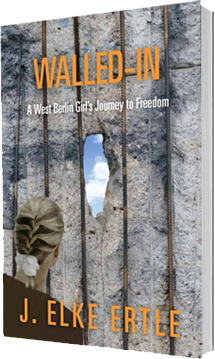
For a sneak peek at the first 20+ pages of my memoir, Walled-In: A West Berlin Girl’s Journey to Freedom, click “Download a free excerpt” on my home page and feel free to follow my blog about anything German: historic or current events, people, places or food.

Walled-In is my story of growing up in Berlin during the Cold War. Juxtaposing the events that engulfed Berlin during the Berlin Blockade, the Berlin Airlift, the Berlin Wall and Kennedy’s Berlin visit with the struggle against my equally insurmountable parental walls, Walled-In is about freedom vs. conformity, conflict vs. harmony, domination vs. submission, loyalty vs. betrayal.

  

Not So German Chocolate Cake

Thursday, August 7th, 2014

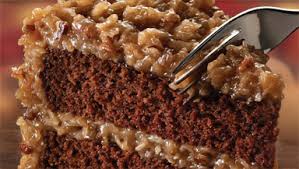
When I first came to San Diego, fresh from the old country, my new friends would try to help with the transition. “Come on over for dinner tomorrow,” they’d say, “We’ll have German Chocolate Cake for dessert. That will make you feel right at home.” Their eyes would twinkle, suggesting we understood each other. I’d smile back and say, “I’d love to. Thanks for inviting me.” Then I’d ponder the rest of the day what they might have meant by “GERMAN” Chocolate Cake. After all, what makes a chocolate cake German? When I learned that the key ingredients were sweet baking chocolate, coconut, and pecans, I was even more baffled. Delicious as the cake was, I had never tasted anything even similar in all of my years in Germany. So what made my friends think this was a German cake?

German Chocolate Cake

German Chocolate Cake

Chicken a la Germany

Sometimes I wondered whether the cake got its name the way my recipe for “Chicken a  la Germany” had come about. The latter owed its title to a minor mishap in my kitchen. Not being an experienced cook, I once had burned the chicken only minutes before the arrival of the guests. To cover up my blunder, I peeled off the skin, rubbed the chicken meat with lemon juice and drizzled spicy yoghurt sauce over the pieces. My guests loved it, but my lips remained sealed when I shared the recipe. As it turns out, the German Chocolate Cake story is quite different.

History of German Chocolate Cake

In 1852, an American named Sam German, created a bar of sweet baking chocolate while working for the Baker’s Chocolate Company. The company named the bar in his honor: Baker’s German’s Sweet Chocolate. http://whatscookingamerica.net/History/Cakes/GermanChocolateCake.htm. In 1957, more than 100 years later, Mrs. George Clay of 3831 Academy Drive in Dallas, Texas, submitted her cake recipe to the Dallas Morning Star. The newspaper printed it in the “Recipe of the Day” section. The cake, made with Baker’s Sweet Chocolate, gained in popularity. Sales of Baker’s chocolate increased dramatically. Over time, the name of Mrs. Clay’s award-winning cake was simplified and the all-American cake became known as German Chocolate Cake.  


For a sneak peek at the first 20+ pages of my memoir, Walled-In: A West Berlin Girl’s Journey to Freedom, click “Download a free excerpt” on my home page and feel free to follow my blog about anything German: historic or current events, people, places or food.

Walled-In is my story of growing up in Berlin during the Cold War. Juxtaposing the events that engulfed Berlin during the Berlin Blockade, the Berlin Airlift, the Berlin Wall and Kennedy’s Berlin visit with the struggle against my equally insurmountable parental walls, Walled-In is about freedom vs. conformity, conflict vs. harmony, domination vs. submission, loyalty vs. betrayal.


The stonecutters tenacity

Monday, August 4th, 2014

When nothing seems to help, I go look at a stonecutter hammering away at his rock, perhaps a hundred times without as much as a crack showing in it. Yet at the hundred-and-first blow it will split in two, and I know it was not the last blow that did it, but all that had gone before.

–Jacob A. Riis


For a sneak peek at the first 20+ pages of my memoir, Walled-In: A West Berlin Girl’s Journey to Freedom, click “Download a free excerpt” on my home page and feel free to follow my blog about anything German: historic and current events, people, places and food.

Walled-In is my story of growing up in Berlin during the Cold War. Juxtaposing the events that engulfed Berlin during the Berlin Blockade, the Berlin Airlift, the Berlin Wall and Kennedy’s Berlin visit with the struggle against my equally insurmountable parental walls, Walled-In is about freedom vs. conformity, conflict vs. harmony, domination vs. submission, loyalty vs. betrayal.


See the “Lichtgrenze” in Berlin in Fall

Thursday, July 31st, 2014

If you are looking for a one-of-a-kind experience, take a trip to Berlin, Germany, later this year to see the Lichtgrenze (border of lights). Lichtgrenze is an artistic light project that will commemorate the 25th anniversary of the fall of the Berlin Wall and the collapse of communism. At a cost of just under 2 million, the State of Berlin, in collaboration with Kulturprojekte Berlin GmbH will place 8,000 illuminated balloons along the route of the former wall. The installation will be funded with lottery money.

2014 Fall of the Wall Celebrations

The Berlin Wall divided the city for nearly thirty years. It tumbled on 9 November 1989. Twenty-five years later, Berlin has transformed into a vibrant metropolis. Throughout 2014, locals and visitors can enjoy special lectures, movies, concerts, exhibitions and readings. But the high point of the celebrations will be the Lichtgrenze during the weekend of November 8 and 9. The installation will trace the path of the Wall over a stretch of approximately 8 miles in the city center. It will run from the Bornholmer Strasse to the Oberbaumbruecke, past the Mauerpark, along the Berlin Wall Memorial on the Bernauer Strasse up to the Brandenburg Gate, across the Potsdamer Platz to Checkpoint Charlie, and finally to the East Side Gallery. An accompanying open-air exhibition will take a closer look at the division, the peaceful revolution, and the ultimate fall of the Wall.

Release of Balloons

On the night of November 9, the helium-filled balloons will be released into the sky at five spots in the city center to commemorate the opening of the Berlin Wall 25 years ago. The release will represent “a symbol of hope for a world without walls” and will follow a countdown, played by the Staatskapelle Berlin and conducted by Daniel Barenboim. A public party at the Brandenburg Gate will then round off the celebrations.

Lichtgrenze’s installation inspired by two brothers

Lichtgrenze is the brain child of two brothers: Christopher and Marc Bauder. Christopher, born in 1973, is an interaction designer and media artist. He focuses on the translation of digital information into objects and environments and vice versa. Marc, born in 1974, has produced and directed many award-winning documentaries for television and cinema. Both live and work in Berlin. For additional information, visit http://www.mauer.visitberlin.de.


For a sneak peek at the first 20+ pages of my memoir, Walled-In: A West Berlin Girl’s Journey to Freedom, click “Download a free excerpt” on my home page and feel free to follow my blog about anything German: historic and current events, people, places and food.

Walled-In is my story of growing up in Berlin during the Cold War. Juxtaposing the events that engulfed Berlin during the Berlin Blockade, the Berlin Airlift, the Berlin Wall and Kennedy’s Berlin visit with the struggle against my equally insurmountable parental walls, Walled-In is about freedom vs. conformity, conflict vs. harmony, domination vs. submission, loyalty vs. betrayal.


The Importance of Smiles

Monday, July 28th, 2014

Smiles are sunshine for the human psyche.


For a sneak peek at the first 20+ pages of my memoir, Walled-In: A West Berlin Girl’s Journey to Freedom, click “Download a free excerpt” on the home page of http://www.walled-in-berlin.com. Walled-In is a story of growing up in Berlin during the Cold War.


Stauffenberg tries to kill Hitler

Thursday, July 24th, 2014

Colonel Claus von Stauffenberg was a primary conspirator in the attempted assassination of German dictator, Adolf Hitler, along with military leaders Hermann Goering and Heinrich Himmler. By 1944, a small group of high-ranking German officials had come to believe that assassination was the only option to prevent Hitler from continuing to pursue the suicidal course he had started. http://www.history.com/this-day-in-history/assassination-plot-against-hitler-fails

Stauffenberg’s background

Claus von Stauffenberg was born in 1907 at his family’s castle in the south of Germany. He attended the War Academy in Berlin and joined the army in 1926. He served in combat in all of Hitler’s major battles and was seriously wounded during a military operation in North Africa, which cost him his left eye, right hand and the last two fingers of the left hand. During Germany’s invasion of the Soviet Union in 1941, Stauffenberg became aware of and took exception to the atrocities committed by the German Army against Soviet prisoners of war, the Jews and other civilians in Russia. After being promoted to Colonel in June of 1944 and appointed Chief of Staff to Home Army Commander General Friedrich Fromm, Stauffenberg gained direct access to Hitler’s briefing sessions.

Claus von Stauffenberg

Claus von Stauffenberg

The coup to kill Hitler

Following Hitler’s and his military leaders’ presumed death, the plan called for three men to take control of the German Army: Friedrich Fromm, Ludwig Beck and Erwin von Witzleben. The men were also to seize key government buildings, radio stations and telephone centers. Stauffenberg was to become State Secretary of the War Ministry. On the fateful day of July 20, 1944, Stauffenberg and his aide, Werner von Haeften, flew to a briefing with Hitler and other officials at the Wolfschanze–Wolf’s Lair–Hitler’s military headquarters on the eastern front. Stauffenberg, who had never met Hitler before, carried a bomb in his briefcase. He placed it on the floor of the briefing room and seemingly left to make a phone call. Shortly thereafter the bomb exploded. Assuming that the assassination had succeeded, Stauffenberg and Haeften returned to Berlin to put the second part of the planned coup into motion. However, co-conspirator General Friedrich Olbricht had failed to seize key government buildings, radio stations and telephone centers in the interim. And worse, the news came that Hitler had survived the blast with only a badly injured arm. The plot unraveled quickly and the following day, Stauffenberg was executed by firing squad.


For a sneak peek at the first 20+ pages of my memoir, Walled-In: A West Berlin Girl’s Journey to Freedom, click “Download a free excerpt” on my home page and feel free to follow my blog about anything German: historic or current events, people, places or food.

Walled-In is my story of growing up in Berlin during the Cold War. Juxtaposing the events that engulfed Berlin during the Berlin Blockade, the Berlin Airlift, the Berlin Wall and Kennedy’s Berlin visit with the struggle against my equally insurmountable parental walls, Walled-In is about freedom vs. conformity, conflict vs. harmony, domination vs. submission, loyalty vs. betrayal.

 

Pride likes competition

Monday, July 21st, 2014

Pride gets no pleasure out of having something, only out of having more of it than the next man… It is the comparison that makes you proud, the pleasure of being above the rest. Once the element of competition is gone, pride is gone.

–C.S. Lewis


For a sneak peek at the first 20+ pages of my memoir, Walled-In: A West Berlin Girl’s Journey to Freedom, click “Download a free excerpt” on the home page of http://www.walled-in-berlin.com. Walled-In is a story of growing up in Berlin during the Cold War.


One Brit’s Take on 2014 World Cup

Thursday, July 17th, 2014

Germany defeated Argentina 1:0 on Sunday when Mario Goetze scored the game-winning goal at the 113th minute. This was the first time a European team has won the Word Cup in a tournament played in the Americas. German fans are thrilled. The Brits on the other hand–their team defeated early in the 2014 World Cup competition–have a slightly different take on this year’s tournament. Simon Winder, author of “Germania: a Personal History of Germans Ancient and Modern, compares England and Germany to rivaling siblings in an article published in the British newspaper, “The Telegraph”.

Mario Goetze (right) scored game-winning goal at the 2014 World Cup tournament

Mario Goetze (right) scored game-winning goal in the 2014 World Cup tournament

Dysfunctional twins?

Wilder portrays Britain’s 2:1 defeat by Uruguay as a devastating blow to the British Psyche. He points out that Uruguay is a country with a population barely twice that of England’s County of Essex. Germany, Britain’s neighbor across the North Sea on the other hand, won the World Cup. Wilder goes on to draw a parallel between the World Cup competition and the economic competition between the two countries. He writes, “I have always felt that Britain and Germany are like dysfunctional twins, with a mass of shared values but quite different life experiences. It has always been Britain that has (in its own estimation) been the ‘good twin’ whereas Germany is the ‘bad twin’, or even the ‘evil twin’. The World Cup gives us a chilling new possibility: could Germany now be ‘the twin that has done well for himself’, while Britain has become ‘the twin that took the poor life decisions’?” http://www.telegraph.co.uk/news/worldnews/europe/germany/10957770/Lets-learn-to-love-Germany.html. Wilder concludes by writing, “Let’s learn to love Germany. We [England] are constantly buffeted by our political leaders into a view that Britain has no choice in the face of the icy wind of globalization that we need to accept deteriorating conditions for workers, 24-hour-a-day shopping, an intrusive security state, centralized government and massive inequalities of wealth, as though these are things that we can no more object to than to the weather. And yet here is Germany, just across the North Sea, with an economy getting on for 50 per cent larger than our own, which by almost any measure effortlessly contradicts these assertions.” I think Germans would be proud to hear of Wilder’s musings. Having been weighted down for so long by its recent dark past, Germany has worked hard to prove to the world that it can and wants to be a peaceful nation and a good neighbor. It has also successfully managed its own economic havoc following reunification and now produced a remarkable soccer team.


For a sneak peek at the first 20+ pages of my memoir, Walled-In: A West Berlin Girl’s Journey to Freedom, click “Download a free excerpt” on my home page and feel free to follow my blog about anything German: historic or current events, people, places or food.

Walled-In is my story of growing up in Berlin during the Cold War. Juxtaposing the events that engulfed Berlin during the Berlin Blockade, the Berlin Airlift, the Berlin Wall and Kennedy’s Berlin visit with the struggle against my equally insurmountable parental walls, Walled-In is about freedom vs. conformity, conflict vs. harmony, domination vs. submission, loyalty vs. betrayal.

 

Whisper to yourself

Monday, July 14th, 2014

It’s not what you say out of your mouth that determines your life. It’s what you whisper to yourself that has the most power!

–Robert T. Kivosaki


For a sneak peek at the first 20+ pages of my memoir, Walled-In: A West Berlin Girl’s Journey to Freedom, click “Download a free excerpt” on the home page of http://www.walled-in-berlin.com. Walled-In is a story of growing up in Berlin during the Cold War.


Berlin’s first Squirrel Bridge

Thursday, July 10th, 2014

This March, Berlin, Germany, got its first squirrel bridge. Volunteers from the association “Menschen fuer Tiere, e.V.” (People for Animals), one of Germany’s largest wildlife and nature conservations, constructed a squirrel crossing in Berlin’s district of Friedrichshagen. www.tagesspiegel.de/berlin/eichhoernchenbruecke

Purpose of a squirrel bridge?

The Mueggelseedamm in Friedrichshagen is a busy, two-lane cobble stone road that skirts the Mueggelsee, a large lake in Berlin’s eastern suburbs. Until this year, squirrels, our small, bushy-tailed rodent friends, had to take their lives into their versatile little claws whenever they wished to cross from one side of the street to the other. The crowns of the trees that line both sides of the Mueggelseedamm are just too far apart to allow for safe branch-to-branch jumps. Attempting to cross the roadway between oncoming automobiles instead, many of the squirrels perished. While the natural lifespan of squirrels is approximately six years, most urban squirrels are said to fail to reach their first birthday due to unintended automobile contact. At a cost of 500 Euros, Menschen fuer Tiere, e.V. hopes to change those odds by providing a safer street crossing alternative. As part of a campaign, called “Aktion Tier,” volunteers installed Berlin’s first squirrel bridge, consisting of a 70-foot-long synthetic rope that stretches between trees on either side of the roadway.

List of Worldwide Squirrel bridges

The idea of an alternative animal crossing is not unique, however. There are over one dozen squirrel bridges worldwide. The first known bridge constructed is the Nutty Narrows Bridge in Washington. It was installed in 1963. Of the thirteen known squirrel bridges worldwide, only two are located in the United States. The remainder is found in Europe.

  • Nutty Narrows Bridge, Longview, Washington – constructed 1963,
  • near Formby, Great Britain – constructed 2004,
  • Aberdeen, Scotland – constructed 2008,
  • Mount Graham, Arizona, USA – constructed 2010,
  • Burgstrasse, Vlotho, Germany, constructed 2012,
  • Benoordenhoutseweg, The Hague, Belgium, constructed 2012,
  • Parc Franck-Delmas/Parc d’Orbigny, La Rochelle, France – constructed 2012,
  • Kilometer 73,90, Rijksweg 12, Netherlands – constructed 2012,
  • Ring 0, Brussels, Belgium – constructed 2013,
  • Europaboulebard, Amstelpark, Amsterdam, Netherlands – constructed 2011/12,
  • Heinsbergerweg, Roermond, Netherlands – constructed 2013, and
  • Andrelaan, Brecht, Belgium – constructed 2013


For a sneak peek at the first 20+ pages of my memoir, Walled-In: A West Berlin Girl’s Journey to Freedom, click “Download a free excerpt” on my home page and feel free to follow my blog about anything German: historic and current events, people, places and food.

Walled-In is my story of growing up in Berlin during the Cold War. Juxtaposing the events that engulfed Berlin during the Berlin Blockade, the Berlin Airlift, the Berlin Wall and Kennedy’s Berlin visit with the struggle against my equally insurmountable parental walls, Walled-In is about freedom vs. conformity, conflict vs. harmony, domination vs. submission, loyalty vs. betrayal.