Archive for the ‘J. Elke Ertle’ Category

Interview – Leipziger Volkszeitung

Monday, October 20th, 2014

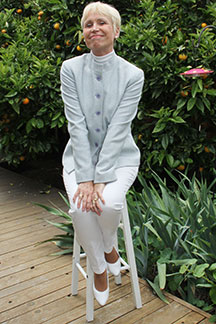
The following is a reprint of an interview that appeared in the Leipziger Volkszeitung Online (LVZ-Online) on October 6, 2014. Evelyn ter Vehn conducted the interview:

Von Berlin nach San Diego: J. Elke Ertle stellt ihre Geschichte in Leipzig vor. Leipzig. Sie stand auf der Westseite, als die Mauer in Berlin hochgezogen wurde. Trotzdem fuehlte sie sich aus vielen Gruenden eingegrenzt. Jutta Elke Ertle ist im Nachkriegs-Berlin aufgewachsen und wanderte spaeter nach Amerika aus. Im Rahmen der Lichtfest-Veranstaltungen kommt sie am Dienstag nach Leipzig und stellt ihr Buch “Walled-In” (Eingemauert) vor: Eine persoehnliche Reise in die Freiheit. LVZ-Online sprach mit der US-Autorin.

Ihre Kindheit war gepraegt vom Mauerbau-Erlebnis und dem Leben in einem geteilten Berlin. 1989 lebten Sie schon lange in Kalifornien. Wie haben Sie den Mauerfall erlebt?

Ich habe die Fernsehbilder gesehen, und ich fuehlte eine grosse Freude fuer alle, die diese Freiheit erlebten. Nie haette ich gedacht, dass es mit dem Mauerfall mal so schnell gehen koennte.

Was war der Ausloeser dafuer, ihre persoehnliche Berlin-Geschichte aufzuschreiben?

Mauern haben in meinem Leben eine besondere Bedeutung gehabt. Da gab es die Berliner Mauer, aber auch die elterlichen “Mauern”, die fuer mich als Teenager noch viel wichtiger waren. 1989 habe ich an all das wieder gedacht. Als ich in den Ruhestand ging, fing ich an, darueber zu schreiben. Und ploetzlich hatte ich 200 Seiten gefuellt.

Durch welche elterlichen Mauern haben Sie sich am staerksten eingeschraenkt gefuehlt?

Meine Eltern waren sehr gut  solange ich alle Regeln befolgte. Vor allem beim Thema Jungs waren sie aber viel strenger als die Eltern meiner Freundinnen. Andererseits hielten sie ein Studium nicht fuer wichtig, weil sie davon ausgingen, dass ich heiraten wuerde. Ich habe dann eine amerikanische Familie kennengelernt, in der es viel offener zuging. Da habe ich gewusst: Ich moechte das fuer mein Leben auch so hinkriegen, dass ich einmal fuer mich selbst entscheiden kann.

Sie sind dann tatsaechlich nach Amerika ausgewandert. Wie kam es dazu?

Eigentlich wollte ich nur ein Jahr nach San Diego, um meine Sprachkenntnisse zu vertiefen, vor allem aber wollte ich unabhaengiger werden. Aber mit einem Besuchervisum haette ich in den USA nicht arbeiten koennen, und ich musste mir alles selbst finanzieren. An meinem 21. Geburtstag bekam ich dann die Genehmigung fuer die Einwanderung.

Sie sind jetzt auf Lesereise in Deutschland. Was wollen Sie den Menschen mit auf den Weg geben?

Wenn jemand meine Freiheit einschraenken will, ohne die Berechtigung dazu zu haben, straeuben sich mir die Nackenhaare. Das Buch zeigt: Wenn man den Willen hat, etwas zu aendern, kann man auch viel schaffen.

Walled-In. A West Berlin Girl’s Journey to Freedom, 7. Oktober 2014, 19 Uhr, Deutsche Nationalbibliothek (Vortragsraum 2. Obergeschoss). Die Lesung wird vom US-Generalkonsulat Leipzig in Kooperation mit der Deutschen Nationalbibliothek veranstaltet. Das Grusswort haelt US-Generalkonsul Scott Riedmann. Die Veranstaltung findet auf Deutsch und Englisch statt, der Eintritt ist frei.


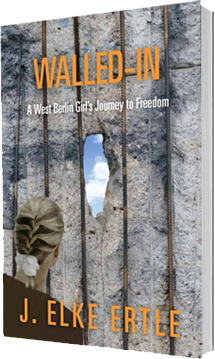
For a sneak peek at the first 20+ pages of my memoir, Walled-In: A West Berlin Girl’s Journey to Freedom, click “Download a free excerpt” on my home page and feel free to follow my blog about anything German: historic or current events, people, places or food.

Walled-In is my story of growing up in Berlin during the Cold War. Juxtaposing the events that engulfed Berlin during the Berlin Blockade, the Berlin Airlift, the Berlin Wall and Kennedy’s Berlin visit with the struggle against my equally insurmountable parental walls, Walled-In is about freedom vs. conformity, conflict vs. harmony, domination vs. submission, loyalty vs. betrayal.


 

State of Mind

Monday, October 20th, 2014

It’s all in the state of mind.

If you’d like to win, but think you can’t,

It’s almost a cinch you won’t.

If you think you’ll lose, you’ve lost,

For out in the world we find

Success being with a fellow’s will

If you think you’re outclassed, you are.

You’ve got to think high to rise.

You’ve got to be sure of yourself before

You can ever win a prize.

Life’s battles don’t always go

To the stronger or faster man,

But soon or late the man who wins

Is the one who thinks he can.

 Walter D. Wintle


For a sneak peek at the first 20+ pages of my memoir, Walled-In: A West Berlin Girl’s Journey to Freedom, click “Download a free excerpt” on my home page and feel free to follow my blog about anything German: Historical or current events, people, places or food.

Walled-In is my story of growing up in Berlin during the Cold War. Juxtaposing the events that engulfed Berlin during the Berlin Blockade, the Berlin Airlift, the Berlin Wall, and Kennedy’s Berlin visit with the struggle against my equally insurmountable parental walls, Walled-In is about freedom vs. conformity, conflict vs. harmony, domination vs. submission, loyalty vs. betrayal.


Jesse Owens and the big “snub”

Thursday, October 16th, 2014

Jesse Owens was an American track and field athlete and winner of four gold medals at the 1936 Summer Olympics in Berlin, Germany. He was the most successful athlete at the Olympic games and won the 100 meters, 200 meters, long jump and the 4×100 meter relay. Most of my life, I heard it said that Hitler refused to shake Owens’ hand. He snubbed Owens because he was Black. I recently learned that this is only a partial truth.

Did Hitler snub Jesse Owens?

I am not trying to minimize Hitler’s arrogance and mistaken belief in Aryan superiority. According to his chief architect Albert Speer, it is true that Hitler “was highly annoyed by the series of triumphs of the colored American runner, Jesse Owens. People whose ancestors came from the jungle were primitive, Hitler said with a shrug; their physiques were stronger than those of civilized whites and hence should be excluded from future games.” In other words, it is true that Hitler viewed Jesse Owens as racially inferior and, therefore, might very well have snubbed him, but reality apparently played out differently.

Jesse Owens and the 1936 Olympics

Jesse Owens was a true celebrity in Berlin, and the German public received him warmly. On the first day of the Olympics, Hitler shook hands with the German gold medal winners. Cornelius Johnson, another Black American athlete, won the first gold medal for the United States. Hitler left the stadium just before Johnson was to receive the award.There are several speculations relative to the reasons behind Hitler’s departure. In any case, Olympic committee officials prevailed upon Hitler to shake hands with all or none of the winners, and Hitler decided to skip all medal presentations from that day forward. Therefore, technically Hitler shunned Cornelius Johnson rather than Jesse Owens.

Jesse Owens and discrimination in the U.S.

Born in 1913, Jesse Owens was nine years old when his family moved from Alabama to Ohio. His given name was James Cleveland Owens, and he was called “J.C.” But because of his southern accent, J.C.’s new teacher in Ohio thought he had said his name was “Jesse.” And the name Jesse stuck for the rest of his life. Due to racial discrimination, Owens was forced to live off-campus with the other Black American athletes (he attended Ohio State University), eat in “black-only” restaurants, and stay in “black-only” hotels while traveling in the U.S. Following Jesse’s marvelous Olympic triumphs, President Franklin D. Roosevelt did not invite him to the White House. The Black athlete even had the ride the freight elevator at the Waldorf-Astoria in New York to attend his own reception. According to Jeremy Schaap, author of “Triumph: the Untold Story of Jesse Owens and Hitler’s Olympics” Owens later said, “Hitler didn’t snub me, it was FDR who snubbed me. The president didn’t even send me a telegram.”

Jesse Owens at the 1936 Olympics in Berlin, Germany (Bundesarchiv)

Jesse Owens at the 1936 Olympics in Berlin, Germany (Bundesarchiv)

Jesse Owens – finally honored

Neither President Franklin D. Roosevelt nor his successor, Harry S. Truman bestowed honors upon Jesse Owens. In 1955, President Dwight D. Eisenhower named him “Ambassador of Sports.” In 1984, the street leading to the Olympic Stadium in Berlin was renamed in his honor, and in 1990 and 1998, two U.S. postage stamps were issued to honor him.


For a sneak peek at the first 20+ pages of my memoir, Walled-In: A West Berlin Girl’s Journey to Freedom, click “Download a free excerpt” on my home page and feel free to follow my blog about anything German: historic or current events, people, places or food.

Walled-In is my story of growing up in Berlin during the Cold War. Juxtaposing the events that engulfed Berlin during the Berlin Blockade, the Berlin Airlift, the Berlin Wall and Kennedy’s Berlin visit with the struggle against my equally insurmountable parental walls, Walled-In is about freedom vs. conformity, conflict vs. harmony, domination vs. submission, loyalty vs. betrayal.


Battle of Wits

Monday, October 13th, 2014

I would challenge you to a battle of wits, but I see you are unarmed!

–William Shakespeare


For a sneak peek at the first 20+ pages of my memoir, Walled-In: A West Berlin Girl’s Journey to Freedom, click “Download a free excerpt” on the home page of http://www.walled-in-berlin.com. Walled-In is a story of growing up in Berlin during the Cold War.


Love-It-or-Leave-It Sauerkraut

Thursday, October 9th, 2014

Because of my German roots I have been called a “Kraut” a time or two. At first I was surprised. I am not exactly a Sauerkraut-lover. Maybe some Germans are, but in my house Sauerkraut was eaten twice a year at most. And then we did not eat it because it was a family favorite, we ate it–mainly in the winter–because fresh vegetables were difficult to obtain or exorbitantly expensive. Actually, the French and Americans have a higher per-capita consumption of Sauerkraut than the Germans.

What is Sauerkraut?

Simply put, Sauerkraut is fermented cabbage. Traditionally, it is shredded, salted and then left to ferment for 4-6 weeks. During fermentation, microbes produce lactic acid. Enzymes break the cabbage into smaller, more digestible molecules and the lactic acid, which acts as a preservative, kills unwanted organisms. Food manufacturers often heat it and use vinegar in lieu of salt. In that case, we are looking at pickled – not fermented –  Sauerkraut.

Sauerkraut – not a German invention

Although the word Sauerkraut is German for “sour cabbage,” the Germans didn’t invent the process. It is thought that laborers building the Great Wall of China over 2,000 years ago began to ferment shredded cabbage in rice wine. Most likely, Genghis Khan introduced the process in Russia sometime in the 13th century. From there, it continued to spread westward. By the 16th century, Germanic tribes began fermenting cabbage. But according to Hans Hermann von Wimpffen, author of “Sauerkraut,” the Alsatians in France, not the Germans, turned fermented cabbage with sausage and bacon into their national dish. Early German and Dutch settlers brought their recipes for Sauerkraut to the Americas.

Sauerkraut with sausage. www.walled-in-berlin.com

Sauerkraut with sausage. www.walled-in-berlin.com

Sauerkraut – health effects

Sauerkraut, like other fermented foods like yogurt, pickles, and tempeh, are said to have important health effects. They provide fiber and is a potent source of vitamin C and several B vitamins. Lactic acid improves the intestinal flora and helps break down proteins. The enzymes break molecules into building blocks that can more easily be absorbed and used by the body. The immune system benefits because beneficial microorganisms populate the stomach and prevent harmful organisms from entering. Better health is the all-around result.

My favorite Sauerkraut recipe calls for fried apples, onions and pork sausage.


For a sneak peek at the first 20+ pages of my memoir, Walled-In: A West Berlin Girl’s Journey to Freedom, click “Download a free excerpt” on my home page and feel free to follow my blog about anything German: historic or current events, people, places or food.

Walled-In is my story of growing up in Berlin during the Cold War. Juxtaposing the events that engulfed Berlin during the Berlin Blockade, the Berlin Airlift, the Berlin Wall and Kennedy’s Berlin visit with the struggle against my equally insurmountable parental walls, Walled-In is about freedom vs. conformity, conflict vs. harmony, domination vs. submission, loyalty vs. betrayal. 


Garden of Life

Monday, October 6th, 2014

Friends are “annuals” that need seasonal nurturing to bear blossoms. Family is a “perennial” that comes up year after year, enduring the droughts of absence and neglect. There’s a place in the garden of life for both of them.

–Erma Bombeck


For a sneak peek at the first 20+ pages of my memoir, Walled-In: A West Berlin Girl’s Journey to Freedom, click “Download a free excerpt” on the home page of http://www.walled-in-berlin.com. Walled-In is a story of growing up in Berlin during the Cold War.


A Man Called Martin Luther

Thursday, October 2nd, 2014

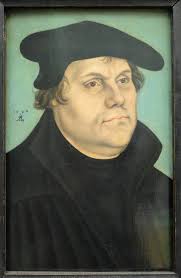
Martin Luther, German monk, Catholic priest, and professor of theology was born in 1483 and died in 1546. By questioning some of the basic tenets of the Roman Catholic Church he laid the groundwork for becoming one of the most influential figures in the Protestant Reformation movement.

Martin Luther – early years

Martin Luther was born in the town of Eisleben in southeast Germany, which was part of the Holy Roman Empire at the time. He initially entered the University of Erfurt to pursue a legal career. But at age 22 he had a life-changing experience that set him on a different course. One day, he was caught in a horrendous thunderstorm. A lightening bolt struck near him. Luther cried out to St. Anne, the patron saint of miners, “Save me, St. Anne, and I’ll become a monk!” http://www.biography.com/people/martin-luther-9389283. He was spared and took his promise seriously. He left law school and entered a friary in Erfurt. In 1507, he was ordained to the priesthood, became the dean of the newly founded University of Wittenberg one year later, and was awarded his Doctor of Theology in 1512.

Martin Luther

Martin Luther

Martin Luther – his 95 theses

When a papal representative was sent to Germany in 1516 to sell indulgences to raise money to rebuild St. Peter’s Basilica in Rome, Luther vehemently objected. Indulgences were grants for good works. They were given by the pope. They could also be purchased by donating money to the church and then be used to temporarily relieve punishment for minor sins. Luther felt this practice was wrong and protested by nailing a sheet of paper on the door of the All Saint’s Church in Wittenberg. The paper contained 95 Theses. Thanks to the newly invented printing press, his theses spread throughout Germany and Europe within weeks and sparked the Reformation. Throughout 2017, Germany celebrates the 500th anniversary of Martin Luther’s life and theses. http://www.walled-in-berlin.com/j-elke-ertle/500th-anniversary-martin-luthers-theses/

Martin Luther – later life

When Martin Luther refused to retract his theses, the Catholic Church excommunicated him in 1921. At age 41, he married the 26-year-old former nun, Katharina von Bora. He devoted his life to organizing the new church. He wrote a German Mass, developed the catechism as a teaching method, translated the New and the Old Testament into German, and wrote numerous hymns. His hymn Vom Himmel hoch da komm’ ich her (From Heaven Above to Earth I Come), based on Luke 2:11-12, is still sung every Christmas season. In his later years, Luther grew increasingly bitter toward several segments of society, particularly Jews and Muslims. According to the prevailing view among historians, the Nazis later incorporated his anti-Jewish rhetoric. He died at the age of 62.


For a sneak peek at the first 20+ pages of my memoir, Walled-In: A West Berlin Girl’s Journey to Freedom, click “Download a free excerpt” on my home pag and feel free to follow my blog about anything German: historic or current events, people, places or food.

Walled-In is my story of growing up in Berlin during the Cold War. Juxtaposing the events that engulfed Berlin during the Berlin Blockade, the Berlin Airlift, the Berlin Wall and Kennedy’s Berlin visit with the struggle against my equally insurmountable parental walls, Walled-In is about freedom vs. conformity, conflict vs. harmony, domination vs. submission, loyalty vs. betrayal.


The Best A Writer can do

Monday, September 29th, 2014

Writers don’t often say anything that readers don’t already know, unless it’s a news story. A writer’s greatest pleasure is revealing to people things they knew but did not know they knew or did not realize everyone else knew, too. This produces a warm sense of fellow feeling and is the best a writer can do.

–Andy Rooney


For a sneak peek at the first 20+ pages of my memoir, Walled-In: A West Berlin Girl’s Journey to Freedom, click “Download a free excerpt” on the home page of http://www.walled-in-berlin.com. Walled-In is a story of growing up in Berlin during the Cold War.


Mr. Volkswagen: Heinrich Nordhoff

Thursday, September 25th, 2014

Heinrich Nordhoff was born in Hildesheim, Germany, in 1899. As a young man in 1930, he left BMW (Bayerische Motorenwerke) to accept an executive position at the competition, the Opel AG. General Motors (GM) had become the majority stakeholder in Opel the year before. During World War II, most of Opel’s factories were shut down. The exception was their truck manufacturing division in Brandenburg, managed for GM by Nordhoff. At the end of the war, the truck division fell into the Russian zone of divided post-war Germany. The plant was dismantled and shipped to Russia. Nordhoff fled to the West. Having been trained by GM, he hoped for a leading position at the newly rebuilt Opel plant in Ruesselheim in the West. But the Americans told him that he would never again build cars. He should consider himself lucky to get a job sweeping the street.

Nordhoff turns to Volkwagen

Until GM had given Nordhoff the cold shoulder he had been completely disinterested in associating himself with the Volkswagen, that “Nazi car.” http://walled-in-berlin.com/j-elke-ertle/those-tough-little-beetles/.However, when British occupation forces offered him the management of the badly damaged Volkswagen plant in Wolfburg, he accepted. On January 1, 1948, a day before his 50th birthday, he became managing director of Volkswagen. Nordhoff never looked back. During his first year, Volkswagen doubled the production of the Beetle to 20,000 cars. By 1950 they produced 100,000, and by 1955 1 million had been built. Despite his GM training, which subscribed to multi-market marketing, Nordhoff took the opposite approach. He believed in continuous improvement of the car’s underpinnings while retaining the humpback styling. http://www.spiegel.de/spiegel/print/d-46106820.html

Nordhoff and the American Market

1969 Volkswagen Beetle, Photo © J. Elke Ertle

1969 Volkswagen Beetle Photo © J. Elke Ertle

Within five years after World War II, Nordhoff exported the Beetle to the USA. When he first traveled to New York to promote the car, custom agents just laughed when they took a look at his promotional drawings. They told him that no one in the world would buy a car like that and charged him $30 in fees. The fees were levied because customs rejected Nordhoff’s claim that the drawings were promotional materials. The agents declared them to be art graphics. http://www.spiegel.de/spiegel/print/d-46106820.html But Nordhoff did not give up. He had come to believe in the Beetle despite the British Officers’ warning that the Beetle “has more flaws than a dog has fleas.” As we know, the Volkswagen Beetle went on to become the symbol of West Germany’s post-World War II Wirtschaftswunder – economic wonder.

The End of the Beetle

By the late sixties, however, the Beetle was getting serious competition from Japanese, American, and other European models. With 15 million sold in 1972, production of the Volkswagen Beetle had exceeded even that of Ford’s Model T. The last Beetle was sold in Mexico in 2003. Visit also http://www.walled-in-berlin.com/j-elke-ertle/those-tough-little-beetles/http://www.walled-in-berlin.com/j-elke-ertle/volkswagen-when-greed-meets-technology/

Now, Volkswagen is hoping to make a comeback with the production of an all-electric, fully integrated e-generation bus. The vehicle should hit the market by 2022 and is intended to make Volkswagen a worldwide bestseller once again. http://www.walled-in-berlin.com/j-elke-ertle/volkswagen-comeback-e-generation-bus/


For a sneak peek at the first 20+ pages of my memoir, Walled-In: A West Berlin Girl’s Journey to Freedom, click “Download a free excerpt” on my home page and feel free to follow my blog about anything German: historic and current events, people, places and food.

Walled-In is my story of growing up in Berlin during the Cold War. Juxtaposing the events that engulfed Berlin during the Berlin Blockade, the Berlin Airlift, the Berlin Wall and Kennedy’s Berlin visit with the struggle against my equally insurmountable parental walls, Walled-In is about freedom vs. conformity, conflict vs. harmony, domination vs. submission, loyalty vs. betrayal.

 

Werner von Siemens – self-made man

Thursday, September 18th, 2014

Ernst Werner Siemens, German industrialist, researcher and inventor, was a self-made man. Having been born in 1816 as the fourth of 14 children in a tenant farmer family precluded his pursuit of extensive higher education. But this disadvantage did not keep Siemens from turning his dreams into reality. Today’s Siemens AG is the largest engineering- and electronics company in Europe. The company offers products and services relative to construction, energy, lighting, transportation, logistics and medicine. The firm’s corporate headquarters is located in Munich. Siemens AG has operations in close to 190 countries and owns approximately 285 production and manufacturing facilities. Werner von Siemens passed away in 1892.

Werner von Siemens in 1872

Werner von Siemens in 1872

Siemens – the industrialist and inventor

To become an engineer, Siemens needed an education. To that end he joined the Prussian army and soon had acquired sufficient knowledge to greatly improve the army’s communication system. For one thing, he constructed a point telegraph that was far superior to anything the army had used before. Even before he left the army at the age of 31, he had formed a partnership with master mechanic Johann Georg Halske. In 1848, one year before he left the army, the Siemens & Halske Telegraph Construction Company built the first long-distance telegraph line in Europe. It covered 310 miles from Berlin to Frankfurt am Main.

In 1879, the firm presented the first electric railway at the Berlin Trade Fair, and the first electric streetlights were installed in Berlin’s Kaisergalerie. In 1880, Siemens built the first electric elevator  in Mannheim, and in 1881 the world’s first electric streetcar went into service in Berlin-Lichterfelde.

Siemens – the researcher

Ernst Werner Siemens also pursued intensive scientific research. In 1866 he made what was probably his most important contribution to electrical engineering when he reported having discovered the dynamo-electric principle.

The firm goes International

Thereafter, business opportunities multiplied. Two years later, he had his younger brother, Carl Wilhelm Siemens, open a branch office in London, England. In 1855, another brother, Carl Heinrich Siemens, opened a company branch in St. Petersburg, Russia. In 1867, the company completed the Indo-European telegraph line from Calcutta to London. Because of his many achievements, German Emperor Friedrich III raised Werner Siemens to nobility in 1888. He was henceforth known as Werner von Siemens.

Siemens – social reformer

Siemens was also far ahead of his time with numerous social initiatives. In 1866, he first issued an inventory premium. It was the forerunner of today’s profit sharing plans. Six years later, he introduced a company pension plan, which included a widows and orphans fund for surviving dependents. When asked why he invested so much in his employees, he replied that it reinforced employees’ loyalty to the company and, therefore, should be considered a “healthy self interest.”


For a sneak peek at the first 20+ pages of my memoir, Walled-In: A West Berlin Girl’s Journey to Freedom, click “Download a free excerpt” on my home page and feel free to follow my blog about anything German: historic and current events, people, places and food.

Walled-In is my story of growing up in Berlin during the Cold War. Juxtaposing the events that engulfed Berlin during the Berlin Blockade, the Berlin Airlift, the Berlin Wall and Kennedy’s Berlin visit with the struggle against my equally insurmountable parental walls, Walled-In is about freedom vs. conformity, conflict vs. harmony, domination vs. submission, loyalty vs. betrayal.