Archive for the ‘J. Elke Ertle’ Category

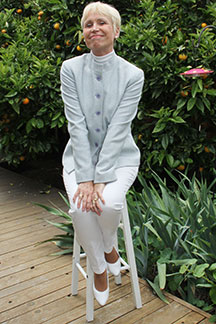
Age is a work of art

Monday, November 24th, 2014

Youth is the gift of nature, but age is a work of art.

–Stanislaw Jerzy Lec


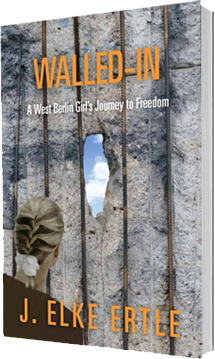
For a sneak peek at the first 20+ pages of my memoir, Walled-In: A West Berlin Girl’s Journey to Freedom, click “Download a free excerpt” on my home page and feel free to follow my blog about anything German: historic or current events, people, places or food.

Walled-In is my story of growing up in Berlin during the Cold War. Juxtaposing the events that engulfed Berlin during the Berlin Blockade, the Berlin Airlift, the Berlin Wall and Kennedy’s Berlin visit with the struggle against my equally insurmountable parental walls, Walled-In is about freedom vs. conformity, conflict vs. harmony, domination vs. submission, loyalty vs. betrayal.


Schloss Cecilienhof – Cecilienhof Palace

Thursday, November 20th, 2014

Schloss Cecilienhof became international known as the site of the Potsdam Conference in 1945. Prior to the end of World War II, the palace had served as the home of Crown Prince Wilhelm, his wife, Duchess Cecilie von Mecklenburg-Schwerin and their six children. Located southwest of Berlin, Germany, the English Tudor-style building resembles a Grand English Country Manor with its half-timbered walls, bricks and many chimneys. With a total of 176 rooms, Cecilienhof is considerably larger than it seems.

Schloss Cecilienhof - Cecilienhof Palace

Schloss Cecilienhof – Cecilienhof Palace

Schloss Cecilienhof’s Pre-1945 History

The castle was the last palace to be built by the Hohenzollern, a dynasty that ruled Prussia and Germany for 500 years. The German Emperor Wilhelm II had Schloss Cecilienhof built for his eldest son, Crown Prince Wilhelm. Construction began in 1914 and was completed in 1917. After only one happy year together in their new home, the royal couple remained separated for the rest of their lives. Even before the revolution of 1918, the Crown Prince rarely found time to be with his family. The Duchess and her six children continued to live at the palace from time to time until 1920 when Schloss Cecilienhof was confiscated. The royal couple’s two oldest sons, Wilhelm and Louis Ferdinand, remained at castle to attend public school in Potsdam. But when the Red Army drew close to Berlin in February of 1945, the Duchess and all of her children fled without being able to salvage many of their possessions. At the end of World War II, the Soviets seized Cecilienhof, which was located within the Soviet Zone of Germany.

Schloss Cecilienhof and the Potsdam Conference

From July 17 to August 2, 1945, US President Harry S. Truman, British Prime Minister Winston Churchill and General Secretary of the Communist Party’s Central Committee Joseph Stalin convened at the Schloss Cecilienhof to decide the future of Germany. The three Allied powers decided to meet at the palace because the capital itself was too heavily damaged.

Prior to the Potsdam Conference, thirty-six rooms and the Great Hall were renovated and furnished with furniture from other Potsdam palaces. The Hohenzollern’s furniture had been removed by the Soviets and stored elsewhere. Cecilie’s music salon and writing room, Wilhelm’s smoking room, library and breakfast room as well as the Great Hall (where the Potsdam Agreement was signed) were among the rooms that were renovated and used during the Potsdam Conference. The various delegations were housed in the suburb of Potsdam-Babelsberg.

The Great Hall at Schloss Cecilienhof where the Potsdam Agreement was signed

The Great Hall at Schloss Cecilienhof where the Potsdam Agreement was signed

Schloss Cecilienhof’s Post-1945 History

After the Potsdam Conference had ended, Soviet troops used the palace as a clubhouse for a while. Later, Schloss Cecilienhof was handed over to the state of Brandenburg. In 1952, a memorial for the Conference was set up in the former private chambers of Crown Prince Wilhelm and Duchess Cecilie. The East German government used the palace for state receptions and other important meetings. In 1960, part of the castle was turned into a hotel. Today, part of Schloss Cecilienhof still serves as a museum. The hotel is temporarily closed for renovations and expects to reopen in 2018.

Since 1990, Schloss Cecilienhof is part of the Palaces and Parks of Potsdam and Berlin UNESCO World Heritage Site.


For a sneak peek at the first 20+ pages of my memoir, Walled-In: A West Berlin Girl’s Journey to Freedom, click “Download a free excerpt” on my home page and feel free to follow my blog about anything German: historic or current events, people, places or food.

Walled-In is my story of growing up in Berlin during the Cold War. Juxtaposing the events that engulfed Berlin during the Berlin Blockade, the Berlin Airlift, the Berlin Wall and Kennedy’s Berlin visit with the struggle against my equally insurmountable parental walls, Walled-In is about freedom vs. conformity, conflict vs. harmony, domination vs. submission, loyalty vs. betrayal.


What is affluence?

Monday, November 17th, 2014

“Affluence is having more clocks than time.”

I saw this sign in a clock repair shop in Munich. Somehow it rings true, doesn’t it?


For a sneak peek at the first 20+ pages of my memoir, Walled-In: A West Berlin Girl’s Journey to Freedom, click “Download a free excerpt” on my home page and feel free to follow my blog about anything German: historic or current events, people, places or food.

Walled-In is my story of growing up in Berlin during the Cold War. Juxtaposing the events that engulfed Berlin during the Berlin Blockade, the Berlin Airlift, the Berlin Wall and Kennedy’s Berlin visit with the struggle against my equally insurmountable parental walls, Walled-In is about freedom vs. conformity, conflict vs. harmony, domination vs. submission, loyalty vs. betrayal.

A Berliner is a Doughnut, myth or fact?

Thursday, November 13th, 2014

The myth persists that President John F. Kennedy said, “I am a doughnut,” when he spoke the famous words,

All free men, wherever they live, are citizens of Berlin, and, therefore, as a free man, I take pride in the words, “Ich bin ein Berliner.”

I stood in the crowd in front of Schoeneberger Rathaus in West Berlin in June of 1963. Let me assure you that none of us in the audience thought for one minute that JFK had misspoken. Here is why:

A Berliner

True, a Berliner Pfannkuchen, in short a Berliner, is a jelly filled and sugar-glazed bakery item, akin to our well-loved doughnut. So far – so good. But, as a long-time US citizen who was born in Berlin, I still respond to the question what area in Germany I originally came from with, “Oh, don’t you know, I am a Berliner.” Same word – different context. I hope no one ever assumes that I like to refer to myself as a doughnut. And John F. Kennedy knew what he was saying as well. In fact, translators who knew the German language very well had written the phrase for him.

A Berliner Pfannkuchen - in short a "Berliner,"Photo by J. Elke Ertle © 2014

A Berliner Pfannkuchen – in short a “Berliner,” Photo by J. Elke Ertle © 2014

When President John F. Kennedy made that statement, “Ich bin ein Berliner” in his speech in West Berlin, his German audience understood without question what his words meant. They meant, “I am a citizen of Berlin.” No one laughed at or misconstrued his words. Instead, the audience understood him to say that America would stand by them in their Cold War battle against the Berlin Wall and a divided Germany.

An American

Let’s take this persistent myth one step further. In Berlin (maybe also in some other German cities), there is another bakery item, called an American. Americans are a little larger and flatter than Berliners (no pun intended). Americans are not jelly filled but are also sugar-glazed. And now the most interesting part –  Americans are available with a white sugar glaze or a chocolate sugar glaze and are called light Americans or dark Americans, respectively.

A light "American," Photo by J. Elke Ertle © 2014

A light “American,” Photo by J. Elke Ertle © 2014

Next time you call yourself an American when abroad, aren’t you glad that the rest of the world isn’t wondering whether you are referring to yourself as an US citizen or as a flattened doughnut? So let’s put that stubborn myth to rest once and for all.


For a sneak peek at the first 20+ pages of my memoir, Walled-In: A West Berlin Girl’s Journey to Freedom, click “Download a free excerpt” on my home page and feel free to follow my blog about anything German: historic and current events, people, places and food.

Walled-In is my story of growing up in Berlin during the Cold War. Juxtaposing the events that engulfed Berlin during the Berlin Blockade, the Berlin Airlift, the Berlin Wall and Kennedy’s Berlin visit with the struggle against my equally insurmountable parental walls, Walled-In is about freedom vs. conformity, conflict vs. harmony, domination vs. submission, loyalty vs. betrayal.



Time is like a river

Monday, November 10th, 2014

Time is like a river. You cannot touch the water twice, because the flow that has passed will never pass again.


For a sneak peek at the first 20+ pages of my memoir, Walled-In: A West Berlin Girl’s Journey to Freedom, click “Download a free excerpt” on the home page of http://www.walled-in-berlin.com. Walled-In is a story of growing up in Berlin during the Cold War.


Reunification exuberance turns to gloom

Thursday, November 6th, 2014

Last week, we talked about the fall of the Berlin Wall on November 9, 1989 and the reunification of East and West less than one year later. We also alluded to the financial and social costs that unity would require.

Financial and social costs of reunification

Immediately following reunification, an agency was created to privatize the “people’s property”, the state-owned enterprises in the former East. This agency was called Treuhandanstalt. It soon became clear that the average productivity of the German Democratic Republic (East Germany) was equal to only one-third of that of the Federal Republic of Germany (West Germany). The profit from privatization that had been expected to come close to DM 600 billion (about €300 billion) fell short by far. In fact, the expected profit turned into an actual deficit of DM 230 billion (€115 billion). That meant that privatization could no longer pay for the needed infrastructure in the new federal states, as had been anticipated. To make matters worse, factories in the former East were so outdated that they had to be closed and/or rebuilt resulting in massive unemployment. With little initial productivity in the East, the population in the former West was forced to bear most of the financial costs of reunification. The population in the former East was forced to bear most of the social costs of reunification. Soon, reunification exuberance turned into gloom on both sides.

Aufbau Ost project.

Then there was the Aufbau Ost project. It consisted for the most part of the construction of infrastructure and telecommunication facilities in the former East, preservation of cultural assets, environmental projects, and the renovation of inner-city residential quarters in Dresden, Leipzig, Chemnitz, and Halle. The initial lack of such assets in the five new federal states resulted in an immediate exodus from east to west. According to a recent statement by German Chancellor Angela Merkel, the exodus has finally stopped. But it took 25 years before the population outflow in the new federal states is equal to the population influx.

Today, 25 years after reunification, great progress has been made in the former East, both economically and socially. The worst is over. Still, enormous challenges remain. But the people from East and West are now prepared to face them together.


For a sneak peek at the first 20+ pages of my memoir, Walled-In: A West Berlin Girl’s Journey to Freedom, click “Download a free excerpt” on my home page and feel free to follow my blog about anything German: historic and current events, people, places and food.

Walled-In is my story of growing up in Berlin during the Cold War. Juxtaposing the events that engulfed Berlin during the Berlin Blockade, the Berlin Airlift, the Berlin Wall and Kennedy’s Berlin visit with the struggle against my equally insurmountable parental walls, Walled-In is about freedom vs. conformity, conflict vs. harmony, domination vs. submission, loyalty vs. betrayal.


Trees are poems

Monday, November 3rd, 2014

Trees are poems that nature writes into the sky.

–Anonymous

Photo by J. Elke Ertle © 2013

Photo by J. Elke Ertle © 2013


For a sneak peek at the first 20+ pages of my memoir, Walled-In: A West Berlin Girl’s Journey to Freedom, click “Download a free excerpt” on the home page of http://www.walled-in-berlin.com. Walled-In is a story of growing up in Berlin during the Cold War.


German reunification

Thursday, October 30th, 2014

The Fall of the Berlin Wall

At the beginning of 1989 German reunification was on no one’s mind. Hardly anybody in Germany or elsewhere anticipated that the Berlin Wall would disappear in the near future. During the course of the preceding twenty-eight years, the East German government had continually “improved” the Wall. Now, in its forth generation, the Berlin Wall was higher, stronger, and even less surmountable than ever before.

Reunification within one year

On October 7 of the same year, the German Democratic Republic (East Germany) celebrated its 40th anniversary. Despite preceding unrest and demonstrations, no one expected it to be the GDR’s last anniversary celebration. But only one year later, on October 3, 1990, the two distinct German states were reunited after forty years of separation. East Germany had collapsed like a house of cards in the space of just a few months, and the Federal Republic of Germany (West Germany) had added five new federal states by accession. They were: Brandenburg, Mecklenburg-Vorpommern, Saxony, Saxony-Anhalt and Thuringia.

The cost of reunification

Initially, reunification brought forth nothing but exuberance among the people on both sides of the dividing line. East and West Germans assumed that the reunification process could turn into an administrative nightmare, but that it would be a manageable undertaking. But it tuned out that the social and financial costs of reunification were enormous. Within a brief period, people in the East and West were forced to come to terms with their past, present and future without so much as a precedent in history.

Next time, I will discuss some of the problems East and West Germans had to face during the reunification process and for many years thereafter.


For a sneak peek at the first 20+ pages of my memoir, Walled-In: A West Berlin Girl’s Journey to Freedom, click “Download a free excerpt” on my home page and feel free to follow my blog about anything German: historic or current events, people, places or food.

Walled-In is my story of growing up in Berlin during the Cold War. Juxtaposing the events that engulfed Berlin during the Berlin Blockade, the Berlin Airlift, the Berlin Wall and Kennedy’s Berlin visit with the struggle against my equally insurmountable parental walls, Walled-In is about freedom vs. conformity, conflict vs. harmony, domination vs. submission, loyalty vs. betrayal.


Success and Enthusiasm

Monday, October 27th, 2014

Success is going from failure to failure without loss of enthusiasm.

–Sir Winston Churchill


For a sneak peek at the first 20+ pages of my memoir, Walled-In: A West Berlin Girl’s Journey to Freedom, click “Download a free excerpt” on the home page of http://www.walled-in-berlin.com. Walled-In is a story of growing up in Berlin during the Cold War.


Litfass and outdoor advertising

Thursday, October 23rd, 2014

Litfass ends messy advertising

By the mid-1800s, Berlin-born Ernst Litfass was tired of the rampant, untidy advertising and graffiti that had become the norm in his hometown. People routinely hung notices and other materials on walls, doors, fences and trees. It made the city look cluttered and unkempt. In hopes of putting an end to these objectionable practices, the printer and publisher approached city officials with an idea: Litfass proposed the erection of columns throughout the city to which residents would attach their notices and messages.

Litfass gains a monopoly

After years of negotiations, on 5 December 1854, Berlin’s President of Police, Karl Ludwig von Hinkeldey, finally granted permission for Litfass to erect the first of his proposed “advertisement columns.” In fact, the City of Berlin issued him a ten-year monopoly on these columns. In return, Litfass had to agree to also publicize public service announcements. The next year, in 1855, the first 100 columns were erected, bearing the name of their inventor – Litfass Saeulen (Litfass columns). The idea caught on. Both parties to the agreement realized that they benefitted from this new method of advertising: City fathers found that it helped them to censor public information while advertisers could rest assured that their announcements remained visible throughout the rental period without someone obscuring their ads. Ten years later, Litfass had an additional 50 columns erected.

Litfass Saeule in Berlin, Photo by J. Elke Ertle © 2014

Litfass Saeule in Berlin, Photo by J. Elke Ertle © 2014


Litfass Saeulen become commonplace

Litfass grew rich fast. After his death in Wiesbaden in 1874, the idea of putting up Litfass Saeulen quickly spread to other German cities. Today, the columns can be found in other countries as well. In France, they are named Morris after Gabriel Morris. Morris columns were originally built by La Société Fermière des Colonnes Morris but are built and maintained today by the JCDecaux company. Although Litfass Saeulen are generally used to display advertisements in the form of posters pasted to the column, such as theater, cinema, nightclub, and concert announcements, some are motorized and rotate very slowly. Others serve as vents for underground services; still others are equipped with a hidden door so that the interior can used for storage purposes.


For a sneak peek at the first 20+ pages of my memoir, Walled-In: A West Berlin Girl’s Journey to Freedom, click “Download a free excerpt” on my home page and feel free to follow my blog about anything German: historic and current events, people, places and food.

Walled-In is my story of growing up in Berlin during the Cold War. Juxtaposing the events that engulfed Berlin during the Berlin Blockade, the Berlin Airlift, the Berlin Wall and Kennedy’s Berlin visit with the struggle against my equally insurmountable parental walls, Walled-In is about freedom vs. conformity, conflict vs. harmony, domination vs. submission, loyalty vs. betrayal.