
Archive for the ‘J. Elke Ertle’ Category

Same Procedure as Last Year?

Wednesday, December 31st, 2014

If you ask any German, “The Same Procedure as Last Year?” chances are he will shoot back, “The Same Procedure as Every Year, James.” The reason is that half of all Germans have watched the 18-minute black-and-white British comedy, Dinner for One before. Even if they don’t speak any English, they probably have watched the skit in English (no subtitles or dubbing) once a year for years because it is a beloved German New Year’s Eve tradition. While Americans watch the clock wind down and break into Auld Lang Syne to ring in the New Year, Germans turn on the TV and watch Dinner for One.

History of Dinner for One

The Englishman, Lauri Wylie, wrote the comedy for theatre in the 1920s. Forty years later, in 1962, British actors Freddie Frinton and May Warden performed the farce in Blackpool, England. Frinton played the butler and Warden the elderly aristocrat. German entertainer, Peter Frankenfeld, hired the pair on the spot for a live performance on his show at the Theater am Besenbinderhof in Hamburg, Germany. The following year, the German television station Norddeutscher Rundfunk recorded Frinton and Warden in a single take. They felt that the pair’s performance transcended all language barriers, not requiring translation. The network simply had a narrator give a brief introduction in German to set the scene. According to the Guinness Book of World Records, the skit became the most frequently aired television program ever.

Story line

Miss Sophie celebrates her 90th birthday by hosting a dinner party for her friends Sir Toby, Admiral von Schneider, Mr. Pommeroy and Mr. Winterbottom. Unfortunately her guests have died years ago. But the dinner party must go on and follow the same procedure as every year. James, the butler, now has to take the places of Miss Sophie’s four long-dead friends. He not only has to serve the appropriate drinks along with each course, but he also has to impersonate each guest and empty that guest’s glass. With four dinner guests and four courses he has to down sixteen drinks. Slowly, James’ refined demeanor begins to slip. He looses his coordination and slurs his speech while Miss Sophie remains oblivious. With each course James asks,

“The same procedure as last year, Miss Sophie?” and Miss Sophie always replies,

“The same procedure as every year, James!”

New Year’s Eve Tradition

Although Dinner for One has been a standing New Year’s Eve tradition in Germany since 1972, it is virtually unknown in most English-speaking countries, including the United States, Canada and even Great Britain. Instead the performance is aired in many European countries, Australia and South Africa. If you haven’t seen this comedy, you have missed a gem. I watch Dinner for One once a year and never fail to find it hilarious. Click here to see Freddie Frinton and May Warden in action: www.youtube.com/watch?v=b1v4BYV-YvA.


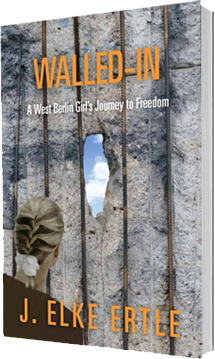
For a sneak peek at the first 20+ pages of my memoir, Walled-In: A West Berlin Girl’s Journey to Freedom, click “Download a free excerpt” on my home page and feel free to follow my blog about anything German: historic and current events, people, places and food.

Walled-In is my story of growing up in Berlin during the Cold War. Juxtaposing the events that engulfed Berlin during the Berlin Blockade, the Berlin Airlift, the Berlin Wall and Kennedy’s Berlin visit with the struggle against my equally insurmountable parental walls, Walled-In is about freedom vs. conformity, conflict vs. harmony, domination vs. submission, loyalty vs. betrayal.


Success defined

Monday, December 29th, 2014

Success is when you look back at your life and the memories make you smile.


For a sneak peek at the first 20+ pages of my memoir, Walled-In: A West Berlin Girl’s Journey to Freedom, click “Download a free excerpt” on my home page and feel free to follow my blog about anything German: Historical or current events, people, places, or food.

Walled-In is my story of growing up in Berlin during the Cold War. Juxtaposing the events that engulfed Berlin during the Berlin Blockade, the Berlin Airlift, the Berlin Wall, and Kennedy’s Berlin visit with the struggle against my equally insurmountable parental walls, Walled-In is about freedom vs. conformity, conflict vs. harmony, domination vs. submission, loyalty vs. betrayal.


Don’t follow the path

Monday, December 22nd, 2014

Don’t follow the path. Walk where there is no path and leave a new track.

–Jean  Paul


For a sneak peek at the first 20+ pages of my memoir, Walled-In: A West Berlin Girl’s Journey to Freedom, click “Download a free excerpt” on the home page of http://www.walled-in-berlin.com. Walled-In is a story of growing up in Berlin during the Cold War.


Christmas calendar and Advent wreath

Thursday, December 18th, 2014

When I grew up in Berlin, Germany, the children’s Christmas season started with an Adventskalender (Christmas calendar or literally “advent” calendar).

Advent calendar

In those days, Christmas calendars were made from a piece of cardboard that had a paper backing. Twenty-five “windows” were cut into the winter-themed piece of cardboard. When opened, each window revealed a Christmas symbol or scene. Like other children, during the first twenty-five days of December, I was allowed to open one window each day. The window for Christmas Day was extra large and usually revealed a picture of the Nativity. Today’s Christmas calendars are often filled with chocolates or candy, and children find a sweet treat behind each window.

Advent

The Advent calendar helped me understand how close we were to Christmas Eve and Christmas Day, my two favorite days of the year. Having grown up in a secular family, I did not realize then that the true purpose of advent is to prepare for the celebration of the birth of Jesus. The word “Advent” comes from the Latin word adventus, which means “coming.” It was meant to be a religious celebration, but for me it always was a secular tradition. For information on the religious tradition visit http://www.christianity.com/christian-life/christmas/what-is-advent.html

Advent wreath

The second wonderful pre-Christmas tradition I remember from my childhood is our Advent wreath (Adventskranz). Every year on the fourth Sunday before Christmas, a wreath of simple fir branches would magically appear in our house. Its fragrant branches held four red candles and golden ribbons, tied into bows. We lit the first candle in the afternoon of the fourth Sunday before Christmas while sipping a cup of coffee and indulging in a piece of Stollen, a traditional Christmas treat. The following Sunday, we lit two candles, then three until we could light all four candles on the last Sunday before Christmas.

Third Advent - three candles are lit

Third Advent – three candles are lit

These two traditions, the Advent calendar and the Advent wreath, preceded Christmas every year in our home and had me anticipate my favorite two days for weeks in advance.


For a sneak peek at the first 20+ pages of my memoir, Walled-In: A West Berlin Girl’s Journey to Freedom, click “Download a free excerpt” on my home page and feel free to follow my blog about anything German: historic or current events, people, places or food.

Walled-In is my story of growing up in Berlin during the Cold War. Juxtaposing the events that engulfed Berlin during the Berlin Blockade, the Berlin Airlift, the Berlin Wall and Kennedy’s Berlin visit with the struggle against my equally insurmountable parental walls, Walled-In is about freedom vs. conformity, conflict vs. harmony, domination vs. submission, loyalty vs. betrayal.


Emotional Chaos

Monday, December 15th, 2014

Humor is emotional chaos remembered in tranquility.

–James Thurber


For a sneak peek at the first 20+ pages of my memoir, Walled-In: A West Berlin Girl’s Journey to Freedom, click “Download a free excerpt” on the home page of http://www.walled-in-berlin.com. Walled-In is a story of growing up in Berlin during the Cold War.


Winter without Gluehwein is like…

Thursday, December 11th, 2014

In German-speaking countries, winter without Gluehwein is like… apple pie without ice cream, French fries without catsup, or chips without dip. Gluehwein (glow wine) is a hot, spiced wine. It is usually made from red wine and always served piping hot, making it extremely popular on cold winter days and especially during the Christmas season. Roughly 40 million liters of Gluehwein are consumed every year at German Christmas markets alone.

Gluehwein – around the world

Although known by different names, variations of this hot, spiced wine are enjoyed throughout the world. Ingredients may differ, but the enjoyment is universal. Poles relish their “heated wine.” In Hungary, Romania, the Czech Republic and Macedonia “boiled wine” is a favorite. The people in Bulgaria, Bosnia, Croatia and Serbia drink “cooked wine” and the Italians delight in “burnt wine.” The Danes, Swedes, Norwegians, Fins and Icelanders call it “Gloegg,” and in the Netherlands it is referred to as “bishop’s wine.” The French and Turks simply call it “hot wine,” and the Russian “Glintwein” is based on the same recipe as the German Gluehwein. In Germany, a popular variation of Gluehwein is the Feuerzangenbowle (fire-tongs bowl). It is made from the same recipe, but a rum-soaked sugarloaf is placed on the pot, set on fire and allowed to drip into the wine.

Gluehwein – ingredients

This delicious cold weather drink is usually made from red wine, various spices (cinnamon, cloves, star anise, cardamom, vanilla bean), lemon or orange juice and sugar. After bringing the mixture close to a point, rum or some other liquor may be added. Gluehwein can also be made with white wine; however, this version is less popular than its red counterpart. Occasionally, fruit wines, such as blueberry wine or cherry wine, are also used.

My Gluehwein recipe

Every Gluehwein aficionado has his or her favorite recipe. Here is mine:

Ingredients: 2 cups of water, 2 bottles of good quality red wine, juice of 2 lemons, 5 oz sugar, 6 cloves, 2 cinnamon sticks, 2 oranges (cut into bite size pieces), orange slices for decoration, 3 oz rum (optional)

Preparation: Place the water and spices in a pot and bring to a boil. Simmer for 15 minutes. Discard the spices. Add the remaining ingredients (except rum), stir and bring close to the boiling point without allowing the mixture to boil. This keeps the alcohol from evaporating. Serve Gluehwein in lightly prewarmed cups. Decorate each cup with an orange slice.

If you don’t want to bother making your own spiced wine, just book a flight and head for one of the many Christmas markets in Germany.


For a sneak peek at the first 20+ pages of my memoir, Walled-In: A West Berlin Girl’s Journey to Freedom, click “Download a free excerpt” on my home page and feel free to follow my blog about anything German: historic or current events, people, places or food.

Walled-In is my story of growing up in Berlin during the Cold War. Juxtaposing the events that engulfed Berlin during the Berlin Blockade, the Berlin Airlift, the Berlin Wall and Kennedy’s Berlin visit with the struggle against my equally insurmountable parental walls, Walled-In is about freedom vs. conformity, conflict vs. harmony, domination vs. submission, loyalty vs. betrayal.
 

The self is something one creates

Monday, December 8th, 2014

People often say that this or that person has not yet found himself. But the self is not something that one finds. It is something that one creates.

–Thomas Szasz


For a sneak peek at the first 20+ pages of my memoir, Walled-In: A West Berlin Girl’s Journey to Freedom, click “Download a free excerpt” on my home page and feel free to follow my blog about anything German: historic and current events, people, places and food.

Walled-In is my story of growing up in Berlin during the Cold War. Juxtaposing the events that engulfed Berlin during the Berlin Blockade, the Berlin Airlift, the Berlin Wall and Kennedy’s Berlin visit with the struggle against my equally insurmountable parental walls, Walled-In is about freedom vs. conformity, conflict vs. harmony, domination vs. submission, loyalty vs. betrayal.



Christmas Time in Berlin

Thursday, December 4th, 2014

If you want to catch some good old-fashioned holiday spirit, a visit to Berlin during Christmas time might just get the job done. As a result of the reunification in 1990, Berlin has ended up with a double complement of practically everything from theaters to museums, art galleries, opera houses, symphony orchestras, churches, zoos and, of course, Weihnachtsmaerkte – Christmas markets.

Christmas market – Weihnachtsmarkt in Berlin

At last count, approximately 80 Christmas markets in and around the city beckon visitors to experience Christmas time in Berlin. There are traditional and contemporary handcrafted toys to be admired, wood- and glass art, ceramics, baskets, candles and much more. Some of the markets even invite visitors to create their own Christmas tree ornament or advent wreath. For culinary enthusiasts, treats of all kinds are waiting to be sampled. Bratwurst (sausage), Lebkuchen (gingerbread), Pilzpfanne (fresh mushrooms fried with onions and bacon), hot chocolate and Gluehwein (mulled wine) are only a few of the holiday specialties offered. Sometimes, concerts, readings and special performances may be enjoyed along the way.

Christmas Lights in Berlin

Then after dark, many parts of the city are transformed into a sea of festive lights. The Charlottenburg castle is illuminated. The energy provider, Vattenfall, lights up the 220 linden trees on Unter den Linden, Berlin’s celebrated boulevard near the Brandenburger Tor. But my favorite is the Kurfuerstendamm. For the past 11 years, the Wall AG, an outdoor advertising firm that is part of the International JDDecaux Group, has dressed up the roughly 570 trees on both sidewalks and the median in their Christmas finery. Between 650 and 950 feet of lights are required to decorate each tree. That makes for roughly 145 miles of lights. Additional light sculptures, representing a nutcracker, reindeer, a train and Christmas trees, adorn the median.

Christmas lights in Berlin - 2014 - Photo: Gundi Seifert

Christmas lights in Berlin – 2014 – Photo: Gundi Seifert

Christmas lights on Berlin's Kurfuerstendamm - 2014 - Photo: Gundi Seifert

Christmas lights on Berlin’s Kurfuerstendamm – 2014 – Photo: Gundi Seifert

If you want to get into the holiday spirit, experience Christmas time in Berlin. Now stay tuned for my favorite Gluehwein recipe. I will share it with you next week and bet that the Gluehwein will put some color into your cheeks and some goodwill into your heart.


For a sneak peek at the first 20+ pages of my memoir, Walled-In: A West Berlin Girl’s Journey to Freedom, click “Download a free excerpt” on my home page and feel free to follow my blog about anything German: historic and current events, people, places and food.

Walled-In is my story of growing up in Berlin during the Cold War. Juxtaposing the events that engulfed Berlin during the Berlin Blockade, the Berlin Airlift, the Berlin Wall and Kennedy’s Berlin visit with the struggle against my equally insurmountable parental walls, Walled-In is about freedom vs. conformity, conflict vs. harmony, domination vs. submission, loyalty vs. betrayal.



Hope is Like Sugar

Monday, December 1st, 2014

Hope is like sugar in your tea. Even a little makes it sweeter.

–From China


For a sneak peek at the first 20+ pages of my memoir, Walled-In: A West Berlin Girl’s Journey to Freedom, click “Download a free excerpt” on my home page and feel free to follow my blog about anything German: historic and current events, people, places and food.

Walled-In is my story of growing up in Berlin during the Cold War. Juxtaposing the events that engulfed Berlin during the Berlin Blockade, the Berlin Airlift, the Berlin Wall and Kennedy’s Berlin visit with the struggle against my equally insurmountable parental walls, Walled-In is about freedom vs. conformity, conflict vs. harmony, domination vs. submission, loyalty vs. betrayal.
 

Glienicker Bruecke – Bridge of Spies

Wednesday, November 26th, 2014

Glienicker Bruecke (Glienicke Bridge) is located in Germany and connects Brandenburg’s capital Potsdam to Berlin’s Wannsee district. Since the division of Berlin, the border between Soviet-occupied East Berlin and the US-occupied western sector of Berlin ran right through the center of the bridge. For this reason, the Western Allies and the Soviets used Glienicke Bridge during the Cold War years to exchange captured spies.

Glienicker Bruecke – History

Today’s Glienicker Bruecke, is the fourth bridge that spans the Havel River on this site. The first bridge was build around 1660 and was made of wood. In order to accommodate increased traffic between Berlin and the Emperor’s new castle in Potsdam, the wooden bridge was replaced with a brick and wood drawbridge in the first quarter of the 19th century. At the beginning of the 20th century, the drawbridge no longer met the needs of the populace and was replaced with an iron bridge. But at the end of World War II, in April 1945, an unexploded shell severely damaged Glienicke Bridge. Reconstruction was completed in 1949 and the East German government renamed it “Bridge of Unity” because of the close proximity of East and West.

During the Cold War years, East German authorities closed the bridge to the people of West Berlin and West Germany in 1952 and also to East German citizens in 1961, when the Berlin Wall was constructed. Soon, Glienicker Bruecke became a favored point of exchange of secret agents between East and West. By the 1970s, the bridge needed significant repairs. West Berlin repaired its half to the bridge in 1980 and the East German half of the structure in 1985. The deal included a provision that the East German authorities would rename the bridge “Glienicker Bruecke” once again. One day after the opening of the Berlin Wall in 1989, the bridge also reopened to pedestrians.

1960 - Tourists having their picture taken on the western side of Glienicker Bruecke, photo © J. Elke Ertle, 2014

1960 – Tourists having their picture taken on the western side of Glienicker Bruecke, photo © J. Elke Ertle, 2014

Glienicker Bruecke – Bridge of Spies

During the Cold War, Glienicker Bruecke became the site of three well-known East/West spy exchanges, which resulted it the name “Bridge of Spies.”

1962 – The US exchanges Soviet Intelligence officer Vilyam Genrikhovich Fisher (also known as Rudolf Abel) for American pilot Francis Gary Powers whose U-2 spy plane was shot down while flying a reconnaissance mission over Soviet Union airspace and the American Ph.D. student Frederic L. Pryor. The exchange inspired the 2015 movie, “Bridge of Spies, starring Tom Hanks as James Donovan, Abel’s defense attorney, and Sebastian Koch as the East German attorney Wolfgang Vogel who brokered some of the most famous spy swaps between East and West.  For more information on Wolfgang Vogel’s involvement, visit http://www.walled-in-berlin.com/j-elke-ertle/wolfgang-vogel-east-german-profiteer/

1964 – The United Kingdom exchanges Soviet intelligence officer Konon Molody for British spy Greville Wynne.

1986 – The US exchanges Czech spies Karl and Hana Koecher, Soviet spy Yevgeni Zemlyakov, Polish spy Marian Zacharski and East German spy Detlef Scharfenorth for human rights campaigner Anatoly Sharansky and three low-level Western spies. http://www.planet-wissen.de/politik_geschichte/ddr/geteilte_stadt_berlin/agententausch.jsp


For a sneak peek at the first 20+ pages of my memoir, Walled-In: A West Berlin Girl’s Journey to Freedom, click “Download a free excerpt” on my home page and feel free to follow my blog about anything German: historic and current events, people, places and food.

Walled-In is my story of growing up in Berlin during the Cold War. Juxtaposing the events that engulfed Berlin during the Berlin Blockade, the Berlin Airlift, the Berlin Wall and Kennedy’s Berlin visit with the struggle against my equally insurmountable parental walls, Walled-In is about freedom vs. conformity, conflict vs. harmony, domination vs. submission, loyalty vs. betrayal.