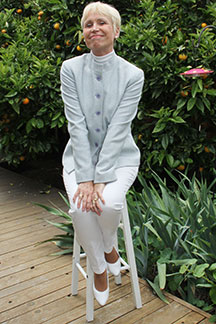
Nadezhda Popova Died

July 29th, 2013

Nadezhda Popova died earlier this month. She rose to deputy commander of the 588th Night Bomber Regiment during WWII. At the young age of 15, Ms. Popova joined a flying club. After graduating from pilot school, she became a flight instructor. At age 19 she became a pilot in an all-female regiment, the night bombers. The ages of these women ranged from 17 to 26.
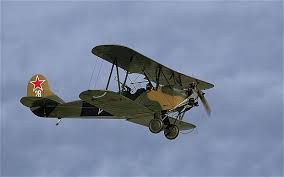
bi plane flown by the Night Witches during World War II

bi plane flown by the Night Witches during World War II

In jerry-rigged onetime crop dusters, these female aviators flew 30,000 missions over a four-year period. They had no parachutes, no guns, no radios, and no radar. Their cockpits were open. If hit by bullets, their planes would burn like paper. Yet, they dumped 23,000 tons of bombs on their German adversaries. Ms. Popova flew 852 combat missions and was shot down several times, but never seriously wounded according to a 14 July 2013 article in the New York Times.

Usually, these two-seaters, made of plywood and canvas, were flown in formations of three. Two would serve as decoys. The third would slip through the darkness and drops its two single bombs, one under each wing. The triad would then switch places until all bombs were dropped. In the last stages of each bomb run, they would shut down their engines so that the Germans could only hear the hiss of the air flowing across the wings. Because it sounded like a broomstick in flight the Germans called them Night Witches.

Ms. Popova, one of the Night Witches, was 91 when she died according to a 13 July 2013 article in The Washington Post.


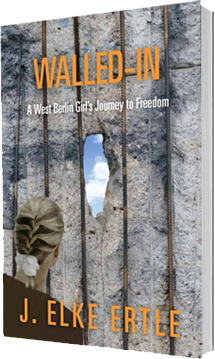
For a sneak peek at the first 20+ pages of my memoir, Walled-In: A West Berlin Girl’s Journey to Freedom, click “Download a free excerpt” on my home page and feel free to follow my blog about anything German: historic and current events, people, places and food.

Walled-In is my story of growing up in Berlin during the Cold War. Juxtaposing the events that engulfed Berlin during the Berlin Blockade, the Berlin Airlift, the Berlin Wall and Kennedy’s Berlin visit with the struggle against my equally insurmountable parental walls, Walled-In is about freedom vs. conformity, conflict vs. harmony, domination vs. submission, loyalty vs. betrayal.


Smile because it happened

July 26th, 2013

Don’t cry because it’s over, smile because it happened.
–Dr. Seuss


For a sneak peek at the first 20+ pages of my memoir, Walled-In: A West Berlin Girl’s Journey to Freedom, click “Download a free excerpt” on the home page of http://www.walled-in-berlin.com. Walled-In is a story of growing up in Berlin during the Cold War.


Walter Ulbricht

July 24th, 2013

On 24 July 1953, communist statesman Walter Ulbricht became the First Secretary of the Central Committee of the Social Unity Party of East Germany. He had been the Deputy Chairman of the Council of Ministers of East Germany since 1949. When the party restructured into a more Soviet-style Communist party the following year, Walter Ulbricht became General Secretary of the Central Committee. In 1953, the position was renamed First Secretary, making Walter Ulbricht the actual leader of East Germany. On account of a childhood diphtheria infection, he retained a squeaky falsetto voice, which made his speeches difficult to understand.

Walter Ulbricht, East German Statesman 1950-1971

Walter Ulbricht, East German Statesman
1950-1971

Already during the Weimar Republic (1919 to 1933) Ulbricht had played a key role in the creation of Germany’s Communist Party. He had spent the Hitler years in exile in the Soviet Union. In 1945, he returned to Germany to reconstruct the communist Social Unity Party and to help establish the German Democratic Republic (East Germany). Walter Ulbricht was a loyal follower of Leninist and Stalinist principles and is quoted as having said, “Es muss demokratisch aussehen, aber wir muessen alles in der Hand haben–it has to look democratic but we must have everything in our hand.”

In 1950, Ulbricht announced a five-year plan concentrating on the doubling of industrial production in East Germany. By 1952, eighty percent of industry had been nationalized. Consumer goods were often in short supply or of shoddy quality. His leadership is said to have been repressive and undemocratic, and that he crushed all opposition. As a result, large numbers of citizens fled to the West. In order to stop the outflow of workers he gave orders to build the Berlin Wall in 1961. Only two months earlier he had publicly stated, “Niemand hat die Absicht, eine Mauer zu errichten–No one has the intention to build a wall.” His unwillingness to seek an accord with West Germany coupled with his difficult relationship with Soviet Union party leader, Leonid Brezhnev, forced his resignation in 1971. He was replaced by his protage, Erich Honecker.


For a sneak peek at the first 20+ pages of my memoir, Walled-In: A West Berlin Girl’s Journey to Freedom, click “Download a free excerpt” on my home page and feel free to follow my blog about anything German: historic or current events, people, places or food.

Walled-In is my story of growing up in Berlin during the Cold War. Juxtaposing the events that engulfed Berlin during the Berlin Blockade, the Berlin Airlift, the Berlin Wall and Kennedy’s Berlin visit with the struggle against my equally insurmountable parental walls, Walled-In is about freedom vs. conformity, conflict vs. harmony, domination vs. submission, loyalty vs. betrayal.


How to Improve your Sales Skills – Do you Need to?

July 22nd, 2013

Here is how to improve your sales skills: THINK FIRST! Sounds elementary, doesn’t it? But apparently it isn’t. Let me tell you what happened recently to a dynamic retired couple I know. You need an appointment just to have a cup of coffee with Brad and Brenda. That’s how busy they are. After years of fulltime careers and parenting, they now spend their days exactly the way they always wanted to but couldn’t. When Brad dug up their entire Texas Privet hedge in a single day a couple of weeks ago, he wrenched his back. Along with physical therapy his doctor suggested brief relaxation breaks. “Do you have a recliner at home?” the doctor asked.

“A recliner? Never did,” Brad admitted. “But if you think it would help my back, we’ll get one,” he added. After mulling it over with Brenda later that day, they agreed to purchase not one, but two recliners and headed for a furniture store. Amber, the sweet saleslady, was all smiles. She encouraged the pair to try out some floor models, and soon a nearly perfect specimen was located. The chair was sturdy, comfortable, and stylish. But it had one drawback. Brenda did not like the shade of the fabric.

“No problem,” Amber was quick to point out. “The chairs can be ordered in any number of colors and fabrics.” Sure enough, Brenda spotted a nice earth-tone swatch in the sample book, and in short order the deal was about to be clinched. That’s when Amber “excelled” with her sales skills. “You’ll be so glad you bought these chairs,” she gushed. “It might be the last major furniture purchase you’ll ever make.”

How do you think Brad and Brenda, our dynamic retired couple, reacted? Do you think they purchased the recliners? Do you think they’ll ever go back to that furniture store? Do you think Amber will be able to sell ice to the Eskimos? THINK FIRST, Amber. Practice some empathy.

Re-reading this article in 2020 after four years of Donald Trump as president of the United States, I have experienced a paradigm shift (a fundamental change in underlying assumptions). In 2013, I believed that Amber’s insensitivity to her customers’ needs made her an ineffective sales representative. But if Donald Trump was able to sell his notion of democracy to 72 million Americans in 2020 and barely lose the election, then maybe Amber could sell ice to the Eskimos after all. What do you think?

Sales Skills - Do you Need to? www.walled.in.berlin.com

How to Improve Your Sales Skills – Do you Need to? www.walled.in.berlin.com


For a sneak peek at the first 20+ pages of my memoir, Walled-In: A West Berlin Girl’s Journey to Freedom, click “Download a free excerpt” on my home page and feel free to follow my blog about anything German: historic and current events, people, places and food.

Walled-In is my story of growing up in Berlin during the Cold War. Juxtaposing the events that engulfed Berlin during the Berlin Blockade, the Berlin Airlift, the Berlin Wall and Kennedy’s Berlin visit with the struggle against my equally insurmountable parental walls, Walled-In is about freedom vs. conformity, conflict vs. harmony, domination vs. submission, loyalty vs. betrayal.


Stadtschloss Berlin Reconstruction

July 18th, 2013

Following years of heated debates, the Stadtschloss Berlin reconstruction is ready to start. On June 12, 2013, German President Joachim Gauck laid the foundation stone for the 590 million euro project.

The Stadtschloss Berlin (Berlin City Place) was a royal and imperial palace in the city’s center. Originally built in the 15th century as a fort to guard the crossing of the River Spree, the castle stood on Fishers’ Island, now known as Museum Island. Throughout the intervening centuries its face continued to change until the famous architect Andreas Schlueter finalized its appearance in the middle of the 18th century.

Stadtschloss Berlin ca. 1920

Stadtschloss Berlin ca. 1920

The Stadtschloss Berlin served as the residence to various Electors of Brandenburg and to the Hohenzollern Kings of Prussia. Following the demise of the German Empire in 1918, the palace was turned into a museum. Badly damaged during Allied bombings in World War II, it ended up in the eastern sector of the city. In 1950, East German leaders decided to demolish rather than to repair it. More than a decade later, East Germany built a new Staatsrat building (Council of State) on part of the site and added the Palast der Republik (Palace of the Republic) in the 1970s. When the Palast der Republik, a large modern building, was found to be contaminated with asbestos shortly before German reunification in 1990, it was closed to the public. Following unification the new Federal government of the united Germany demolished the building and left the area a parkland, pending a decision on its ultimate future.

Heated debates arose. Some citizens advocated for the Stadtschloss Berlin reconstruction. Others suggested that the exterior baroque facades be rebuilt, but a modern interior added. Some advocated the retention of the Palast der Republik http://www.walled-in-berlin.com/j-elke-ertle/palace-of-the-republic/ to preserve its historical significance. Others argued for a public park. Lobby groups formed, and finally, after two decades of passionate debates, the Stadtschloss Berlin will return to the heart of Berlin.

A key figure in the debates has been a businessman from Hamburg, Wilhelm von Boddien. He founded and heads the Association Berliner Schloss. Upon project completion in 2019 the Stadtschloss Berlin reconstruction will house a modern museum containing collections of African and other non-European art. http://www.walled-in-berlin.com/j-elke-ertle/berliner-stadtschloss-to-humboldt-forum/


For a sneak peek at the first 20+ pages of my memoir, Walled-In: A West Berlin Girl’s Journey to Freedom, click “Download a free excerpt” on my home page and feel free to follow my blog about anything German: historic or current events, people, places or food.

Walled-In is my story of growing up in Berlin during the Cold War. Juxtaposing the events that engulfed Berlin during the Berlin Blockade, the Berlin Airlift, the Berlin Wall and Kennedy’s Berlin visit with the struggle against my equally insurmountable parental walls, Walled-In is about freedom vs. conformity, conflict vs. harmony, domination vs. submission, loyalty vs. betrayal.


Angela Merkel

July 17th, 2013

On this day, 17 July 1954, Angela Merkel was born in Hamburg. The city was part of West Germany at that time. In 2005, she became the first female chancellor of the unified Federal Republic of Germany and has been in office ever since.

The year Angela Merkel was born, her father, a Protestant pastor, secured a pastorate at a church in Quitzow. The town was located in the former East Germany, and the family moved to nearby Templin, 50 miles north of Berlin. Here, Merkel learned to speak Russian fluently and went on to pass the Abitur, the higher education entrance qualification. From 1973 to 1978 she studied physics at the University of Leipzig. Until 1990 she worked and studied at the Academy of Sciences of the German Democratic Republic, which was considered the most important research institution in East Germany. While there, she published several papers and in 1986, she was awarded a doctorate in physics for her thesis on quantum chemistry.

Angela Merkel did not get involved in politics until the fall of the Berlin Wall when she joined the party, Democratic Awakening. Following the East German state’s first and only multi-party election, she became the deputy spokesperson of the short-lived East German pre-unification government under Lothar de Maiziere. He ran on a platform of a speedy reunification.

Angela Merkel Chancellor of the Federal Republic of Germany

Angela Merkel
Chancellor of the Federal Republic of Germany

In 1977, Merkel–nee Kasner–married physics student Ulrich Merkel. The union ended in divorce five years later. In 1998 she married professor Joachim Sauer, a quantum chemist at Berlin’s Humboldt University. Angela Merkel is known to be a fervent soccer fan.


For a sneak peek at the first 20+ pages of my memoir, Walled-In: A West Berlin Girl’s Journey to Freedom, click “Download a free excerpt” on my home page and feel free to follow my blog about anything German: historic or current events, people, places or food.

Walled-In is my story of growing up in Berlin during the Cold War. Juxtaposing the events that engulfed Berlin during the Berlin Blockade, the Berlin Airlift, the Berlin Wall and Kennedy’s Berlin visit with the struggle against my equally insurmountable parental walls, Walled-In is about freedom vs. conformity, conflict vs. harmony, domination vs. submission, loyalty vs. betrayal.
 

Too Small to be Effective?

July 16th, 2013

If you think you are too small to be effective, you have never been in the dark with a mosquito.

–Author Unknown


For a sneak peek at the first 20+ pages of my memoir, Walled-In: A West Berlin Girl’s Journey to Freedom, click “Download a free excerpt” on the home page of http://www.walled-in-berlin.com. Walled-In is a story of growing up in Berlin during the Cold War.


When adversity knocks

July 15th, 2013

When adversity knocks, how do you respond? Do you complain? Do you feel sorry for yourself? Do you get mad? Do you take your frustration out on others? Or do you rise to the occasion?

I have been feeling a little overwhelmed lately. For every problem I have solved, ten new ones seem to crop up. I was about to throw in the towel when I remembered a little experiment from my high school days. Our teacher had filled three pots with water. In the first, she placed some carrots; in the second she placed an egg, and in the last she dropped a few coffee beans. Then she brought each pot to a boil and let the contents simmer. After fifteen minutes she fished out the carrots and the egg and arranged them on a plate. She poured the water into a small cup and placed it next to the plate. Then she had us examine each item. The raw carrots had become soft and pliable in the hot water; the egg’s fluid content had hardened; the plain water from the faucet had turned into an aromatic coffee. In each case, the hot water (adversity) had changed the original substance of each item into something else.

coffee, egg or carrot?

coffee, egg or carrot?

Which do you resemble when adversity knocks? Do you react like a carrot and wither? Do you appear unchanged; on the outside but have acquired a hardened core? Or do you change your surroundings for the better when the going gets tough? Which do you resemble when adversity knocks? A carrot, an egg or a coffee bean?


For a sneak peek at the first 20+ pages of my memoir, Walled-In: A West Berlin Girl’s Journey to Freedom, click “Download a free excerpt” on my home page and feel free to follow my blog about anything German: historic and current events, people, places and food.

Walled-In is my story of growing up in Berlin during the Cold War. Juxtaposing the events that engulfed Berlin during the Berlin Blockade, the Berlin Airlift, the Berlin Wall and Kennedy’s Berlin visit with the struggle against my equally insurmountable parental walls, Walled-In is about freedom vs. conformity, conflict vs. harmony, domination vs. submission, loyalty vs. betrayal.

 

Catholic League Formation

July 10th, 2013

This day over 400 years ago gave us the Catholic League (Katholische Liga) formation. On July 10, 1609, a loose confederation of Roman Catholic German states within the Holy Roman Empire of German nations formed the Catholic League. It was created to counterbalance the slightly older Protestant Union in religious and political disputes.

Instead of balancing the powers, however, the formation of the Catholic League intensified the long-standing strain between Protestant reformers and the members of the Catholic Church. Intolerance increased. Repression and civil disobedience resulted and led to the longest lasting and most destructive conflict in modern European history: the Thirty Year War (1618-1648).

Although the Thirty Year War was a European conflict, it laid waste mainly to Germany whose regions became the principal theatre in the devastating clashes. Archduke Ferdinand II of Austria and his commanders Tilly and Albrecht von Wallenstein together with Duke Maximilian of Bavaria fought on the side of the Catholic League. Christian IV of Denmark and King Gustav II Adolf of Sweden were the main opponents on the side of the Protestant Union. Over the thirty-year period, the conflict destroyed large stretches of land and caused widespread famine and epidemics. It claimed the lives of 8,000,000 civilians.


For a sneak peek at the first 20+ pages of my memoir, Walled-In: A West Berlin Girl’s Journey to Freedom, click “Download a free excerpt” on my home page and feel free to follow my blog about anything German: Historical or current events, people, places or food.

Walled-In is my story of growing up in Berlin during the Cold War. Juxtaposing the events that engulfed Berlin during the Berlin Blockade, the Berlin Airlift, the Berlin Wall, and Kennedy’s Berlin visit with the struggle against my equally insurmountable parental walls, Walled-In is about freedom vs. conformity, conflict vs. harmony, domination vs. submission, loyalty vs. betrayal. 

 

value of experiences

July 9th, 2013

If we could sell our experiences for what they cost us, we’d all be millionaires.
–Abigail Van Buren


For a sneak peek at the first 20+ pages of my memoir, Walled-In: A West Berlin Girl’s Journey to Freedom, click “Download a free excerpt” on the home page of http://www.walled-in-berlin.com. Walled-In is a story of growing up in Berlin during the Cold War.