The Right Word

April 7th, 2014

For your born writer, nothing is so healing as the realization that he has come upon the right word.

–Catherine Drinker Bowen


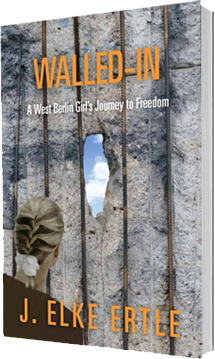
For a sneak peek at the first 20+ pages of my memoir, Walled-In: A West Berlin Girl’s Journey to Freedom, click “Download a free excerpt” on the home page of http://www.walled-in-berlin.com. Walled-In is a story of growing up in Berlin during the Cold War.


Paulskirchenverfassung

April 3rd, 2014

The Paulskirchenverfassung (Constitution of St. Paul’s Church) might have been Germany’s very first Constitution, had it not been for Friedrich Wilhelm IV, reigning King of Prussia. Drawn up by the National Assembly in December 1848, the Paulskirchenverfassung called for basic civil rights, freedom of the press and the abolishment of the existing privileges of the nobility. The King himself had ordered it to be drawn up. But it hadn’t been his desire for democracy that had led him to take this step.

Who was King Friedrich Wilhelm IV?

Friedrich Wilhelm IV reigned from 1840 to 1861 and was the eldest son of Friedrich William II of Prussia. Friedrich Wilhelm IV was known as a romantic who had been responsible for the erection of many beautiful edifices in Berlin and Potsdam. He had also sponsored the completion of the cathedral in Cologne. But politically he seemed out of step with the times. When revolution broke out in Prussia, having spilled over from France, Friedrich Wilhelm IV feared that it might cost him the throne. After first trying to repress it with the army, he quickly decided to recall the troops instead and place himself at the head of the movement.

Friedrich Wilhelm IV, King of Prussia from 1840 to 1861

Friedrich Wilhelm IV, King of Prussia from 1840 to 1861

King Friedrich Wilhelm IV refused

Friedrich Wilhelm IV convened a National Assembly in 1949, and ordered a Constitution be drawn up. He hoped that the move would shore up his position. But when the National Assembly elected him as emperor of Germany, the king flatly refused. His refusal did not stem from modesty however. To the contrary. Friedrich Wilhelm supposedly responded by saying, “I do neither want the consent of the princes nor the crown. This so-called crown is not a crown but a dog collar. It bears the smell of the gutter of the revolution–the silliest, stupidest and worst of this century.” Feeling secure again in his position, he then dissolved the assembly and ordered the army to reoccupy Berlin.

Failed Paulskirchenverfassung

The adoption of the Paulskirchenverfassung had failed. Three months later, the military disbanded the remaining parliament. In keeping with the king’s motto, “Only soldiers can help stop democrats,” fundamental rights were abolished again and popular uprisings squashed.

When one hundred years later, the Grundgesetz (The German Basic Law or Constitution) was created, much of the wording of the Paulskirchenverfassung of 1948 was incorporated.


For a sneak peek at the first 20+ pages of my memoir, Walled-In: A West Berlin Girl’s Journey to Freedom, click “Download a free excerpt” on my home page and feel free to follow my blog about anything German: historic and current events, people, places and food.

Walled-In is my story of growing up in Berlin during the Cold War. Juxtaposing the events that engulfed Berlin during the Berlin Blockade, the Berlin Airlift, the Berlin Wall and Kennedy’s Berlin visit with the struggle against my equally insurmountable parental walls, Walled-In is about freedom vs. conformity, conflict vs. harmony, domination vs. submission, loyalty vs. betrayal.


Opportunity

March 31st, 2014

Opportunity is missed by most people because it is dressed in overalls and looks like work.

–Thomas A. Edison


For a sneak peek at the first 20+ pages of my memoir, Walled-In: A West Berlin Girl’s Journey to Freedom, click “Download a free excerpt” on the home page of http://www.walled-in-berlin.com. Walled-In is a story of growing up in Berlin during the Cold War.


Palace of the Republic

March 27th, 2014

Berlin’s Palace of the Republic — Palast der Republik — was the seat of the legislature of the German Democratic Republic (East Germany) from 1976 to 1990. Constructed between 1973 and 1976, the exterior of this cubic building was defined by its distinctive bronze mirrored windows and the interior by its unique multi-purpose concept.

House of the People

When the East German government decided to build the Palace of the Republic in the 70s, the country was hurting financially and could barely afford the construction. Nonetheless, East Germany built the most modern cultural building in all of Europe at the time. One part of the building housed the People’s Chamber, the legislature of the East German government. The other served a multitude of cultural purposes as the House of the People. Here citizens could visit art galleries, a theater, a bowling alley, a post office, a discotheque and thirteen restaurants. Cultural, political, academic, and social events at the Palace of the Republic included famous concerts and events, party congresses and even the state gala on the eve of the 40th anniversary of the German Democratic Republic in October 1989, which was attended by Soviet leader Mikhail Gorbachev. It is difficult to image nowadays that ordinary people would be allowed to be entertained within meters of government being conducted. I think it would be a security agent’s worst nightmare.

Former Stadtschloss

The Palace of the Republic was not the original building on this site however. The location had once been home to the former Berlin City Palace–Berliner Stadtschloss–an edifice dating back to the Prussian-era. In 1950, the East German government demolished this heavily World War II-damaged building to make room for the Palast der Republik. But just prior to German reunification in 1990, the modern monument to the people had to be closed to the public because of asbestos contamination. By 2003, the asbestos was declared removed, but soon more was found. It was then that the German parliament voted to demolish the Palace of the Republic altogether. The action ran against the opposition of many former East Germans, and what was to be constructed in its place became the subject of many heated debates. http://www.walled-in-berlin.com/j-elke-ertle/the-palast-der-republik-lives-on/

Humboldtforum

Eventually, the German government decided to rebuild the Prussian-era Stadtschloss, not the Palace of the Republic. Its last vestiges were removed in 2008. Construction of a new Stadtschloss began in 2013. It will be called the Humboldtforum http://www.walled-in-berlin.com/j-elke-ertle/berliner-stadtschloss-to-humboldt-forum/and house the Humboldt collection and gallery of non-European art. Three facades of the new palace will be exact replicas of the Prussian-era Stadtschloss, but the interior will be a modern one. Construction is in progress and is expected be completed in 2019.


For a sneak peek at the first 20+ pages of my memoir, Walled-In: A West Berlin Girl’s Journey to Freedom, click “Download a free excerpt” on my home page and feel free to follow my blog about anything German: historic and current events, people, places and food.

Walled-In is my story of growing up in Berlin during the Cold War. Juxtaposing the events that engulfed Berlin during the Berlin Blockade, the Berlin Airlift, the Berlin Wall and Kennedy’s Berlin visit with the struggle against my equally insurmountable parental walls, Walled-In is about freedom vs. conformity, conflict vs. harmony, domination vs. submission, loyalty vs. betrayal.


Vegetation of the mental world

March 24th, 2014

Ideas are the vegetation of the mental world. Like individuals, they live and die. They flourish, according to their nature, in one soil or climate. They droop in another.

–M. Dixon


For a sneak peek at the first 20+ pages of my memoir, Walled-In: A West Berlin Girl’s Journey to Freedom, click “Download a free excerpt” on the home page of http://www.walled-in-berlin.com. Walled-In is a story of growing up in Berlin during the Cold War.


Stalin Note

March 20th, 2014

The Stalin note was a diplomatic paper. On March 10, 1952, Joseph Stalin’s deputy foreign minister, Andrei Gromyko, delivered three identical documents to his postwar Allies–the United States, France and Great Britain. The Stalin note was the first of four pieces of correspondence on the same subject, all initiated by Marshal Stalin. The paper proposed a peace treaty between the four Allies and the East- and West-occupied Germanys to end the country’s artificial division.

Content of the Stalin Note

In this diplomatic note, Stalin proposed German reunification but attached several stipulations. Aside from other requirements, he proposed reunification of East and West Germany, providing that the occupying powers withdraw their armed forces and liquidate all of their bases in Germany. He further demanded that once reunited, Germany would be required to forfeit her right to enter into a military alliance with any power, that had taken part in WWII. Stalin suggested a four-power conference to act on his proposal by signing a peace treaty with Germany.

http://muse.jhu.edu/journals/journal_of_cold_war_studies/summary/v013/13.4.ruggenthaler.html

Four-power conference

The conference never took place. Germany and the three Western Allies feared that a peace treaty of this nature could result in the reunited Germany’s inability to protect her borders. They also recognized that signing this peace treaty would mean that the reunited Germany would be barred from aligning herself with the Western powers. As history shows those interpretations prevailed. The Cold War continued to heat up over the next three decades, and East and West became more firmly entrenched in their respective blocs. Germany remained divided until the German Democratic Republic (East Germany) collapsed in 1990.

The question remains

Historians have been divided ever since on the intent of the Stalin note. The questions remain (1) Did the West German, Western European, and American leaders miss a much earlier opportunity for German reunification? (2) Were the Soviets offering a sincere path toward German reunification in 1952 or was the Stalin Note a ploy to facilitate the incorporation of Germany into the Eastern bloc? Opinions differ to this day.


For a sneak peek at the first 20+ pages of my memoir, Walled-In: A West Berlin Girl’s Journey to Freedom, click “Download a free excerpt” on my home page and feel free to follow my blog about anything German: historic and current events, people, places and food.

Walled-In is my story of growing up in Berlin during the Cold War. Juxtaposing the events that engulfed Berlin during the Berlin Blockade, the Berlin Airlift, the Berlin Wall and Kennedy’s Berlin visit with the struggle against my equally insurmountable parental walls, Walled-In is about freedom vs. conformity, conflict vs. harmony, domination vs. submission, loyalty vs. betrayal.


Little things in life

March 17th, 2014

“Sometimes the littlest things in life are the hardest to take. You can sit on a mountain more comfortably than on a tack.”

–Anonymous


For a sneak peek at the first 20+ pages of my memoir, Walled-In: A West Berlin Girl’s Journey to Freedom, click “Download a free excerpt” on the home page of http://www.walled-in-berlin.com. Walled-In is a story of growing up in Berlin during the Cold War.


Life is like a kite

March 13th, 2014

Life is like a kite in many ways. A paper kite must be anchored in order to be able to soar into the sky. In much the same way, our lives must be anchored so that we may enjoy a happy, healthy and productive existence. Let’s take a look at the similarities between the two:

Colorful kites

Colorful kites

Paper kite

A paper kite consists of three parts: the wing (which is the body), the kite line and the anchor. So that our kite may soar high into the sky rather than come crashing down to earth after a tentative roll and pitch, it must be tethered to an anchor system. Tethering is necessary so that tension can develop in the kite line. That tension will convert to lift and drag. Lift is generated when air flows over and under the kite’s surface, producing low pressure above and high pressure below the wing. Drag is generated along the direction of the wind. The kite line must be tied to an anchor, which can be static (pitched into beach sand, turf, or attached to a tree) or dynamic (a person running, a boat, or a car). Kite line and anchors are the two components that keep our paper kite in the air.

Life

Similarly, we need a kite line tethered to an anchor to keep our life from rolling, pitching and crashing. Some people’s lives are tied to spiritual anchors; others are anchored in their family; still others are moored to their work, their achievements, their pets, or their hobbies. Just as the kite line and anchor keep the paper kite in the air, we need an emotional and mental anchor that lets us build resilience and gives us the ability to cope. Just like a well-anchored paper kite will soar beautifully, so will an emotional anchor help us face family tragedies, set backs, disappointments, and peer pressure. No doubt, we will face strong winds at times, and there will be plenty of lift and drag along the way. So, what is your anchor?


For a sneak peek at the first 20+ pages of my memoir, Walled-In: A West Berlin Girl’s Journey to Freedom, click “Download a free excerpt” on the home page of http://www.walled-in-berlin.com. Walled-In is a story of growing up in Berlin during the Cold War.


Keep on going

March 10th, 2014

Keep on going, and chances are that you will stumble on something, perhaps when you are least expecting it. I never heard of anyone stumbling on something sitting down.

–Charles F. Kettering


For a sneak peek at the first 20+ pages of my memoir, Walled-In: A West Berlin Girl’s Journey to Freedom, click “Download a free excerpt” on the home page of http://www.walled-in-berlin.com. Walled-In is a story of growing up in Berlin during the Cold War.


Did Churchill coin “Iron Curtain”?

March 6th, 2014

In the United States it is often erroneously believed that Sir Winston Churchill coined the phrase “iron curtain,” when he travelled to Fulton, Missouri, on 5 March 1946. It had been a mere ten months since World War II had ended in Europe. Only one of the three signatories of the Potsdam Agreement was still in power: Soviet Union’s Marshal Joseph Stalin. U.S. President Franklin D. Roosevelt had passed away and been replaced by Harry. S. Truman. Sir Winston Churchill had lost the British election to Clement Atlee. At this point in time, the U.S. and Great Britain were mainly concerned with the state of their own post-war economies and remained grateful to Russia that she had taken a prominent role in ending the war.

“The Sinews of Peace” Speech by Churchill

On this day in early March 5, Churchill gave an address at Westminster College in Fulton. His speech was entitled, “The Sinews of Peace.” He began by speaking of his admiration for the Soviet Union and by welcoming her into the circle of leading nations. He expressed understanding for Russia’s need for security on her western frontiers. But then he cautioned, “A shadow has fallen upon the scenes so lately lighted by the Allied victory. Nobody knows what Soviet Russia and its Communist international organization intends to do in the immediate future, or what are the limits, if any, to their expansive and proselytizing tendencies.” He went on to say, “From Stettin in the Baltic to Trieste in the Adriatic, an iron curtain has descended across the Continent. Behind that line lie all the capitals of the ancient states of Central and Eastern Europe. Warsaw, Berlin, Prague, Vienna, Budapest, Belgrade, Bucharest and Sofia, all these famous cities and the populations around them lie in what I must call the Soviet sphere, and all are subject in one form or another, not only to Soviet influence but to a very high and, in many cases, increasing measure of control from Moscow.”

Following the speech, the phrase “iron curtain” became widely known. To hear Churchill’s speech in its entirety, visit https://winstonchurchill.org/resources/speeches/1946-1963-elder-statesman/the-sinews-of-peace/


“Iron Curtain” became a household word. Although it is still widely held that Churchill coined the term “iron curtain” during his 1946 The Sinews of Peace speech, that belief is inaccurate. He had used the term for decades already. The phrase was first used in 1920 by British author and suffragette Ethel Snowden in her book Through Bolshevik Russia. In 1945, Nazi Propaganda Minister Joseph Goebbels used the term in his 25 February 1945 speech entitled The Year 2000. http://research.calvin.edu/german-propaganda-archive/goeb49.htm But after Churchill’s post-war speech in Fulton, the phrase became synonymous with the way the West viewed the East. The phrase became so popular that I, a post-war child growing up in Berlin, Germany, remember it as one of the givens in my vocabulary. To me at that young age, “iron curtain” meant Cold War, and I was convinced that Sir Winston Churchill had coined it.

.


Sir Winston Churchill

Sir Winston Churchill

Churchill’s view on the Berlin situation

Sir Winston Churchill also foreshadowed what, indeed, ended up happening in Berlin a couple of years later when the Russians blockaded all ground access routes to West Berlin. In his speech, Churchill said, “An attempt is being made by the Russians in Berlin to build up a quasi-Communist party in their zone of Occupied Germany by showing special favors to groups of left-wing German leaders. At the end of the fighting last June, the American and British Armies withdrew westwards, in accordance with an earlier agreement, to a depth at some points of 150 miles upon a front of nearly four hundred miles, in order to allow our Russian allies to occupy this vast expanse of territory, which the Western Democracies had conquered. If now the Soviet Government tries, by separate action, to build up a pro-Communist Germany in their areas, this will cause new serious difficulties in the British and American zones.”


For a sneak peek at the first 20+ pages of my memoir, Walled-In: A West Berlin Girl’s Journey to Freedom, click “Download a free excerpt” on my home page and feel free to follow my blog about anything German: historic and current events, people, places and food.

Walled-In is my story of growing up in Berlin during the Cold War. Juxtaposing the events that engulfed Berlin during the Berlin Blockade, the Berlin Airlift, the Berlin Wall and Kennedy’s Berlin visit with the struggle against my equally insurmountable parental walls, Walled-In is about freedom vs. conformity, conflict vs. harmony, domination vs. submission, loyalty vs. betrayal.