Archive for the ‘Walled In Berlin’ Category

Gender Gap Closure in Germany

Friday, November 15th, 2013

Germany ranks higher than the USA in the gender gap closure, according to an October 2013 report by the World Economic Forum.

History of German gender gap laws

Following World War II, the German Basic Law of 1949 (Grundgesetz) was supposed to include amendments relative to the equality of men and women (Gleichberechtigung). However, the Adenauer government failed to take action. Four years later, the German Federal Parliament (Deutscher Bundestag) took a major step toward implementing gender gap closure by revising the existing laws regarding individual rights. On 1 July 1958, the following changes relative to equality of men and women became effective:

Changes to German gender gap laws

  • The husband’s right of final decision in matrimonial matters was deleted.
  • The husband’s responsibility to provide for his family was retained.
  • Women were now permitted to manage assets they had brought into the marriage. Until then, her husband had the right to manage her assets, including any moneys she may have earned from gainful employment.
  • A husband could no longer terminate his wife’s employment. But it took until 1977 before a wife could work outside the home without her husband’s consent. And it was in 1977 that the partnership principle became effective which removed the division of marital responsibilities from the law and made it a private decision.
  • A wife was given the right to use her maiden name in addition to her family name. But not until 1977 could married couples choose whether they wanted to adopt the husband’s or the wife’s family name as their mutual last name. And not until 1994 was a marriage partner allowed to retain his or her separate family name.
  • The special rights of fathers relative to the education of the couple’s children were reduced and totally eliminated in 1979.

International gender gap closure rankings

In October 2013, the World Economic Forum released a report that benchmarks national gender gaps on economic, political, educational and health-based criteria and provides country rankings. Of the 136 countries surveyed, according to the report, Iceland did the best job of closing the gender gap in 2013, followed by Finland, Norway, and Sweden. Germany ranked 14th, Great Britain 18th, the USA 23rd, and France ranked 45th. Worst fared Chad, Pakistan and Yemen. For more detailed information please visit www3.weforum.org/WEF_GenderGap_Report_2013.pdf


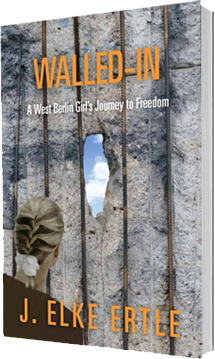
For a sneak peek at the first 20+ pages of my memoir, Walled-In: A West Berlin Girl’s Journey to Freedom, click “Download a free excerpt” on the home page of http://www.walled-in-berlin.com. Walled-In is a story of growing up in Berlin during the Cold War.


Exercise is a leveler

Tuesday, November 12th, 2013

Exercise is a leveler. It doesn’t matter how rich you are – you can’t just buy your way into a great body. You have to do the work. I find that comforting. It’s one of the few things in life where we’re all on a level playing field.
–Vinnie Tortorich


For a sneak peek at the first 20+ pages of my memoir, Walled-In: A West Berlin Girl’s Journey to Freedom, click “Download a free excerpt” on the home page of http://www.walled-in-berlin.com. Walled-In is a story of growing up in Berlin during the Cold War.


The day the Berlin Wall fell

Saturday, November 9th, 2013

9 November 1989 will be remembered as the day the Berlin Wall fell. The Berlin Wall became the hated symbol of the Cold War. It had stood for twenty-eight years and fell unexpectedly within a few short hours. Not one shot was fired.

What caused the Berlin Wall to fall

In the wake of glasnost and perestroika, Hungary had opened its borders to Austria on 19 August 1989. The following month, thousands of East Germans raced to Hungary to flee to free Austria. Hungary’s border opening created a chain reaction. Demonstrations for increased freedoms broke out all over East Germany. Two months later, in October, East German leaders forced longtime Head of State, Erich Honecker, to resign and installed the moderate, Egon Krenz. With this action they hoped to appease the public. But the protests and the exodus continued. When Hungary tightened its new border crossing policies again, East Germans begged the West German embassy in Prague for help. The situation was quickly becoming a public relations disaster for East Germany.

What was supposed to happen

To release some of the pressure that had built-up, Egon Krenz decided on 9 November 1989 to allow East German refugees to exit legally through the crossing points between East Germany and West Germany, including West Berlin. Furthermore, his government intended to also ease private travel restrictions. These new regulations were to take effect the following day to allow time to inform the border guards. In other words, the East German government intended to relax the regulations for travel abroad. It did not mean to open the borders completely.

What happened instead

Shortly before giving a live evening press conference on 9 November 1989, party spokesman Guenter Schabowski was handed a note announcing the planned travel restriction changes. The regulations had only been written a few hours earlier. Schabowski had not been made privy to their content. Instead, he read at 6:53 p.m. the press release handed to him, “…Und deshalb haben wir uns entschlossen, heute eine Regelung zu treffen, die es jedem Buerger der DDR moeglich macht, ueber Grenzuebergangspunkte der DDR auszureisen – …And that is why we decided, to introduce a new regulation which will make it possible for every citizen of the GDR (East Germany) to legally exit the GDR through existing border crossings.” http://www.kalenderblatt.de

When a reporter asked when the new regulations would go into effect, Schabowski shrugged his shoulders and guessed, “Sofort – Immediately.” His offhand answer brought about dramatic consequences.

The beginning of the end of the Berlin Wall

The press conference was aired on East German television and news agencies around the world. Shortly after hearing the broadcast around 7 p.m., East Berliners began gathering at the six checkpoints between East and West Berlin, demanding that the border guards open the gates to the West. The surprised guards frantically called their superiors but received no clear instructions. By 8 p.m. hundreds of people had reached the border crossings. Soon thousands. The crowds failed to disperse. The situation was rapidly deteriorating. The vastly outnumbered soldiers had no way of holding back the huge crowds of East German citizens. By 9 p.m. the guards began to open the checkpoints. By midnight, all of Berlin’s border crossings were open. One hour later, West Germany’s checkpoints were open as well. They never closed again. 9 November 1989 will be remembered as the day the Berlin Wall fell.

East and West Berliners celebrate the fall of the Berlin Wall in front of the Brandenburg Gate in the early morning of 10 November 1989. AP Photo - Jockel Finck

East and West Berliners celebrate the fall of the Berlin Wall in front of the Brandenburg Gate in the early morning of 10 November 1989.
AP Photo – Jockel Finck


For a sneak peek at the first 20+ pages of my memoir, Walled-In: A West Berlin Girl’s Journey to Freedom, click “Download a free excerpt” on my home page and feel free to follow my blog about anything German: historic and current events, people, places and food.

Walled-In is my story of growing up in Berlin during the Cold War. Juxtaposing the events that engulfed Berlin during the Berlin Blockade, the Berlin Airlift, the Berlin Wall and Kennedy’s Berlin visit with the struggle against my equally insurmountable parental walls, Walled-In is about freedom vs. conformity, conflict vs. harmony, domination vs. submission, loyalty vs. betrayal.


Potsdamer Platz – Part 2

Monday, November 4th, 2013

Potsdamer Platz following World War II

Following World War II, Berlin was divided into four sectors. Three of them–the American, British and Soviet occupation sectors–converged at the Potsdamer Platz. That geographic oddity resulted in the Potsdamer Platz becoming a center for black market activities. Since black market trading was illegal, the convergence of three sectors meant that one had to walk only a few feet to cross sector boundaries and could conduct black market activities before drawing much attention.

Potsdamer Platz in October 1945

Potsdamer Platz in October 1945

Potsdamer Platz following construction of the Berlin Wall

In August 1961, the Berlin Wall went up. It divided the bustling Potsdamer Platz into two halves. What had been a busy intersection became a desolate wasteland. Since the S-Bahn (elevated train) traveled briefly through East Berlin on its route from one part of West Berlin to another, the Potsdamer Platz station, located in the eastern sector, was closed off and patrolled by armed guards. Trains ran through the station without shopping. The corresponding U-Bahn (subway) route was closed entirely. After the remaining bomb-damaged buildings on both sides of the Wall were cleared away, only two structures remained standing: Weinhaus Huth and the Hotel Esplanade.

Weinhaus Huth at the Potsdamer Platz

The wine merchant Christian Huth acquired the land in 1877, built his villa and started a wine business. His grandson Willy Huth erected the current building on the same spot thirty-five years later. Weinhaus Huth survived World War II virtually undamaged and became known as “the last house on the Potsdamer Platz.” The reason it survived was its steel construction. The ultra-modern construction method was chosen so that the heavy wine bottles could be stored on the building’s second and third floors.

For forty-five years, Weinhaus Huth stood alone at the Potsdamer Platz, next to the remains of the Hotel Esplanade. Both were in the British sector close to the Berlin Wall. Following the death of Willy Huth in 1967, his widow sold the land and buildings to the City of Berlin.

Hotel Esplanade at the Potsdamer Platz

Hotel Esplanade went from being one of Berlin’s most luxurious hotels to a bombed-out shell that stood alongside the Berlin Wall at the Potsdamer Platz. Built in 1907, it included the famous Kaisersaal (emperor’s hall) where Emperor Wilhelm II hosted exclusive Herrenabende (men’s evenings). In the “Golden Twenties”, the Esplanade held popular afternoon dances. Well-known movie stars like Charlie Chaplin and Greta Garbo visited here.

In the last years of World War II, bombs destroyed ninety percent of the famous hotel. Only the Kaisersaal, the breakfast hall, the stairwell, and the washrooms survived. After the war they were restored, and the Esplanade became a popular nightclub. During the 1950s, it hosted elaborate balls, and scenes of the movie, Cabaret, were filmed here. My father, a professional photographer, photographed many of the events at the hotel.

Also visit www.walled-in-berlin.com/j-elke-ertle/potsdamer-platz-part-1/ to read about the history of the Potsdamer Platz prior to World War II.


For a sneak peek at the first 20+ pages of my memoir, Walled-In: A West Berlin Girl’s Journey to Freedom, click “Download a free excerpt” on my home page and feel free to follow my blog about anything German: historic or current events, people, places or food.

Walled-In is my story of growing up in Berlin during the Cold War. Juxtaposing the events that engulfed Berlin during the Berlin Blockade, the Berlin Airlift, the Berlin Wall and Kennedy’s Berlin visit with the struggle against my equally insurmountable parental walls, Walled-In is about freedom vs. conformity, conflict vs. harmony, domination vs. submission, loyalty vs. betrayal.


Potsdamer Platz – Part 1

Monday, October 28th, 2013

The Potsdamer Platz (Potsdam Square) is a well-known public square in the heart of Berlin, Germany. It is located about 1 km south of the Brandenburg Gate and the Reichstag (German Parliament building). The square grew from a five-cornered traffic knot along a 19th century trading route to one of the liveliest traffic intersections and public squares in Europe. World War II bombs laid waste to 80% of its buildings. During the Cold War that followed, the Berlin Wall ran through the middle of the square, turning it into a no man’s land. But since German reunification in 1990, the Potsdamer Platz has been the site of avant-garde redevelopment projects and is busier than ever.

Potsdamer Platz in the Beginning

Starting in the mid-19th century, Berlin was growing at a tremendous rate. After the city constructed the Potsdam rail station in 1838 and became the capital of the new German Empire in 1871, this five-cornered intersection turned into an important plaza. With a population of 4.4 million, Berlin had become the third largest city in the world, right after London and New York.

Potsdamer Platz in the 1920s and 1930s

By the 1920s and 1930s, the Potsdamer Platz was the busiest traffic center in all of Europe. Five of Berlin’s most hectic streets met here in a star-shaped intersection. Huge hotels and department stores, theatres, dance halls and clubs, cafes, restaurants and bars, beer and wine houses, and hundreds of small shops had sprung up all around the square. Some had acquired an international reputation.

Potsdamer Platz in the mid 1920s

Potsdamer Platz in the mid 1920s

Potsdamer Platz during WWII

As was true of most of the buildings located in the center of Berlin, air raids devastated most of the structures that were built around the Potsdamer Platz. The three most destructive raids occurred during the final years of World War II – in November 1943 and in February 1945.

Watch for the second article in this sequence which talks about the Potsdamer Platz following World War II.

Visit http://www.walled-in-berlin.com/j-elke-ertle/potsdamer-platz-part-2/ to read about the Potsdamer Platz following World War II.


For a sneak peek at the first 20+ pages of my memoir, Walled-In: A West Berlin Girl’s Journey to Freedom, click “Download a free excerpt” on my home page and feel free to follow my blog about anything German: historic and current events, people, places and food.

Walled-In is my story of growing up in Berlin during the Cold War. Juxtaposing the events that engulfed Berlin during the Berlin Blockade, the Berlin Airlift, the Berlin Wall and Kennedy’s Berlin visit with the struggle against my equally insurmountable parental walls, Walled-In is about freedom vs. conformity, conflict vs. harmony, domination vs. submission, loyalty vs. betrayal.


Dresden’s Zwinger

Monday, October 21st, 2013

Dresden’s Zwinger is a palace, located in the historic heart of Dresden in eastern Germany. The Zwinger was built in the early 18th century during the reign of Augustus the Strong. The elector of Saxony had been elected King of Poland in 1697. Having seen Louis XIV’s new court in Versailles on a tour through France and Italy, Augustus ached to have a palace of equal splendor for himself. He commissioned the court architect, Matthaeus Daniel Poeppelmann. Since the fortifications were no longer needed they provided readily available space for the elector’s plans.

History of the construction of the Zwinger, Photo © J. Elke Ertle 2013

History of the construction of the Zwinger – Photo © J. Elke Ertle 2013

The Name

The name goes back to a medieval German term that stands for the part of a fortification between the outer and inner defense walls where the cannons were usually placed. Although the Zwinger no longer had a protective function during the time of August the Strong, the name Zwinger hung on.

Original Use

Poeppelmann designed the Zwinger as an open area surrounded by wooden buildings. The open courtyard was used by the nobility as a venue for tournaments and festivities. The pavilions and galleries were used as an orangery (hothouse). The Zwinger was not enclosed until the Semperbau (Semper Gallery) was built on the northern side during the middle of the 19th century.

Today’s Use

Today, Dresden’s Zwinger serves as a museum complex that contains the Dresden Porzellansammlung (Porcelain Collection), the Gemaeldegalerie Alte Meister (Paintings of the Old Masters Gallery), and the Mathematisch-Physikalischer Salon (Royal Cabinet of Mathematical and Physical Instruments – the armory). The porcelain collection is one of the largest collections in the world. The Semper Gallery contains one of the world’s most important collections of paintings, dating from the Baroque to the Renaissance period. It includes the famous Sistine Madonna by Raphael. And the armory contains a collection of weapons, suits of armor, and ceremonial garments.

Dresden's Zwinger Today, Photo © J. Elke Ertle 2013

Dresden’s Zwinger Today – Photo © J. Elke Ertle 2013

Destruction and Reconstruction

Both, the Zwinger and the Semperbau burned out during the bombing of Dresden on 13 February 1945. They were rebuilt during the 1950s and 1960s. Fortunately, the art collection had been previously evacuated. Reconstruction, began in 1945, and restoration continues today.


For a sneak peek at the first 20+ pages of my memoir, Walled-In: A West Berlin Girl’s Journey to Freedom, click “Download a free excerpt” on my home page and feel free to follow my blog about anything German: historic or current events, people, places or food.

Walled-In is my story of growing up in Berlin during the Cold War. Juxtaposing the events that engulfed Berlin during the Berlin Blockade, the Berlin Airlift, the Berlin Wall and Kennedy’s Berlin visit with the struggle against my equally insurmountable parental walls, Walled-In is about freedom vs. conformity, conflict vs. harmony, domination vs. submission, loyalty vs. betrayal. 


Dresden’s Frauenkirche

Friday, October 18th, 2013

Dresden’s Frauenkirche is a Lutheran cathedral. It has become a landmark of the old German city not far from the Czech border. The classic baroque church is an absolute must-see on anyone’s German travel list.

The Name

The name Frauenkirche (Church of our Lady) refers to a church that has been consecrated in honor of the Virgin Mary, the mother of Jesus. You will find many churches by that name throughout Germany and Europe. In France and Belgium they would be called Notre Dame.

Previous churches on this spot

The first Frauenkirche on this very spot was built in the 11th century as a village missionary church. With the emergence of the City of Dresden in the 12th century the missionary church turned into a parish church. Of Gothic design, the original Frauenkirche was modified and rebuilt many times over the centuries.

Today’s Frauenkirche

In 1726, the Council of the City of Dresden commissioned the architect, Georg Baehr, to begin construction of a new church with a central dome on a square base. Construction was completed in 1743. The design became a landmark. There are no internal supports. The form of the cathedral’s bell-shaped dome is unique. Made of sandstone, it weighs upward of 12,000 tons and is referred to as the Steinerne Glocke (Stone Bell).

Dresden's Frauenkirche, Photo © J. Elke Ertle 2013

Dresden’s Frauenkirche, photo © J. Elke Ertle, 2013

Destruction

Dresden’s Frauenkirche fell into ruins on 15 February 1945. Two days after the Allies had dropped 650,000 incendiary bombs on the city of Dresden, the baroque beauty collapsed. It had survived the direct attack, but the extreme heat had caused more and more of the sandstone to explode, and the piers could no longer bear the immense weight of the dome.

Reconstruction of Dresden’s Frauenkirche

The scorched stones lay in a heap for the next 45 years. But after German reunification in 1989, reconstruction began with the help from many groups, including American and British organizations. The foundation was laid in 1994, using Baehr’s original blueprints. About 3,800 original stones were reused. The reconstruction was finished in 2005 at a cost of an estimated $217 million.


For a sneak peek at the first 20+ pages of my memoir, Walled-In: A West Berlin Girl’s Journey to Freedom, click “Download a free excerpt” on my home page and feel free to follow my blog about anything German: historic and current events, people, places and food.

Walled-In is my story of growing up in Berlin during the Cold War. Juxtaposing the events that engulfed Berlin during the Berlin Blockade, the Berlin Airlift, the Berlin Wall and Kennedy’s Berlin visit with the struggle against my equally insurmountable parental walls, Walled-In is about freedom vs. conformity, conflict vs. harmony, domination vs. submission, loyalty vs. betrayal.


Dresden’s Semper Opera House

Monday, October 14th, 2013

Dresden’s Semper Opera House is one of Europe’s most important treasures. If you travel in Germany, I suggest you include the historic old city of Dresden in your plans and visit the Semper Opera House. Dominating the Theaterplatz on the river Elbe, this grand old building was beautifully restored in the 1980s.

Semperoper, as reconstructed in 1985, Photo © J. Elke Ertle, www. walled-in-berlin.com

Semperoper, as reconstructed in 1985, Photo © J. Elke Ertle, www. walled-in-berlin.com

The original opera house that stood on this spot was completed in 1841 and called Hoftheater (court theater). Designed by the architect Gottfried Semper in Early Renaissance and Baroque styles with Corinthian-style pillars, the original building burnt down in 1869. When Dresden’s citizens demanded that none other than Semper himself reconstruct their beloved opera house, King John of Saxony agreed to commission the professor of architecture. But Gottfried Semper was already otherwise engaged. He had been hired to construct Vienna’s Museum of Art History and Museum of Natural History. Gottfried Semper’s son, Manfred, stepped in and rebuilt the opera house according to his father’s plans. This second Hoftheater, was constructed in Neo-Renaissance style and renamed Semperoper after its architect. The reconstruction was completed in 1878.

Dresden's Semper Opera House, stucco columns in vestibule, Photo © J. Elke Ertle 2013

Dresden’s Semper Opera House, stucco columns in vestibule, Photo © J. Elke Ertle 2013

In 1945, during the Allied bombing of Dresden in the final months of World War II, the Semper Opera House was largely destroyed again. Only the exterior shell of the building was left standing. The people of Dresden decided to rebuild the exterior as it had looked before the war and to recreate the interior as Semper had originally designed it. The reconstruction was based on over 3,000 letters between Semper and his son concerning the rebuilding of the Hoftheater following the fire of 1869. It took over eight years to rebuild, but in 1985, Dresden’s Semper Opera House finally regained its former glory. As our theater guide pointed out, the wood-clad walls of the opera house are in reality nothing other than stucco. The same is true of the marble columns in the vestibule on the third floor. Six thin coats of plaster and lots of delicate brushing and sponging were required to achieve the marble look. Local craftsmen had to relearn the skill that turned plaster into works of art in the 1800s. They found that each column required over three hundred hours of painstaking work.

Although the interior and exterior of Dresden’s Semper Opera House were reconstructed to look like the original, its stage was upgraded to the state of the art. The Semperoper reopened in 1985 with the same opera that was performed just prior to the building’s destruction in 1945: Carl Maria von Weber’s Der Freischuetz. During the flood of the river Elbe in 2002 the Semper Opera House suffered heavy water damage. With substantial help from around the world, it reopened in December 2002.


For a sneak peek at the first 20+ pages of my memoir, Walled-In: A West Berlin Girl’s Journey to Freedom, click “Download a free excerpt” on my home page and feel free to follow my blog about anything German: historic and current events, people, places and food.

Walled-In is my story of growing up in Berlin during the Cold War. Juxtaposing the events that engulfed Berlin during the Berlin Blockade, the Berlin Airlift, the Berlin Wall and Kennedy’s Berlin visit with the struggle against my equally insurmountable parental walls, Walled-In is about freedom vs. conformity, conflict vs. harmony, domination vs. submission, loyalty vs. betrayal.


credit

Friday, October 11th, 2013

There is no limit to what can be accomplished if no one cares who gets credit.

–John Wooden


For a sneak peek at the first 20+ pages of my memoir, Walled-In: A West Berlin Girl’s Journey to Freedom, click “Download a free excerpt” on the home page of http://www.walled-in-berlin.com. Walled-In is a story of growing up in Berlin during the Cold War.


Wittelsbach and Luxembourg Dynasties

Monday, October 7th, 2013

Following the extinction of the House of Ascania in 1320, Brandenburg – and therefore Berlin – came under the control of the Wittelsbach and Luxembourg Dynasties. In 1323, the King of Germany, Louis IV of the House of Wittelsbach, granted the territory to his eldest son, Louis V, “The Brandenburger.” After the King’s death, The Brandenburger gave the margraviate to his two half-brothers, Louis VI, “The Roman” and Otto V, “The Bavarian,” in exchange for the sole rule over Upper Bavaria. The brothers succeeded in establishing Brandenburg as an electorate of the Holy Roman Empire. Thereafter, they ruled as Kurfuersten – Prince-electors – of Brandenburg. Following the death of “The Roman” in 1365, his brother Otto neglected government and pawned part of the margraviate to a crusading military order, the Teutonic Knights.

In 1323, Louis IV grated the Margraviate of Brandenburg to his son Louis V

Tomb of Louis IV of the House of Wittelsbach
Frauenkirche, Munich

Fifty years later, the Holy Roman Emperor, Charles IV, forced Otto V to abdicate and installed his own son, Wenceslaus, from the House of Luxembourg. Subsequently, The Margraviate of Brandenburg became the object of a long and fierce feud between the Wittelsbach and Luxembourg Dynasties. The effects of these disputes devastated the region. Finally, the people of Berlin-Coelln appealed to the Holy Roman Emperor for assistance. He, in turn, appointed Friedrich V von Hohenzollern as their special protector.

When Wenceslaus was elected King of Germany and Bohemia, his brother, Sigismund, took control of Brandenburg. Sigismund eventually gave the territory to his cousin Jobst as security for a substantial loan. But Sigismund later regained control and was elected King of Germany. In 1415 the Electorate of Brandenburg was officially handed to the House of Hohenzollern, which would rule until World Word I – for almost five hundred years.


For a sneak peek at the first 20+ pages of my memoir, Walled-In: A West Berlin Girl’s Journey to Freedom, click “Download a free excerpt” on my home page and feel free to follow my blog about anything German: historic and current events, people, places and food.

Walled-In is my story of growing up in Berlin during the Cold War. Juxtaposing the events that engulfed Berlin during the Berlin Blockade, the Berlin Airlift, the Berlin Wall and Kennedy’s Berlin visit with the struggle against my equally insurmountable parental walls, Walled-In is about freedom vs. conformity, conflict vs. harmony, domination vs. submission, loyalty vs. betrayal.