Archive for the ‘J. Elke Ertle’ Category

Schloss Neuschwanstein

Monday, June 10th, 2013

Schloss Neuschwanstein is located near Fuessen in the Bavarian Alps of Germany and overlooks the Hohenschwangau valley. It is the most magnificent of the castles and palaces built by Ludwig II, King of Bavaria. The king reigned from 1864 until shortly before his death in 1886. He is often called the Maerchenkoenig, the Fairy tale King. The most famous of his castles, Schloss Neuschwanstein, became the inspiration for Disneyland’s Cinderella Castle.
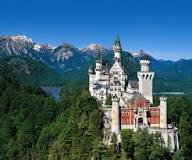
Schloss Neuschwanstein near Fuessen in the Bavarian Alps

Schloss Neuschwanstein near Fuessen in the Bavarian Alps

King Ludwig also built other beautiful castles and palaces. Schloss Linderhof and Schloss Herrenchiemsee were constructed during his reign as well. Although the shy and eccentric king used his own funds to pay for the construction of his palaces and did not expend public funds, his ministers became increasingly concerned with their king’s excessive spending. Ludwig II was deeply in debt. Instead of agreeing to future economization, as his financial ministers advised, he planned additional opulent projects. He even contemplated replacing his entire cabinet to rid himself of their antagonism. But his ministers acted quickly. They declared Ludwig II of Bavaria mentally ill, placed him in custody, and replaced him with his uncle, Prince Luitpold.

Only three days after being disposed, King Ludwig II of Bavaria died under mysterious circumstances. On June 13, 1886, he took a walk in the parkland of his Schloss Berg alongside the shore of Lake Starnberg and went missing. He was found dead in the lake. Although Ludwig’s death was officially ruled a suicide by drowning, no water was found in his lungs.

The shy king had built Schloss Neuschwanstein to withdraw from public life. Ironically, his magnificent castle is the most visited tourist attraction today, not only in Germany, but in all of Europe. Every year over 1.3 million people view King Ludwig’s private refuge https://neuschwansteincastle.net. If you visit Schloss Neuschwanstein, I am sure that the beauty of the castle and its surroundings will amaze you.


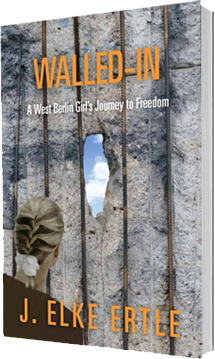
For a sneak peek at the first 20+ pages of my memoir, Walled-In: A West Berlin Girl’s Journey to Freedom, click “Download a free excerpt” on the home page of http://www.walled-in-berlin.com. Walled-In is a story of growing up in Berlin during the Cold War.


CARE Packages to Berlin

Thursday, June 6th, 2013

On this day in history, on June 6, 1945, US General Lucius D. Clay signed the CARE treaty for distribution of CARE Packages in the four occupation sectors of Berlin. Until the start of the Berlin Airlift in 1948, CARE Packages made up 60 percent of all private relief delivered to Berlin. During the course of the Berlin Blockade, another 500,000 CARE Packages were airlifted into the city.

Many World War II survivors were starving. In response, the world’s largest private humanitarian relief organization was formed. CARE (Cooperative for Assistance and Relief Everywhere) was to provide relief to the needy. The United States was the first nation to sign the CARE treaty. On June 21 Great Britain followed suit, and in December of that year, France joined the effort. Initially, distribution of CARE Packages to occupied Germany was prohibited, but on June 5 that ban was lifted.

CARE Package

CARE Package

At first, CARE distributed U.S. Army surplus parcels in Europe. These packages had been prepared for a potential invasion of Japan. Soon, Americans could purchase a CARE Package for 10 dollars and send it to family and friends in Europe. At first, a specific recipient had to be specified. When the recipient’s address was unknown, CARE would attempt to find the person. Later, packages were also sent to general target areas.

The standardized food packages consisted of meat, fats, sugar, egg powder, milk, coffee, and some sweets. Each parcel contained 40,000 calories and was to feed one person for 10 days. Later CARE Packages also included non-food items such as medicine. By 1960, when operations in West Germany ended, CARE had distributed 83,000 tons of aid in West Germany. In West Berlin, operations continued until 1962. Since my family did not have friends or relatives in the United States, we never received a CARE Package.


For a sneak peek at the first 20+ pages of my memoir, Walled-In: A West Berlin Girl’s Journey to Freedom, click “Download a free excerpt” on my home page and feel free to follow my blog about anything German: historic and current events, people, places and food.

Walled-In is my story of growing up in Berlin during the Cold War. Juxtaposing the events that engulfed Berlin during the Berlin Blockade, the Berlin Airlift, the Berlin Wall and Kennedy’s Berlin visit with the struggle against my equally insurmountable parental walls, Walled-In is about freedom vs. conformity, conflict vs. harmony, domination vs. submission, loyalty vs. betrayal.


Heavy Rainfall and Flooding

Wednesday, June 5th, 2013

Heavy rainfall and flooding have been reported in parts of Germany and central Europe. Since last Thursday it has rained almost continuously. According to the German news agency, dpa, the city of Passau, among the worst hit places, has not seen water level this high in five centuries of recorded data. Passau, the “City of Three Rivers” is located in Bavaria, in the southeastern part of Germany where the Danube, Inn and Ilz Rivers come together.

Passau flooded

Aerial view of the flooded city of PassauPhoto/dpa, Peter Kneffel

Other rivers have swollen to critical levels as well. Shipping on stretches of the Rhine, Main, and Neckar rivers had to be halted. Rail transportation between Munich and the Austrian city of Salzburg had to be suspended. Berlin’s Spree River is swollen but not considered critical.

Aside from Germany, hardest hit by the heavy rainfall and flooding were Austria, Switzerland, and the Czech Republic. The worst seems to be over. The Deutscher Wetterdienst (German weather service) predicts a decrease in precipitation for the remainder of the week (see www.dwd.de)


For a sneak peek at the first 20+ pages of my memoir, Walled-In: A West Berlin Girl’s Journey to Freedom, click “Download a free excerpt” on my home page and feel free to follow my blog about anything German: historic and current events, people, places and food.

Walled-In is my story of growing up in Berlin during the Cold War. Juxtaposing the events that engulfed Berlin during the Berlin Blockade, the Berlin Airlift, the Berlin Wall and Kennedy’s Berlin visit with the struggle against my equally insurmountable parental walls, Walled-In is about freedom vs. conformity, conflict vs. harmony, domination vs. submission, loyalty vs. betrayal.


Enjoying Failure

Tuesday, June 4th, 2013

I’d rather be a failure at something I enjoy than be a success at something I hate.


For a sneak peek at the first 20+ pages of my memoir, Walled-In: A West Berlin Girl’s Journey to Freedom, click “Download a free excerpt” on the home page of http://www.walled-in-berlin.com. Walled-In is a story of growing up in Berlin during the Cold War.


The Bell Pepper Urban Myth?

Monday, June 3rd, 2013

It seems that the bell pepper urban myth has been making the rounds. According to eHow and a sizeable number of blogs, word has it that there is such a thing as male and female bell peppers. Male bell peppers, the legend goes, have a three-lobed bottom and fewer seeds; female peppers have a four-lobed bottom and a lot more seeds. The urban myth goes on to suggest that female bell peppers are sweeter and therefore best eaten raw while male bell peppers are best cooked. The number of seeds in male and female fruits led blogger to the conclusion that male bell peppers are the frugal shopper’s better buy because there is more product and less waste.

Urban Myth?

Are these male and female bell peppers or bisexual bell peppers? Photo © J. Elke Ertle

When I shopped at Sprouts the other day I heard this urban myth for the first time. I placed my three bags of large fruit on the checkout counter when the lady behind me enlightened me on the male and female differences. I had never known this! It sounded so plausible. But a quick trip to the Internet painted a slightly different picture. After searching through a plethora of articles, I feel far more comfortable with Megan Stoddard’s explanation that bell peppers, like most flowering plants, produce bisexual flowers. In other words, the flowers, which eventually become the fruit, have both male and female parts. If you are an expert on the subject, please let me know. Until then I am with Megan Stoddard at http.//www.helpfulgardener.com. I think the existence of male and female bell peppers is an urban myth. I have to admit though – it had me going for a while.


For a sneak peek at the first 20+ pages of my memoir, Walled-In: A West Berlin Girl’s Journey to Freedom, click “Download a free excerpt” on my home page and feel free to follow my blog about anything German: historic and current events, people, places and food.

Walled-In is my story of growing up in Berlin during the Cold War. Juxtaposing the events that engulfed Berlin during the Berlin Blockade, the Berlin Airlift, the Berlin Wall and Kennedy’s Berlin visit with the struggle against my equally insurmountable parental walls, Walled-In is about freedom vs. conformity, conflict vs. harmony, domination vs. submission, loyalty vs. betrayal.


Nuclear Power Phase-Out

Thursday, May 30th, 2013

On this day in history, on May 30, 2011, the German government voted for a nuclear power phase-out by 2022 and for the pursuit of renewable energy alternatives.

The vote for a nuclear power phase-out in Germany came in the wake of Japan’s post-tsunami nuclear disaster at the Fukushima Daiichi plant. Eight of the seventeen operating reactors in Germany were permanently shut down following the 2011 disaster. The remaining nine were scheduled for phased-out by 2022. In the meantime, Germany wants to double its share of energy stemming from water, wind, sun and/or biomass. Other European countries have also begun to reduce their dependency on nuclear power. Currently, less than one-fifth of the global energy consumption comes from renewable resources.

The abandoned city of Pripyat with the Chernobyl power plant in the distance

The abandoned city of Pripyat with the Chernobyl power plant in the distance

The accident at Three Mile Island in 1979 and the disaster at Chernobyl in1986 played key roles in halting additional new nuclear plant construction in many countries. However, not all countries favor renewable alternative energy over nuclear power. China, South Korea, India, and Russia still have a number of new reactors under construction.


For a sneak peek at the first 20+ pages of my memoir, Walled-In: A West Berlin Girl’s Journey to Freedom, click “Download a free excerpt” on the home page of http://www.walled-in-berlin.com. Walled-In is a story of growing up in Berlin during the Cold War.


Berlin to host 2015 Soccer Championship

Wednesday, May 29th, 2013

For the first time in history, Berlin will host the soccer championship, the Champions League’s final play. It was announced last Thursday that the 2015 final match would take place in Berlin. While the game is known as soccer in Canada and the United States, Great Britain calls it football. Australia and New Zealand use both terms. Germans have a deep affinity for the game, which often brings together people from all walks of life.

The European Champions League of the UEFA (Union of European Football Associations) is a seasonal soccer competition that was established in 1955. Teams play each other in a round-robin tournament. There are several divisions in which teams can gain points. Depending on the number of points achieved, teams are placed into tables. At the end of the season, the top team is declared the champion. Since the UEFA Champions League’s establishment, the Spanish team ” Real Madrid” holds the record for the most victories. A German team “Bayern München” has been runner-up several times.
Excitement ran high among Berliners last week when the UEFA chose their city to host the 2015 final soccer championship. Although Muenchen has already hosted two soccer finals, one in 1993 another in 1997, and Gelsenkirchen has hosted one in 2004, this is a first for Berlin. The UEFA announcement came two days before “Bayern Muenchen” and “Borussia Dortmund” both German teams, were competing at Wembley Stadium in London for this year’s Champions League title. And this year’s champion is…

Photo by Matt Dunham/Associated Press Bayern's Arjen Robben, center, celebrated after scoring the team's second goal.

Photo by Matt Dunham/Associated Press
Bayern’s Arjen Robben, center, celebrated after scoring the team’s second goal.

…Bayern Muenchen, 2:1 over Borussia Dortmund.

The 2015 soccer final will be played in Berlin’s Olympic Stadium, which was built for the 1936 Olympics. The stadium is the home of Berlin’s soccer team “Hertha BSC” and holds in excess of 74,000 spectators.


For a sneak peek at the first 20+ pages of my memoir, Walled-In: A West Berlin Girl’s Journey to Freedom, click “Download a free excerpt” on the home page of http://www.walled-in-berlin.com. Walled-In is a story of growing up in Berlin during the Cold War.


Dresden’s Green Vault

Monday, May 27th, 2013

If you are planning a trip this summer that includes Dresden, Germany, be sure to visit the Green Vault (Gruenes Gewoelbe). It houses the largest collection of Europe’s most precious art objects. The Green Vault occupies two floors of the Dresden castle with over 21,500 square feet on each level. The original Green Vault is located on the first floor and houses more than 3,000 works of art in gold, silver, precious stones, ivory, ebony and amber. The baroque rooms themselves are famous and a feast for the eyes. The Green Vault took its name from the column bases and capitals (column tops) that were once painted malachite green.

The second floor houses the New Green Vault with a collection of well over 1,000 pieces. The New Green Vault is constructed in a modern style, which keeps the focus on the objects on display. It contains many pieces of baroque jewelry and unique works that were created by the royal goldsmith, Johann Melchior Dinglinger.

Golden Coffee Service - the pieces were made by court goldsmith Johann Melchior Dinglinger around 1700

Golden Coffee Service – the pieces were made by court goldsmith Johann Melchior Dinglinger around 1700

The history of the Green Vault dates back to 1547, when elector Moritz of Saxony added a west wing to his castle. Originally, the rooms were used as private chambers for important documents and jewelry. But between 1723 and 1729, Augustus the Strong turned the once private chambers into a public museum.

When the Second World War loomed, the art treasures were removed and taken to the Koenigstein Fortress. On February 13, 1945, near the end of World War II, the city of Dresden was bombed, and the historic Green Vault was severely damaged. Three of the eight rooms were totally destroyed. The art objects were confiscated by the Red Army and transported to the Soviet Union.

Following World War II, the Green Vault was completely reconstructed. In 1958 the Soviet Union returned the treasures to Dresden, and in 2004 the New Green Vault was opened on the second floor of the rebuilt Dresden castle. In 2006 the historic Green Vault was reopened, as it had existed in 1733, the time of its founder’s death. Click “like” if you enjoyed this article.


For a sneak peek at the first 20+ pages of my memoir, Walled-In: A West Berlin Girl’s Journey to Freedom, click “Download a free excerpt” on my home page and feel free to follow my blog about anything German: historic and current events, people, places and food.

Walled-In is my story of growing up in Berlin during the Cold War. Juxtaposing the events that engulfed Berlin during the Berlin Blockade, the Berlin Airlift, the Berlin Wall and Kennedy’s Berlin visit with the struggle against my equally insurmountable parental walls, Walled-In is about freedom vs. conformity, conflict vs. harmony, domination vs. submission, loyalty vs. betrayal.


Germany’s Basic Law

Thursday, May 23rd, 2013

On this day in 1949–on May 23–the Federal Republic of Germany (the former West Germany) adopted Germany’s Basic Law. Referred to as the Grundgesetz fuer die Bundesrepublik Deutschland, it is the highest law of the country and, therefore, akin to our constitution. But because Germany was occupied by four World War II Allies at the time the Basic Law was adopted, these four occupation forces–the United States, Great Britain, France, and the Soviet Union–had to approve the action. In May of 1949 only the three Western occupation forces approved the Basic Law. And they approved it only for their occupation zones. The Soviet Union did not endorse it for East Germany.

For that reason the term constitution was never used. The Basic Law was meant to serve merely on a temporary basis. The intent was to enact a permanent constitution once East and West Germany would be reunited. Instead, the two halves of the country remained split for twenty-eight years. Five months after the Basic Law was adopted in the Western zones of Germany, the Russian zone had adopted its own constitution.

After the fall of the Berlin Wall in November 1989 and the German reunification in October 1990, the Parliament of West Germany, the Bundestag, voted to incorporate East German territories under West Germany’s Basic Law. Its key components are the principles of democracy, social responsibility, and republicanism; human rights and human dignity are at its core. The once provisional Basic Law became, except for minor changes, the constitution of the reunited Germany, although the term “constitution” is still not used.

If you enjoyed reading this post, please like me.


For a sneak peek at the first 20+ pages of my memoir, Walled-In: A West Berlin Girl’s Journey to Freedom, click “Download a free excerpt” on my home page and feel free to follow my blog about anything German: historic or current events, people, places or food.

Walled-In is my story of growing up in Berlin during the Cold War. Juxtaposing the events that engulfed Berlin during the Berlin Blockade, the Berlin Airlift, the Berlin Wall and Kennedy’s Berlin visit with the struggle against my equally insurmountable parental walls, Walled-In is about freedom vs. conformity, conflict vs. harmony, domination vs. submission, loyalty vs. betrayal.
 

Barbie Dreamhouse

Wednesday, May 22nd, 2013

Barbie, the world’s most famous blonde, moved into her new temporary vacation home in Berlin last week. The Barbie Dreamhouse Experience opened on May 16, 2013, in Berlin’s central district of Mitte. For a stiff entrance fee of 22 euros visitors can view over 350 Barbie dolls. They may peruse the symbol of fashion and femininity’s walk-in closets, learn to be models, and to strut their stuff on the runway. They may also bake virtual cupcakes in the pink kitchen or do their own makeup to look like Barbie.

The giant Barbie Dreamhouse stretches over 27,000 square feet. Modeled after Mattel and EMS Entertainment’s Barbie mansion in Sunrise, Florida, the dollhouse is predominantly pink and contains endless closets.

Barbie moved into Berlin amid protests. Though the exhibition’s opening had been keenly awaited by some of the city’s little girls, the Barbie Dreamhouse Experience garnered massive criticism from German feminists, anti-capitalists, and members of the public. The controversial topless feminist protest group, Femen, burned a cross with a Barbie doll strapped to it. The doll’s naked torso bore the inscription, “Life in plastic is not fantastic.” A Another group protested, “Pink Stinks,” and the Linksjugend demonstrated against children being manipulated for financial gain.

Did you know that the American Barbie and German Bild Lilli are more than a little related? That’s right. Bild Lilli had her start as a sexy cartoon character in 1952 and was first marketed as a doll in in Germany in 1955. Aside from a few minor modifications and without obtaining copyright and patents to produce Bild Lilli, the American toy company, Mattel, began to manufacture almost identical dolls in 1959. They just named their dolls Barbie.


For a sneak peek at the first 20+ pages of my memoir, Walled-In: A West Berlin Girl’s Journey to Freedom, click “Download a free excerpt” on my home page and feel free to follow my blog about anything German: historic and current events, people, places and food.

Walled-In is my story of growing up in Berlin during the Cold War. Juxtaposing the events that engulfed Berlin during the Berlin Blockade, the Berlin Airlift, the Berlin Wall and Kennedy’s Berlin visit with the struggle against my equally insurmountable parental walls, Walled-In is about freedom vs. conformity, conflict vs. harmony, domination vs. submission, loyalty vs. betrayal.