Archive for the ‘J. Elke Ertle’ Category

10 German Business Etiquette Tips

Monday, August 12th, 2013

The Job Talk section of The Local listed 10 German business etiquette tips that would be good additions to the repertoire of any foreign businessman or woman. I think the 25 March 2013 issue hits the nail on the head. If you want to make a good impression and be a successful negotiator in the German business world, consider the following:

1. PUNCTUALITY – Be on Time. Arriving late for an appointment suggests that you don’t value your associate’s time. That’s an insult.

2. FORMALITY – Unless you are invited to use first names, always address colleagues and business associates by their title and surnames.

3. HANDSHAKE – Shake hands before and after a meeting. Keep the handshake firm and brief. A weak one will suggest that you are unsure of your abilities.

A weak handshake suggests uncertainty

The handshake
Keep it brief and firm

4. DRESSCODE – German business attire is usually reserved and conservative. Men and women wear suits and few, if any, pieces of jewelry. Don’t try to outdo them.

5. SMALL TALK – Keep small talk to a minimum and don’t discuss your personal life.

6. PRIVACY – Respect your colleagues’ and associates’ privacy. Always knock before entering. Don’t call superiors and associates at home.

7. DISTANCE – Observe the personal space of others. Shake hands, but don’t get too folksy by touching their arms or shoulders.

8. NO HARD SELL – If you have something to sell, present the facts as thoroughly as you can so that the other person can reach their own conclusion. Don’t bother with a hard sell. It is only insulting.

9. PLAN AHEAD – Your contacts have a full calendar as well. Last minute cancellations and changes are inconsiderate.

10. MEALS – If attending a business meal, wait for your host to initiate when to eat, drink, and make conversation.

Too often, there is a tendency to think that German business people follow the same set of rules as their foreign counterparts. Not necessarily so. The German business world is still fairly structured. When in Rome, do as the Romans. And when in Germany, do as the Germans. Good luck with your next business meeting in Germany. For additional information, please visit www.thelocal.de.


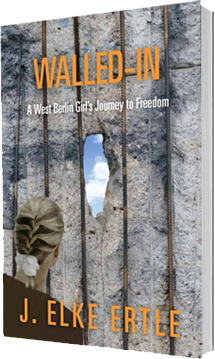
For a sneak peek at the first 20+ pages of my memoir, Walled-In: A West Berlin Girl’s Journey to Freedom, click “Download a free excerpt” on my home page and feel free to follow my blog about anything German: historic or current events, people, places or food.

Walled-In is my story of growing up in Berlin during the Cold War. Juxtaposing the events that engulfed Berlin during the Berlin Blockade, the Berlin Airlift, the Berlin Wall and Kennedy’s Berlin visit with the struggle against my equally insurmountable parental walls, Walled-In is about freedom vs. conformity, conflict vs. harmony, domination vs. submission, loyalty vs. betrayal.


Otto Lilienthal’s Last Glider Flight

Friday, August 9th, 2013

This day in history marks Otto Lilienthal’s last glider flight. He was a German pioneer of aviation and became known as the Glider King and Father of Flight. The date of his last flight was 9 August 1896. It was a beautiful summer day in Stoelln, about 60 kilometers northwest of Berlin, when Otto Lilienthal stepped into his harness for the last time. He had already made three successful flights that day and had attained his usual flying distance of over 800 feet. On the fourth attempt, he was slowly gliding into the valley when an unexpected sudden gust caught him off guard. His glider pitched and stalled. The Glider King lost control and crashed to the ground.

Otto Lilienthal had piloted gliders since 1891. During those five years, he made over 3000 flights and built 18 different contraptions. His largest double decker glider had a wingspan of 23 feet. His designs were similar to today’s frames for hang gliders and ultralight aircraft. He and his younger brother Gustav had tinkered with strap-on wings, using willow switches and cotton fabric, since Otto was fourteen. The storks near their home along the River Peene had been their inspiration. The brothers proceeded to study the flight of birds and soon recognized that the principal of aerodynamics is involved in flight and that wings need to have a curvature.

Otto Lilienthal German Pionier of Aviation He crashed on 9 August 1896

Otto Lilienthal
German Pionier of Aviation
He crashed on 9 August 1896

On Otto Lilienthal’s last glider flight on 9 August, 1896, he dropped from a height of about 50 feet, still in his glider. As he was placed on a cot, he is reported to have said, “I hardly have any pain. I’m just going to rest a little bit.” He, in fact, had fractured his spine and died from the injuries the following day.


For a sneak peek at the first 20+ pages of my memoir, Walled-In: A West Berlin Girl’s Journey to Freedom, click “Download a free excerpt” on my home page and feel free to follow my blog about anything German: historic and current events, people, places and food.

Walled-In is my story of growing up in Berlin during the Cold War. Juxtaposing the events that engulfed Berlin during the Berlin Blockade, the Berlin Airlift, the Berlin Wall and Kennedy’s Berlin visit with the struggle against my equally insurmountable parental walls, Walled-In is about freedom vs. conformity, conflict vs. harmony, domination vs. submission, loyalty vs. betrayal.


Happiness and Growth

Wednesday, August 7th, 2013

“Everyone wants to live on top of the mountain, but all the happiness and growth occurs while you’re climbing it.”
–Andy Rooney


For a sneak peek at the first 20+ pages of my memoir, Walled-In: A West Berlin Girl’s Journey to Freedom, click “Download a free excerpt” on the home page of http://www.walled-in-berlin.com. Walled-In is a story of growing up in Berlin during the Cold War.


Tropical Islands Resort in Krausnick

Monday, August 5th, 2013

Since 2004 Germans can extend their traditionally short summers by checking into the Tropical Islands Resort in Krausnick. Located in a former airship hanger for zeppelins, the tropical theme park is located just 37 miles from Berlin’s city center. It stands on the site of the former Airfield Brand-Briesen. In 1938, the Nazis began development of the airfield. The Soviet Army occupied it after World War II. In 1992, following German reunification, the site was returned to the German Federal government.

Tropical Islands Resort in Krausnick

Former airship hanger turned into a Tropical Islands Resort

Turned into a theme park at a cost of cost approximately 78 million euros, the hanger is the biggest freestanding hall in the world. Its inside air temperature is held at 80°F, humidity at 64%. Tropical Islands Resort is open around the clock every day of the year and allows overnight stays. Visitors may choose a variety of admission options, which include lodges and guest rooms along with tent rentals and simply crashing on the beach with a mat and blanket. The maximum number of visitors the park can accommodate per day is 6,000.

Tropical Islands Resort in Krausnick

Tropical Islands Resort lodge with waterfall

The Tropical Islands Resort in Krausnick is home to the biggest indoor rainforest in the world with 50,000 plants and many birds. The park’s tropical sea is designed to look like the waters of a coral island and includes 660 feet of sandy beach. An indoor landscaped water park the size of four football fields contains pools, lagoons, water slides, waterfalls, whirlpools, and saunas. Visitors can enjoy replicas of buildings from Thailand, Borneo, Samoa and Bali, a number of bars, restaurants, and evening and day shows. A 43,000 square foot children’s play area is also available.

For more information, contact tropical-islands.de.


For a sneak peek at the first 20+ pages of my memoir, Walled-In: A West Berlin Girl’s Journey to Freedom, click “Download a free excerpt” on my home page and feel free to follow my blog about anything German: historic and current events, people, places and food.

Walled-In is my story of growing up in Berlin during the Cold War. Juxtaposing the events that engulfed Berlin during the Berlin Blockade, the Berlin Airlift, the Berlin Wall and Kennedy’s Berlin visit with the struggle against my equally insurmountable parental walls, Walled-In is about freedom vs. conformity, conflict vs. harmony, domination vs. submission, loyalty vs. betrayal.


Potsdam Agreement

Friday, August 2nd, 2013

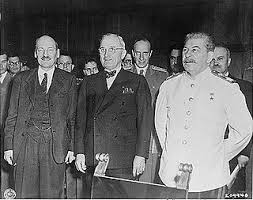
The Potsdam Agreement contains the details of the tripartite military occupation and reconstruction of Germany and the European Theatre following World War II. It was signed on this day in history in 1945. Shortly after midnight on 2 August 1945, the representatives of the three victorious WWII Allies, Clement Attlee (Great Britain), Harry S. Truman (United States), and Joseph Stalin (USSR) signed the Potsdam Agreement at Schloss Cecilienhof in Potsdam. The castle is located about 16 miles southwest of Berlin.

Potsdam Conference

The Big Three:
Clement Attlee, Harry S. Truman, Joseph Stalin

Relative to Germany, the Potsdam Agreement addressed mainly the “5D’s”: Denazification, Demilitarization, Democratization, Decentralization, and Disassemblement.
– DENAZIFICATION – eradication of the National Socialist Party and Nazi institutions to eliminate all Nazi influence. War criminals to be brought to swift justice.
– DEMILITARIZATION – disarmament and demilitarization of Germany and the elimination of all German industries that could be used for military production.
– DEMOCRATIZATION – formation of political parties and trade unions, freedom of speech, press, and religion.
– DECENRALIZATION – elimination of a concentration of powers by decentralizing the political structure.
– DISMANTLING – Reduction or destruction of all civilian heavy-industry with war-potential, such as shipbuilding, machine production, and chemical factories. Restructuring of German economy towards agriculture and light-industry. It was further agreed that reparations to the USSR should come from the Soviet zone of Germany; reparations to the United States, the United Kingdom, and other countries to come from the Western Zones. In addition, it was agreed that the USSR would be entitled to 10% of the industrial capacity (industrial capital equipment and industries) of the western zones. Dismantling was stopped in West Germany in 1951. In East Germany disassemblement continued.

The Potsdam Agreement was superseded by the “Treaty on the Final Settlement with Respect to Germany”, which was signed on 12 September 1990, following reunification.


For a sneak peek at the first 20+ pages of my memoir, Walled-In: A West Berlin Girl’s Journey to Freedom, click “Download a free excerpt” on my home page and feel free to follow my blog about anything German: historic and current events, people, places and food.

Walled-In is my story of growing up in Berlin during the Cold War. Juxtaposing the events that engulfed Berlin during the Berlin Blockade, the Berlin Airlift, the Berlin Wall and Kennedy’s Berlin visit with the struggle against my equally insurmountable parental walls, Walled-In is about freedom vs. conformity, conflict vs. harmony, domination vs. submission, loyalty vs. betrayal.


True Friends

Wednesday, July 31st, 2013

The most beautiful discovery that true friends can make is that they can grow separately without growing apart.
–Anonymous


For a sneak peek at the first 20+ pages of my memoir, Walled-In: A West Berlin Girl’s Journey to Freedom, click “Download a free excerpt” on the home page of http://www.walled-in-berlin.com. Walled-In is a story of growing up in Berlin during the Cold War.


Nadezhda Popova Died

Monday, July 29th, 2013

Nadezhda Popova died earlier this month. She rose to deputy commander of the 588th Night Bomber Regiment during WWII. At the young age of 15, Ms. Popova joined a flying club. After graduating from pilot school, she became a flight instructor. At age 19 she became a pilot in an all-female regiment, the night bombers. The ages of these women ranged from 17 to 26.

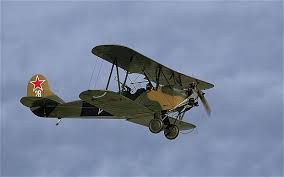
bi plane flown by the Night Witches during World War II

bi plane flown by the Night Witches during World War II

In jerry-rigged onetime crop dusters, these female aviators flew 30,000 missions over a four-year period. They had no parachutes, no guns, no radios, and no radar. Their cockpits were open. If hit by bullets, their planes would burn like paper. Yet, they dumped 23,000 tons of bombs on their German adversaries. Ms. Popova flew 852 combat missions and was shot down several times, but never seriously wounded according to a 14 July 2013 article in the New York Times.

Usually, these two-seaters, made of plywood and canvas, were flown in formations of three. Two would serve as decoys. The third would slip through the darkness and drops its two single bombs, one under each wing. The triad would then switch places until all bombs were dropped. In the last stages of each bomb run, they would shut down their engines so that the Germans could only hear the hiss of the air flowing across the wings. Because it sounded like a broomstick in flight the Germans called them Night Witches.

Ms. Popova, one of the Night Witches, was 91 when she died according to a 13 July 2013 article in The Washington Post.


For a sneak peek at the first 20+ pages of my memoir, Walled-In: A West Berlin Girl’s Journey to Freedom, click “Download a free excerpt” on my home page and feel free to follow my blog about anything German: historic and current events, people, places and food.

Walled-In is my story of growing up in Berlin during the Cold War. Juxtaposing the events that engulfed Berlin during the Berlin Blockade, the Berlin Airlift, the Berlin Wall and Kennedy’s Berlin visit with the struggle against my equally insurmountable parental walls, Walled-In is about freedom vs. conformity, conflict vs. harmony, domination vs. submission, loyalty vs. betrayal.


Smile because it happened

Friday, July 26th, 2013

Don’t cry because it’s over, smile because it happened.
–Dr. Seuss


For a sneak peek at the first 20+ pages of my memoir, Walled-In: A West Berlin Girl’s Journey to Freedom, click “Download a free excerpt” on the home page of http://www.walled-in-berlin.com. Walled-In is a story of growing up in Berlin during the Cold War.


Walter Ulbricht

Wednesday, July 24th, 2013

On 24 July 1953, communist statesman Walter Ulbricht became the First Secretary of the Central Committee of the Social Unity Party of East Germany. He had been the Deputy Chairman of the Council of Ministers of East Germany since 1949. When the party restructured into a more Soviet-style Communist party the following year, Walter Ulbricht became General Secretary of the Central Committee. In 1953, the position was renamed First Secretary, making Walter Ulbricht the actual leader of East Germany. On account of a childhood diphtheria infection, he retained a squeaky falsetto voice, which made his speeches difficult to understand.

Walter Ulbricht, East German Statesman 1950-1971

Walter Ulbricht, East German Statesman
1950-1971

Already during the Weimar Republic (1919 to 1933) Ulbricht had played a key role in the creation of Germany’s Communist Party. He had spent the Hitler years in exile in the Soviet Union. In 1945, he returned to Germany to reconstruct the communist Social Unity Party and to help establish the German Democratic Republic (East Germany). Walter Ulbricht was a loyal follower of Leninist and Stalinist principles and is quoted as having said, “Es muss demokratisch aussehen, aber wir muessen alles in der Hand haben–it has to look democratic but we must have everything in our hand.”

In 1950, Ulbricht announced a five-year plan concentrating on the doubling of industrial production in East Germany. By 1952, eighty percent of industry had been nationalized. Consumer goods were often in short supply or of shoddy quality. His leadership is said to have been repressive and undemocratic, and that he crushed all opposition. As a result, large numbers of citizens fled to the West. In order to stop the outflow of workers he gave orders to build the Berlin Wall in 1961. Only two months earlier he had publicly stated, “Niemand hat die Absicht, eine Mauer zu errichten–No one has the intention to build a wall.” His unwillingness to seek an accord with West Germany coupled with his difficult relationship with Soviet Union party leader, Leonid Brezhnev, forced his resignation in 1971. He was replaced by his protage, Erich Honecker.


For a sneak peek at the first 20+ pages of my memoir, Walled-In: A West Berlin Girl’s Journey to Freedom, click “Download a free excerpt” on my home page and feel free to follow my blog about anything German: historic or current events, people, places or food.

Walled-In is my story of growing up in Berlin during the Cold War. Juxtaposing the events that engulfed Berlin during the Berlin Blockade, the Berlin Airlift, the Berlin Wall and Kennedy’s Berlin visit with the struggle against my equally insurmountable parental walls, Walled-In is about freedom vs. conformity, conflict vs. harmony, domination vs. submission, loyalty vs. betrayal.


How to Improve your Sales Skills – Do you Need to?

Monday, July 22nd, 2013

Here is how to improve your sales skills: THINK FIRST! Sounds elementary, doesn’t it? But apparently it isn’t. Let me tell you what happened recently to a dynamic retired couple I know. You need an appointment just to have a cup of coffee with Brad and Brenda. That’s how busy they are. After years of fulltime careers and parenting, they now spend their days exactly the way they always wanted to but couldn’t. When Brad dug up their entire Texas Privet hedge in a single day a couple of weeks ago, he wrenched his back. Along with physical therapy his doctor suggested brief relaxation breaks. “Do you have a recliner at home?” the doctor asked.

“A recliner? Never did,” Brad admitted. “But if you think it would help my back, we’ll get one,” he added. After mulling it over with Brenda later that day, they agreed to purchase not one, but two recliners and headed for a furniture store. Amber, the sweet saleslady, was all smiles. She encouraged the pair to try out some floor models, and soon a nearly perfect specimen was located. The chair was sturdy, comfortable, and stylish. But it had one drawback. Brenda did not like the shade of the fabric.

“No problem,” Amber was quick to point out. “The chairs can be ordered in any number of colors and fabrics.” Sure enough, Brenda spotted a nice earth-tone swatch in the sample book, and in short order the deal was about to be clinched. That’s when Amber “excelled” with her sales skills. “You’ll be so glad you bought these chairs,” she gushed. “It might be the last major furniture purchase you’ll ever make.”

How do you think Brad and Brenda, our dynamic retired couple, reacted? Do you think they purchased the recliners? Do you think they’ll ever go back to that furniture store? Do you think Amber will be able to sell ice to the Eskimos? THINK FIRST, Amber. Practice some empathy.

Re-reading this article in 2020 after four years of Donald Trump as president of the United States, I have experienced a paradigm shift (a fundamental change in underlying assumptions). In 2013, I believed that Amber’s insensitivity to her customers’ needs made her an ineffective sales representative. But if Donald Trump was able to sell his notion of democracy to 72 million Americans in 2020 and barely lose the election, then maybe Amber could sell ice to the Eskimos after all. What do you think?

Sales Skills - Do you Need to? www.walled.in.berlin.com

How to Improve Your Sales Skills – Do you Need to? www.walled.in.berlin.com


For a sneak peek at the first 20+ pages of my memoir, Walled-In: A West Berlin Girl’s Journey to Freedom, click “Download a free excerpt” on my home page and feel free to follow my blog about anything German: historic and current events, people, places and food.

Walled-In is my story of growing up in Berlin during the Cold War. Juxtaposing the events that engulfed Berlin during the Berlin Blockade, the Berlin Airlift, the Berlin Wall and Kennedy’s Berlin visit with the struggle against my equally insurmountable parental walls, Walled-In is about freedom vs. conformity, conflict vs. harmony, domination vs. submission, loyalty vs. betrayal.