Archive for the ‘J. Elke Ertle’ Category

Brandeis Book and Author Luncheon 2015

Thursday, March 19th, 2015

Brandeis Book and Author Luncheon 2015 to feature four San Diegans. Susan Meissner will be joined by first-time authors J. Elke Ertle, Michelle Gable and Kelly Parsons. Three newcomers to the book publishing world will be joined by long-established Poway author Susan Meissner at Brandeis’ Book and Author Luncheon next month. Written by staff reporter Elizabeth Marie Himchak, the following article appeared in the Pomerado News on February 19, 2015.

The annual fundraiser, set to start at 10:15 a.m. Tuesday, March 10 in Bernardo Heights Country Club, will feature Michelle Gable (“A Paris Apartment”), Dr. Kelly Parsons (“Doing Harm”) and J. Elke Ertle (“Walled-In”), who are first-time published authors. Meissner, who has appeared at the luncheon before, will talk about her novel “A Fall of Marigolds” and serve as moderator.

Tickets are $55 per person, on sale through March 5. For a registration form, call Leslie Goldstein at 760-317-1819. Bernardo Heights Country Club is at 16006 Bernardo Heights Parkway in Rancho Bernardo.

Goldstein, the luncheon’s chairwoman, said up to 100 attendees are expected based on previous years. There is typically an even mix of Brandeis National Committee Rancho Bernardo Chapter members and book-lovers in the community.

“I think they’ll really enjoy this event,” Goldstein said, adding this time all four authors live in San Diego County.

The luncheon that includes a book signing is expected to go into mid-afternoon. It is a fundraiser for the scientific research and scholarship fund at Brandeis University in Waltham, Massachusetts.

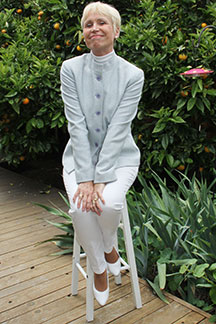
Brandeis Book and Author Luncheon 2015 - left to right: luncheon chair Leslie Goldstein with this year's featured authors J. Elke Ertle, Dr. Kelly Parsons, Susan Meissner, Michelle Gable - photo by Elizabeth Marie Himchak

Brandeis Book and Author Luncheon 2015 – left to right: luncheon chair Leslie Goldstein with this year’s featured authors J. Elke Ertle, Dr. Kelly Parsons, Susan Meissner, Michelle Gable – photo by Elizabeth Marie Himchak

Gable, who has been writing since childhood and works in the finance industry, wrote “A Paris Apartment.” According to her website, the novel was inspired by an apartment in Paris that was locked up from the time its owner left right before World War II started, until 2010 when her heirs sought to inventory and sell its contents, valued in the millions.

The apartment was unintentionally frozen in time when its owner left, never to return. For her fictional novel, Gable has April Vogt, a Sotheby’s continental furniture specialist, travel from the United States to Paris to see what contents at the apartment are of value. In the process she uncovers the deceased owner’s secrets, recorded in letters and journals, and learns more about herself.

Parsons, a urologist and University of California San Diego faculty member, has written the novel “Doing Harm.” According to his website the book is about Steve Mitchell, a happily married husband and father in line for a coveted position at Boston’s University Hospital.

Mitchell’s world turns upside down after he botches a major surgery and another patient mysteriously dies. He learns the death is caused by a sociopath who views murder as a game and has information that could destroy his career and marriage.

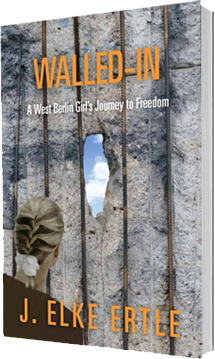
Ertle’s book, “Walled-In: A West Berlin girl’s journey to freedom,” is an autobiography. According to her website, she was born and raised in the British sector of West Berlin during the Cold War. The restrictions on physical movement within the city, due to the Berlin Wall, and the rigid rules imposed by her parents bore many similarities in their effects on her life.

After befriending an American military family and surviving due to the Western Allies’ Berlin Airlift, she became interested in moving to the United States, which she did at 21. She is now retired from a career in the public sector and teaches exercise classes.

Meissner’s “A Fall of Marigolds,” her first novel picked up by a mass market publishing house, debuted last year. Similar to her other historical novels, it revolves around two women a century apart who are intertwined by an object. This time it is a scarf with a beautiful marigold design.

The characters are Clara, a young nurse who survives the 1911 Triangle Shirtwaist Factory fire and sees the man she loves jump to his death to escape the blaze. Her story is juxtaposed with that of Taryn, who was outside the World Trade Center on 9/11, where her husband was trapped on the top floor of the North Tower. In the aftermath, both must choose how to recover and come to terms with their concept of love.

© Copyright 2015 The San Diego Union-Tribune, LLC. An MLIM LLC Company. All rights reserved.


For a sneak peek at the first 20+ pages of my memoir, Walled-In: A West Berlin Girl’s Journey to Freedom, click “Download a free excerpt” on my home page and feel free to follow my blog about anything German: historic or current events, people, places or food.

Walled-In is my story of growing up in Berlin during the Cold War. Juxtaposing the events that engulfed Berlin during the Berlin Blockade, the Berlin Airlift, the Berlin Wall and Kennedy’s Berlin visit with the struggle against my equally insurmountable parental walls, Walled-In is about freedom vs. conformity, conflict vs. harmony, domination vs. submission, loyalty vs. betrayal.


cluttered desk – cluttered mind?

Monday, March 16th, 2015

If a cluttered desk is a sign of a cluttered mind, of what then, is an empty desk a sign?

–Albert Einstein


For a sneak peek at the first 20+ pages of my memoir, Walled-In: A West Berlin Girl’s Journey to Freedom, click “Download a free excerpt” on the home page of http://www.walled-in-berlin.com. Walled-In is a story of growing up in Berlin during the Cold War.


Berlin – A Cultural Mecca

Thursday, March 12th, 2015

Over the years Berlin, Germany, has become a cultural Mecca. For almost 45 years, the city was divided. East Berlin was under Soviet control, West Berlin under American, British and French control. After the Berlin Wall was erected on August 13, 1961, the two halves of the city no longer shared sewer, gas or electric lines. Transportation systems were cut. With time, the two halves grew into two separate cities.

When Germany was reunited in 1990, the city suddenly found itself with a double compliment of everything. The unbeatable array of cultural attractions ranges from classical to traditional, from lifestyle to avant-garde. Today, the city boasts 1,500 cultural offerings every day, ranging from theaters, art galleries, concerts, ballet, cabaret, opera, shows, cinema, symphonies and exhibits to museums and memorial sites. Berlin’s large opera houses and show arenas lie next to small independent theaters, while traditional houses stand next to modern acting workshops. The many events in Berlin are diverse, and their requirements for a suitable location vary from vast arenas to large concert halls, and from open-air theaters to small club cellars. The city has 400 art galleries, which includes the Berlin Wall, because the largest remaining wall section holds 106 murals alone.

And, of course, there are countless historic sites to visit – the Brandenburg Gate, Jewish Museum, Philharmonics, Checkpoint Charlie, Berlin Cathedral, French Cathedral, Kaiser Wilhelm Memorial Church, Stadtschloss, Red City Hall, Reichstag, Radio Tower, Cecilienhof Palace, Sanssouci Palace, Charlottenburg Palace, Hackesche Hoefe, Nikolai Quarters, the Huguenot Museum, Memorial to the Jews murdered of Europe, Soviet Memorial and the Tiergarten – just to name a few.

Brandenburg Gate - Berlin - Photo by J. Elke Ertle © 2014

Brandenburg Gate – Berlin – Photo by. Elke Ertle © 2014

In addition to the cultural variety that can be enjoyed in Berlin, the city’s nightlife, sports events and shopping opportunities are unequaled. According to art historian Karl Scheffler, Berlin “is a city that never is, but is always in the process of becoming.”


For a sneak peek at the first 20+ pages of my memoir, Walled-In: A West Berlin Girl’s Journey to Freedom, click “Download a free excerpt” on my home page and feel free to follow my blog about anything German: historic and current events, people, places and food.

Walled-In is my story of growing up in Berlin during the Cold War. Juxtaposing the events that engulfed Berlin during the Berlin Blockade, the Berlin Airlift, the Berlin Wall and Kennedy’s Berlin visit with the struggle against my equally insurmountable parental walls, Walled-In is about freedom vs. conformity, conflict vs. harmony, domination vs. submission, loyalty vs. betrayal.


Measure of Wealth

Monday, March 9th, 2015

The real measure of your wealth is how much you would be worth if you lost all your money.


For a sneak peek at the first 20+ pages of my memoir, Walled-In: A West Berlin Girl’s Journey to Freedom, click “Download a free excerpt” on the home page of http://www.walled-in-berlin.com. Walled-In is a story of growing up in Berlin during the Cold War.


German – almost America’s official language?

Thursday, March 5th, 2015

German almost became America’s official language. But the bill was defeated by a single vote in 1776.

True or False?

The notion sounds plausible enough. After all, English was the language of the hated Colonialists, against whom the American people rebelled. Why shouldn’t the fledgling young nation vote for a language, other than English, to further distance itself from the Colonialists? With over 50 million Americans claiming German ancestry, Americans of German decent represent the largest single ethnic group in the United States. They include such diverse personalities as John D. Rockefeller, Babe Ruth, Dwight D. Eisenhower, Amelia Earhart, Wernher von Braun, Adolphus Busch, Meryl Streep and Donald Trump. But, the plain truth is that the 1776 vote for an official language never took place.

The “By one Vote” myth

The “By one Vote” story is another urban myth. According to the legend the Pennsylvania state parliament took a vote sometime in the 1790s on whether German should become America’s official language. The Speaker of the House, a German-American by the name of Frederick A. Muhlenberg, cast the decisive vote for English and against German.

The true story

In reality, the 1776 vote never took place. However, it is true that German immigrants from Virginia petitioned Congress in 1794 to have certain US laws printed in German as well as in English. German translations were meant to help immigrants who had not yet learned English to acclimate faster in their new homeland. Congress denied the petition by a vote of 42 to 41. https://usa.usembassy.de/germanamericans-language.htm The German-born, bilingual Speaker of the House, Frederick Augustus Conrad Muehlenberg, abstained from the vote, but declared afterwards, “The faster the Germans become Americans, the better it will be.”  www.spiegel.de/kultur/zwiebelfisch/onionfish-german-as-the-official-language-of-the-usa-a-306711.html

Even without German having become the official language of the US, many German words have made their way into our American vocabulary. How about angst, autobahn, kindergarten, coffee-klatsch, dummkopf, Diesel, edelweiss, gemuetlich, Gesundheit, hamburger, kaputt, muesli, and zigzag, just to name a few?


For a sneak peek at the first 20+ pages of my memoir, Walled-In: A West Berlin Girl’s Journey to Freedom, click “Download a free excerpt” on my home page and feel free to follow my blog about anything German: historic and current events, people, places and food.

Walled-In is my story of growing up in Berlin during the Cold War. Juxtaposing the events that engulfed Berlin during the Berlin Blockade, the Berlin Airlift, the Berlin Wall and Kennedy’s Berlin visit with the struggle against my equally insurmountable parental walls, Walled-In is about freedom vs. conformity, conflict vs. harmony, domination vs. submission, loyalty vs. betrayal.

 

What is intuition?

Monday, March 2nd, 2015

Intuition is the GPS of the Soul.


For a sneak peek at the first 20+ pages of my memoir, Walled-In: A West Berlin Girl’s Journey to Freedom, click “Download a free excerpt” on the home page of http://www.walled-in-berlin.com. Walled-In is a story of growing up in Berlin during the Cold War.


Richard von Weizsaecker passed away

Thursday, February 26th, 2015

Richard von Weizsaecker passed away on January 31, 2015. He was the sixth post-war President of Germany (of West Germany from 1984 to 1990; of the reunited Germany from 1990 to 1994). From 1981 to 1984 he was the Mayor of West Berlin. http://www.dw.de/berlin-pays-last-respects-to-former-president/a-18249449 During his presidency, the Berlin Wall fell and the two Germanys were reunited.

Richard von Weizsaecker’s Life

His grandfather Karl had been the Prime Minister of the Kingdom of Wuerttemberg and had been ennobled in 1897 and raised to the title of Freiherr (Baron) in 1916. Born in 1920 near Stuttgart, Germany, Richard von Weizsaecker was the youngest son of Ernst von Weizsaecker. Richard’s father was a career diplomat who became a senior official in Hitler’s Foreign Ministry. Richard had two brothers and a sister. His oldest brother Carl was a physicist and philosopher and had worked on nuclear fission under Hitler. His middle brother Heinrich was killed in action during World War II. For the most part, Richard grew up in Switzerland and Scandinavia. He later studied philosophy and history in Oxford, Great Britain, and in Grenoble, France. During World War II, he served in the German Army. Following the war, he studied history and law in Goettingen, Germany.

Richard von Weizsaecker struggled with his country’s and his family’s past. His father, who had signed an order to deport 6,000 Jews to Auschwitz, was tried for war crimes during the Nuremberg trials. Richard interrupted his law studies to act as his father’s defense counsel; nonetheless, his father went to prison for his role in Nazi Germany. Richard von Weizsaecker also struggled with his own past. Many of the men who had tried to assassinate Hitler on July 20th 1944 came from his regiment. But he had not been one them. After the war, Richard went into business; he would not have anything to do with politics. He also served as president of a lay assembly of the Lutheran church whose teachings he quietly lived by.

Richard von Weizsaecker’s confronts the past

As President of Germany, he was known to stand for decency, dignity and goodness, and he played a leading role in helping Germany face up to its Nazi past. When Germany was reunited, many said that he was the best spokesman the country could have wished for.

In 1985, on the 40th anniversary of the end of World War II, Richard von Weizsaecker gave a poignant speech in the Bundestag (House of Representatives). In the talk, he articulated the historic responsibility of Germany and the Germans for the crimes of Nazism. He called attention to the link between the Nazi takeover of Germany and the tragedies caused by the Second World War and said, “When the unspeakable truth of the Holocaust became known at the end of the war, all too many of us claimed they had not known anything about it or even suspected anything.” http://www.nytimes.com/1985/05/09/world/all-of-us-must-accept-the-past-the-german-president-tell-s-mp-s.html. “We Germans must look truth straight in the eye – without embellishment and without distortion. . . . There can be no reconciliation without remembrance.”

Richard von Weizsaecker also suggested that younger generations of Germans “cannot profess a guilt of their own for crimes they did not commit,” and that forty years after their surrender in the war they had started, the Germans should face their crimes and their own destruction as honestly as they could. Only then would they understand that the day of their defeat was also the moment of their liberation. http://www.economist.com/news/obituary/21643061-richard-von-weizs-cker-first-president-his-reunited-country

My connection to Richard von Weizsaecker

I have no tangible connection to Richard von Weizsaecker. The only link that loosely connects us is a small chalet in Austria. As a child, I spent five weeks in that mountain cabin. It was there that I discovered my love for the mountains, their splendor and their serenity. My parents had arranged for me to join a group of orphans, lead by the orphanage’s owner. To finance a summer camp experience for her charges, the woman took a handful of paying children along. I was one of those children. For five weeks, we lived in the small chalet: no electricity, no kitchen, no shower facilities. But we hiked our hearts out and breathed in sunshine, beauty and solitude. It was formative experience for me (read “Camp Experiences” in my book, Walled-In: A West Berlin Girl’s Journey to Freedom).

In the 1990s, my husband and I visited Austria and looked up the chalet and the tiny valley it was nestled it. It looked just the way I remembered. When I inquired about its owner, I was told that German President, Richard von Weizsaecker, now owned the chalet. Although we never met, at that moment I felt strangely connected to this man and wondered whether this peaceful spot had helped me to confront his past and to become the gracious man he was known to be.


For a sneak peek at the first 20+ pages of my memoir, Walled-In: A West Berlin Girl’s Journey to Freedom, click “Download a free excerpt” on the home page of http://www.walled-in-berlin.com. Walled-In is a story of growing up in Berlin during the Cold War.


To live is learning to dance in the rain

Monday, February 23rd, 2015

To live isn’t waiting for the rain to stop. To live is learning to dance in the rain.


For a sneak peek at the first 20+ pages of my memoir, Walled-In: A West Berlin Girl’s Journey to Freedom, click “Download a free excerpt” on the home page of http://www.walled-in-berlin.com. Walled-In is a story of growing up in Berlin during the Cold War.


25 years ago today Berlin Wall became history

Thursday, February 19th, 2015

Twenty-five years ago today, the Berlin Wall became history. On this day 25 years ago – on February 19, 1990 – East German border guards began the large-scale demolition of the Berlin Wall. http://www.tagesspiegel.de/berlin/vor-25-jahren-berlin-waechst-zusammen-ddr-grenzsoldaten-reissen-die-mauer-ab/11390546.html By the end of the year, most of the Berlin Wall – or the “anti-fascist protection rampart” as it was called in East Germany – was history.

The demolition process that had been started by private Mauerspechte (wallpeckers), was completed by commercial construction crews. The initial teardown began in the area of the Brandenburg Gate. With jackhammers, crews began to remove 570 feet of Berlin Wall that stood between the Reichstag (Seat of the German Parliament) and Checkpoint Charlie (best known Berlin Wall crossing point between East and West Berlin). Trucks carted away the 2.6-ton wall segments. The East German company Limex would later sell them for up to 500,000 marks each.

The same area that was first freed from the Berlin Wall was also the location of the first provisional border crossing between East and West Berlin, hastily created in December 1989. Less than three years earlier, President Ronald Reagan had appealed to the Soviet leader: “Mr. Gorbachev, tear down this wall.” No one had imagined then that those words might soon become reality.

When the concrete elements were finally released from their foundation in February of 1990, most Berliners celebrated the event like a street festival. But not everyone shared their enthusiasm. Also on the day the Berlin Wall began to come down, a group of East German civil rights activists, clergy and politicians came together to discuss potential paths to a democratic transformation of East Germany. The group did not want to join West Germany and hoped to find a different solution. But East Germany was facing bankruptcy and economic collapse. In the preceding weeks and months, Hans Modrow, the last premier of the East German regime, had tried in vain to obtain a 15 billion mark loan from West Germany. At the end of their meeting on February 19, 1990, the group of round table members rejected the plan of joining West Germany and called for a demilitarized united Germany instead. We know that history did not support their decision.


For a sneak peek at the first 20+ pages of my memoir, Walled-In: A West Berlin Girl’s Journey to Freedom, click “Download a free excerpt” on my home page and feel free to follow my blog about anything German: Historical or current events, people, places or food.

Walled-In is my story of growing up in Berlin during the Cold War. Juxtaposing the events that engulfed Berlin during the Berlin Blockade, the Berlin Airlift, the Berlin Wall, and Kennedy’s Berlin visit with the struggle against my equally insurmountable parental walls, Walled-In is about freedom vs. conformity, conflict vs. harmony, domination vs. submission, loyalty vs. betrayal.

 

German Christians renounced their faith

Thursday, February 12th, 2015

Up to 400,000 German Christians renounced their faith and left the church in recent months to protest a tax law change, said Justin Huggler who writes for “The Telegraph.” As it stands, every German Christian is required to pay a church tax to the Catholic or the Protestant Church. The tax is due regardless of whether or not he attends church services. Once baptized, he is considered a member of the church and obligated to pay. The tax is payable to the government along with income taxes. The government then distributes the amount collected to the appropriate denomination. According to the 2011 census, around 30.8 per cent of German Christians (24.7 million people) are Catholics and 30.3 per cent (24.3 million people) are Protestants. http://www.telegraph.co.uk/news/worldnews/europe/germany/11380968/Compulsory-income-tax-on-Christians-drives-Germans-away-from-Protestant-and-Catholic-churches.html

Tax Law Change under German Law

An 8% or 9% church tax for German Christians has been compulsory for as long as I can remember. My father – a Protestant – threatened many years ago to leave the church to avoid paying these taxes. Under German Law, he was obligated to not only pay his own church tax to the Protestant Church but also the church tax of my mother – a Catholic. Since my mother did not work outside our home, her church tax was based on my father’s income. He thought that unfair (see “A Matter of Faith” in my memoir Walled-In: A West Berlin Girl’s Journey to Freedom). A recent change in German tax laws requires financial institutions to withhold the church tax on capital gains in addition to income earned. This change is what has sparked a German mass exodus from both, Catholic and Protestant churches.

Koellner Dom - Cologne Cathedral - Photo by J. Elke Ertle ©2014

Koellner Dom – Cologne Cathedral – Photo by J. Elke Ertle © 2014

What it means to leave the Church

Church taxes are used to fund church activities, schools and day care centers. The only way to avoid paying these taxes is to formally renounce one’s church membership. Until recently, most German Christians have paid the extra tax for the benefits it affords them. Now, they are rethinking their options. To leave the church is more than a formality. Not only does the government charge a fee for processing the declaration to leave the church, but German Christians can also be denied certain rites once they have left the faith. Although they cannot be excommunicated or prevented from taking part in church services, they can be denied religious burial and access to the best state-funded schools. German Catholics who renounce their church membership are also barred from confession, communion and from the anointing of the sick, unless close to death.


For a sneak peek at the first 20+ pages of my memoir, Walled-In: A West Berlin Girl’s Journey to Freedom, click “Download a free excerpt” on my home page and feel free to follow my blog about anything German: historic and current events, people, places and food.

Walled-In is my story of growing up in Berlin during the Cold War. Juxtaposing the events that engulfed Berlin during the Berlin Blockade, the Berlin Airlift, the Berlin Wall and Kennedy’s Berlin visit with the struggle against my equally insurmountable parental walls, Walled-In is about freedom vs. conformity, conflict vs. harmony, domination vs. submission, loyalty vs. betrayal.