500th Anniversary Martin Luther’s Theses

February 27th, 2017


On 31 October 2017, Protestants throughout the world will celebrate the 500th anniversary of the day on which Martin Luther is said to have nailed 95 Theses to the door of All Saints’ Church in Wittenberg, Germany. Luther was a German monk and professor of moral theology at the University of Wittenberg http://www.walled-in-berlin.com/j-elke-ertle/a-man-called-martin-luther/ who became disillusioned with certain abuses practiced by the 16th century Roman Catholic Church. Martin Luther’s Theses eventually sparked the Protestant Reformation. Twelve years after he is said to have nailed the Theses to the church door, the word “Protestant” became a term that described those who protested against the Catholic Church.

Why Martin Luther’s Theses?

In 1510 Luther visited Rome and was disgusted by the practices of church officials, and in particular, by their sale of indulgences. Indulgences were certificates that could be purchased to reduce the punishment for sins committed by the purchasers or their loved ones in purgatory. Martin Luther argued the church practice lead people to think that they could forgo repentance by purchasing indulgences.


Martin Luther depicted as nailing his 95 Thesis to the door of All Saints' Church in Wittenberg, Germany.

Martin Luther depicted as nailing his 95 Thesis to the door of All Saints’ Church in Wittenberg, Germany.
www.walled-in-berlin.com


 In 1515, Pope Leo X granted indulgences to finance the construction of St. Peter’s Basilica in Rome. These certificates, in particular, could be purchased to reduce the punishment for almost any sin, including adultery and theft. With his 95 Theses Luther intended to express his disillusionment over this corruption. His Theses called for a reform of the Catholic Church and challenged other scholars to debate church policy. The indulgence controversy set off by the Martin Luther’s Theses was the beginning of the Protestant Reformation, which set into motion lasting social and political change in Europe.

How did Word of the 95 Theses Spread?

On 31 October 1517, Luther sent a letter to Albert of Brandenburg, Archbishop of Mainz, because it was under the archbishop’s authority that indulgences were sold. Whether Luther also posted the Theses on the door of All Saints’ Church and on other churches in Wittenberg is not clear. In any case, Martin Luther’s Theses were quickly reprinted, translated, and distributed throughout Germany and Europe. Although Luther wrote the Theses to be argued in an academic disputation (a formalized method of debate), there is no evidence that such a debate ever took place. No copies of a Wittenberg printing of the 95 Theses have ever been discovered.

Is the nailing of Martin Luther’s Theses a myth?

Today, the majority of researchers agree that Luther mailed the Thesis to the archbishop on 31 October 1517, but they question that he nailed them to the door of All Saint’s. In the early 1960s, researchers began to doubt the latter because the first written account of the event comes from Philip Melanchthon, Luther’s colleague and close friend. Erwin Iserloh, a catholic Luther researcher, suggests that the nailing could not have taking place because Philip Melanchthon did not arrive in Wittenberg until 1518 and therefore could not have been an eyewitness to the event. Besides, Melanchthon never mentioned the nailing until after Luther’s death. Although announcements were routinely hung on the door of All Saints’, the nailing of the 95 theses prior to hearing back from the archbishop seems unlikely.

Walk in Martin Luther’s Footsteps

The German tourism industry has geared up to help visitors discover the history of Reformation. Visitors are encouraged to follow Luther’s footsteps on the 745-mile Luther Trail or to discover his life and legacy on numerous mini-tours across Germany. Tours by train, bus and foot are available to fit every budget. The most prominent Luther sites are Wittenberg, Eisleben and Eisenach. Other cities and towns associated with Martin Luther are Allstedt, Altenburg, Augsburg, Bad Frankenhausen, Bad Hersfeld, Bad Neustadt, Bretten, Coburg, Dresden, Eilenburg, Erfurt, Gotha, Grimma, Halle, Heidelberg, Jena, Leipzig, Magdeburg, Mansfeld, Marburg, Moehra, Muellhausen, Naumburg, Nuremberg, Oppenheim, Pirna, Schmalkalden, Sonneberg, Speyer, Torgau, Weimar, Worms and Zeitz. For more information, visit

http://www.visit-luther.com/explore-luthercountry/events/all-luthercountry-events/


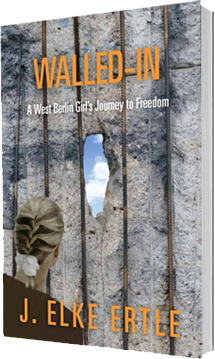
For a sneak peek at the first 20+ pages of my memoir, Walled-In: A West Berlin Girl’s Journey to Freedom, click “Download a free excerpt” on my home page and feel free to follow my blog about anything German: historic and current events, people, places and food.

Walled-In is my story of growing up in Berlin during the Cold War. Juxtaposing the events that engulfed Berlin during the Berlin Blockade, the Berlin Airlift, the Berlin Wall and Kennedy’s Berlin visit with the struggle against my equally insurmountable parental walls, Walled-In is about freedom vs. conformity, conflict vs. harmony, domination vs. submission, loyalty vs. betrayal.


Turning Resolve into Success

February 23rd, 2017

Success is the ability to go from one failure to another with no loss of enthusiasm.

— Sir Winston Churchill


For a sneak peek at the first 20+ pages of my memoir, “Walled-In: A West Berlin Girl’s Journey to Freedom,” click “Download a free excerpt” on the home page of http://www.walled-in-berlin.com


Frederick the Great shaped modern Europe

February 20th, 2017

King Frederick the Great (Friedrich der Grosse) was born in 1712 in Berlin, Germany. In 1740, he inherited the Prussian throne from his father, Frederick William I (Friedrich Wilhelm I) http://www.walled-in-berlin.com/j-elke-ertle/frederick-william-i-a-troubled-ruler/ and ruled until 1786. He was bestowed the epitaph of “the Great” during his lifetime and was affectionately nicknamed “Der Alte Fritz” (Old Fritz) by the Prussian people.

It is doubtful that Otto von Bismarck http://www.walled-in-berlin.com/j-elke-ertle/otto-von-bismarck-visionary-or-villain/ could have united Germany without Frederick the Great’s achievements. In addition to being an excellent military strategist and one of the most enlightened monarchs of the area, Frederick the Great was also an insightful historian, a probing philosopher, an accomplished musician and an insatiable reader. During his time in power, Prussia became one of the preeminent powers in Europe.

Frederick the Great’s childhood

Frederick the Great’s father was a violent authoritarian with a quick temper who expected his son to embrace the military to the exclusion of all other pursuits. But the young price preferred the arts and culture to the art of war. Frederick William responded by beating and humiliating his son. At age 18, young Frederick attempted to escape to England together with his friend, Hans Hermann von Katte. The two were caught and arrested for treason. In a cruel spectacle, Frederick William made his son watch the decapitation of his friend. Thereafter, Frederick the Great bowed to his father’s wishes.

Frederick the Great’s Domestic Achievements

Frederick the Great achieved a high reputation as a military commander and is often remembered as the father of Prussian militarism, but his impact was even more evident domestically. He not only reformed the military and the bureaucracy, he also established religious tolerance and granted a basic form of freedom of speech and press. He reformed the judicial system, abolishing most uses of torture and established the first German code of law. He also encouraged immigrants of various nationalities and faiths to come to Prussia.


Frederick II, King of Prussia (known as Frederick the Great), 1712-1786. www.walled-in-berlin.com. Photo courtesy of en.wikipedia

Frederick II, King of Prussia (known as Frederick the Great), 1712-1786. www.walled-in-berlin.com. Photo courtesy of en.wikipedia


Frederick the Great’s reign saw a revolutionary change in the importance and prestige of Prussia. Despite preferring the French language to his native German, Frederick distrusted France’s intentions. “Distrust is the mother of security” became his motto.

Frederick the Great’s Architectural Achievements

Frederick had many famous buildings constructed in Berlin. Most of them still exist today, such as the Berlin State Opera (Berliner Staatsoper), the Royal Library (Staatsbioliothek Berlin), St. Hedwig’s Cathedral (Sankt-Hedwig-Kathedrale) and Prince Henry’s Palace (now the site of the Humboldt University (Humboldt Universitaet.) http://www.walled-in-berlin.com/j-elke-ertle/berlins-prestigious-humboldt-university/ However, the king’s most favorite place was his summer residence, Sanssouci, in Potsdam. http://www.walled-in-berlin.com/j-elke-ertle/sanssouci-modest-kings-retreat/


For a sneak peek at the first 20+ pages of my memoir, Walled-In: A West Berlin Girl’s Journey to Freedom, click “Download a free excerpt” on my home page and feel free to follow my blog about anything German: historic and current events, people, places and food.

Walled-In is my story of growing up in Berlin during the Cold War. Juxtaposing the events that engulfed Berlin during the Berlin Blockade, the Berlin Airlift, the Berlin Wall and Kennedy’s Berlin visit with the struggle against my equally insurmountable parental walls, Walled-In is about freedom vs. conformity, conflict vs. harmony, domination vs. submission, loyalty vs. betrayal.


Never lose hope

February 16th, 2017

Never lose hope. You never know what tomorrow may bring.

— Anonymous

Never lose hope. www.walled-in-berlin.com

Never lose hope. www.walled-in-berlin.com


For a sneak peek at the first 20+ pages of my memoir, “Walled-In: A West Berlin Girl’s Journey to Freedom,” click “Download a free excerpt” on the home page of http://www.walled-in-berlin.com

Frederick William I – A Troubled Ruler

February 13th, 2017


King Frederick William I (Friedrich Wilhelm I) of Prussia (1713-1740) was a short-tempered and cantankerous ruler. But to his credit, he was also an astute monarch. His reforms transformed Prussia from a second-rate power into an efficient and thriving state. Because the army was his overriding passion he became known as the “Soldier King.” He also concerned himself with many other aspects of his relatively small country. When Frederick William died, he left his son and heir, Frederick II the Great an army of about 83,000, a centralized state, a surplus of more than 8,000,000 taler in the royal treasury, and a Prussia that had become the third military power on the European continent, right behind Russia and France.

King Frederick William I (Friedrich Wilhelm I) of Prussia, photo courtesy of britannica.com from a portrait by Antoine Pesne. www.walled-in-berlin.com

King Frederick William I (Friedrich Wilhelm I) of Prussia, photo courtesy of britannica.com – portrait by Antoine Pesne. www.walled-in-berlin.com

Frederick William – complete opposite of his father

Frederick Williams’s father, Frederick I of Prussia (1657-1713) had been the first King of Prussia. Modeling himself after Louis XIV, the “Sun King” of France, his father had embraced luxury to the point of bankrupting the state finances. Young Frederick William decided to take the opposite path. Once king, he dissolved his father’s extravagant court, cut expenses by about three quarters, lived simply and frugally and worked hard. He spent all the money he saved on his armies to make Prussia independent from its neighbors.

Frederick William’s Accomplishments

Frederick William tried to improve the welfare of his people. Convinced that a thriving state could not afford illiterate subjects, he introduced compulsory primary education. He encouraged farming, reclaimed marshes, stored grain in good times and sold it in bad times. He resettled Prussia’s eastern territories after it had been depopulated by the plague. He freed the serfs and abolished hereditary leases. Frederick William never started a war and made considerable reforms to the Prussian army’s training, tactics and conscription program. The lot of the peasantry improved significantly during his reign. He demanded discipline, efficiency and good work ethics from his soldiers, and Prussian discipline and Prussian virtues became accepted concepts. http://www.walled-in-berlin.com/j-elke-ertle/the-origin-of-prussian-virtues/

Frederick William’s shortcomings

Although an effective ruler, Frederick William possessed a violent temper. His inherited illnesses, which resulted in gout, migraines, obesity and severe stomach cramps, may have exacerbated his disposition. At times, his temper was uncontrollable. The most frequent victim of such outbursts was his son Fritz (later known as Frederick the Great). http://www.walled-in-berlin.com/j-elke-ertle/frederick-the-great-shaped-modern-europe/ When father and son happened to meet in private or in public, Frederick William often seized Fritz by the throat, threw him to the ground and forced him to kiss his boots.

Frederick William wanted his eldest surviving son to become a fine soldier. To that end, he exposed Fritz to a minimal education and required him to live a simple lifestyle while focusing on the Army and statesmanship. But Fritz preferred the intellectual pleasures of music, philosophy and French culture. As Fritz’s defiance for his father’s rules increased, Frederick William beat or humiliated him. When Fritz attempted to flee to England with his friend and tutor, Hans Hermann von Katte, the enraged king had Katte executed and forced Fritz to watch. Frederick William’s last years were dominated by his passion of recruiting tall men for his palace guard, the Potsdam Giants (Potsdamer Riesengarde) http://www.walled-in-berlin.com/j-elke-ertle/bizarre-tale-of-the-potsdam-giants/


For a sneak peek at the first 20+ pages of my memoir, Walled-In: A West Berlin Girl’s Journey to Freedom, click “Download a free excerpt” on my home page and feel free to follow my blog about anything German: historic or current events, people, places or food.

Walled-In is my story of growing up in Berlin during the Cold War. Juxtaposing the events that engulfed Berlin during the Berlin Blockade, the Berlin Airlift, the Berlin Wall and Kennedy’s Berlin visit with the struggle against my equally insurmountable parental walls, Walled-In is about freedom vs. conformity, conflict vs. harmony, domination vs. submission, loyalty vs. betrayal.


Same sky – different horizon

February 9th, 2017

We all live under the same sky, but we don’t all have the same horizon.

— Konrad Adenauer


Sky, bird, horizon. Photo © J. Elke Ertle, 2016. www.walled-in-berlin.com

Sky, birds, horizon. Photo © J. Elke Ertle, 2016. www.walled-in-berlin.com


For a sneak peek at the first 20+ pages of my memoir, Walled-In: A West Berlin Girl’s Journey to Freedom, click “Download a free excerpt” on my home page and feel free to follow my blog about anything German: historic and current events, people, places and food.

Walled-In is my story of growing up in Berlin during the Cold War. Juxtaposing the events that engulfed Berlin during the Berlin Blockade, the Berlin Airlift, the Berlin Wall and Kennedy’s Berlin visit with the struggle against my equally insurmountable parental walls, Walled-In is about freedom vs. conformity, conflict vs. harmony, domination vs. submission, loyalty vs. betrayal.


Avant-Garde Recyclers of Cars

February 6th, 2017


Did you know that Communist East Germany was an ingenious, albeit unintentional, recycler of cars? East Germany’s most popular car, the Trabant – affectionally called Trabi by its owners – turned out to be edible. You heard right! When the Berlin Wall came down in 1989, East Germans abandoned their cars in droves and walked across the border. Many Trabis were hastily left in open fields. When the owners returned some weeks later, they found to their surprise that goats and pigs had dined on their beloved Trabis.


Pig dining on abandoned Trabi. Photo courtesy of AcidCow.com

Pig dining on abandoned Trabi. Photo courtesy of AcidCow.com


A 1984 UN report identified East Germany as the most polluted country in Europe. http://www.csmonitor.com/1984/1005/100538.html In terms of air, water and soil pollution, East Germany certainly was the most polluted European country. But East Germans were also cutting-edge recyclers of cars because Trabant bodies were made from an amalgam, called Duroplast, a material which turned out to be edible. No other carmaker can say that about its vehicles.

The East German Trabant

Between 1957 and 1990, the East German state-owned automobile manufacturer, VEB Sachsenring Automobilwerke Zwickau, produced a total of 3,096,099 Trabants http://www.walled-in-berlin.com/j-elke-ertle/the-trabi-an-ugly-duckling/. Before the fall of the Berlin Wall http://walled-in-berlin.com/j-elke-ertle/schabowski-sparks-the-fall-of-the-wall/ East Germans coveted those cars. To buy a new Trabi, the prospective owner was placed on a list and had to wait for delivery an average of 11 to 18 years. Aside from the lengthy wait, a Trabi was a huge financial investment. In most cases it cost the equivalent of one year’s salary. With so much riding on ownership, Trabis were well cared for and had an average lifespan of 28 years.

In West Germany, Trabis were mocked for their 25-horsepower, vacuum-cleaner-size plastic motor, their uncomfortable ride and their bodies’ fibrous reinforcing material that looked like – but wasn’t – cardboard.

What is Duroplast?

The roof, trunk lid, hood, fenders and doors of the Trabant were made of an amalgam, called Duroplast. Duroplast was made from cotton waste from the Soviet Union and phenol resins from the East German dye industry. Fibrous reinforcement was added. The resulting material was strong, light and durable.

Worldwide Recyclers of Cars

In the U.S. nearly 12 million cars are recycled every year. In Europe it is nearly eight million. Generally, about 75-80 percent of a vehicle is recyclable. That means the car is shredded, metal is recovered for recycling and the remainder is put into a landfill. The waste usually includes polymers such as plastics and resins. Not in East Germany, however. These avant-garde recyclers of cars reprocessed the Duroplast.

As discarded Trabants began filling junkyards after the German reunification, VEB Sachsenring, the same automobile manufacturer that had produced the cars in the first place, developed a way to shred the Duroplast and use it as an aggregate in cement pavement blocks. A Berlin biotech company even experimented with bacteria that would consume the car bodies in 20 days.


For a sneak peek at the first 20+ pages of my memoir, Walled-In: A West Berlin Girl’s Journey to Freedom, click “Download a free excerpt” on my home page and feel free to follow my blog about anything German: historic and current events, people, places and food.

Walled-In is my story of growing up in Berlin during the Cold War. Juxtaposing the events that engulfed Berlin during the Berlin Blockade, the Berlin Airlift, the Berlin Wall and Kennedy’s Berlin visit with the struggle against my equally insurmountable parental walls, Walled-In is about freedom vs. conformity, conflict vs. harmony, domination vs. submission, loyalty vs. betrayal.


Not just another flower

February 2nd, 2017

I will not be another flower, picked for my beauty and left to die. I will be wild, difficult to find and impossible to forget.

— Erin Van Vuren

Psychotria elate (Hot Lips Plant), not just another flower. www.walled-in-berlin.com

Psychotria elata (Hot Lips Plant), not just another flower, www.walled-in-berlin.com


Walled-In is my story of growing up in Berlin during the Cold War. Juxtaposing the events that engulfed Berlin during the Berlin Blockade, the Berlin Airlift, the Berlin Wall and Kennedy’s Berlin visit with the struggle against my equally insurmountable parental walls, Walled-In is about freedom vs. conformity, conflict vs. harmony, domination vs. submission, loyalty vs. betrayal.

For a sneak peek at the first 20+ pages of my memoir, Walled-In: A West Berlin Girl’s Journey to Freedom, click “Download a free excerpt” on my home page and feel free to follow my blog about anything German: historic and current events, people, places and food.

Walled-In is my story of growing up in Berlin during the Cold War. Juxtaposing the events that engulfed Berlin during the Berlin Blockade, the Berlin Airlift, the Berlin Wall and Kennedy’s Berlin visit with the struggle against my equally insurmountable parental walls, Walled-In is about freedom vs. conformity, conflict vs. harmony, domination vs. submission, loyalty vs. betrayal.
 

Bizarre Tale of the Potsdam Giants

January 30th, 2017

The Potsdam Giants (Riesengarde) were the personal batallion of Prussian King Frederick William I (Friedrich Wilhelm I). Officially named “The Grand Grenadiers of Potsdam,” they soon became known as The Potsdam Giants or “The Long Guys” (Lange Kerls) in common parlance. The only requirement for joining was that recruits had to be over six feet tall, an exceptional height at the time. One of the tallest soldiers in the regiment, an Irishman by the name of James Kirkland, was reportedly just less than 7 feet 2 inches. https://www.historyanswers.co.uk/history-of-war/the-potsdam-giants-how-the-king-of-prussia-bred-an-army-of-super-soldiers/

Grenadier James Kirkland, serving in the Potsdam Giants, the personal batallion of King Frederick William I. www.walled-in-berlin.com

Grenadier James Kirkland, serving in the Potsdam Giants, the personal batallion of King Frederick William I. www.walled-in-berlin.com


King Frederick William was known as the “soldier king” (Soldatenkoenig) and had a passion for all things military. He ruled from 1713 until his death in 1740 and was succeeded by his son Frederick the Great (Friedrich der Grosse) http://www.walled-in-berlin.com/j-elke-ertle/frederick-the-great-shaped-modern-europe/

King Frederick William’s Potsdam Giants

Frederick William was born in 1688 in Berlin, Germany, and died in 1740. In 1713, he was crowned King of Prussia and spent most of his life expanding Prussia’s army and turning it into the most famous and disciplined army in Europe. Eventually, one in every nine Prussian was a soldier. http://madmonarchs.guusbeltman.nl/madmonarchs/fredwil1/fredwil1_bio.htm

Frederick William had a passion for tall men and would go to any length to recruit them into his Prussian infantry regiment no. 6, the Potsdam Giants. He dispatched agents throughout the continent in search of such men and gave special compensation to parents who sent him their tallest sons and to landowners who surrendered their tallest farmhands. Prussian teachers kept an eye out for tall children and promptly handed them over to him. Newborn babies, expected to grow unusually tall, were marked with a bright red scarf to identify them. Frederick William even impressed upon his political allies that they could keep their gifts as long as they provided him with giants for his batallion. He never sent his personal regiment into battle, thereby keeping his Potsdam Giants out of harms way.

If these tall men did not comply voluntarily, he had them kidnapped. There is a story that Frederick William even abducted a preacher in the middle of a sermon. For a time, he tried to stretch these soldiers on a rack to make them even taller than they already were. When it became difficult to entice tall men into the Potsdam Giants, the king initiated a breeding program. When Frederick William was ill or felt depressed, he simply commandeered a few hundred “Long Guys” to march through his bedroom to cheer him up.

Privileges of the Potsdam Giants

Attired in blue uniforms with red contrasts and an 18-inch-high grenadier cap to make them appear even taller, the Potsdam Giants were given excellent accommodations and the best meals the military had to offer. Rates of pay were determined by height. The taller these “Long Guys” were, the more money they earned. Nevertheless, most of the Potsdam Giants were reluctant soldiers and many deserted or attempted suicide.

The end of the Potsdam Giants

When the king died in 1740 the regiment was 3,200-men-strong. However, his successor, Frederick the Great, did not share his father’s obsession and disbanded the Potsdam Giants. He integrated most of the soldiers into other units. In 1806, the regiment was officially dissolved.


For a sneak peek at the first 20+ pages of my memoir, Walled-In: A West Berlin Girl’s Journey to Freedom, click “Download a free excerpt” on my home page and feel free to follow my blog about anything German: historic and current events, people, places and food.

Walled-In is my story of growing up in Berlin during the Cold War. Juxtaposing the events that engulfed Berlin during the Berlin Blockade, the Berlin Airlift, the Berlin Wall and Kennedy’s Berlin visit with the struggle against my equally insurmountable parental walls, Walled-In is about freedom vs. conformity, conflict vs. harmony, domination vs. submission, loyalty vs. betrayal.

 

Flawed Human Character

January 26th, 2017

Another flaw in the human character is that everyone wants to build and nobody wants to do maintenance.

— Kurt Vonnegut


For a sneak peek at the first 20+ pages of my memoir, Walled-In: A West Berlin Girl’s Journey to Freedom, click “Download a free excerpt” on my home page and feel free to follow my blog about anything German: historic or current events, people, places or food.

Walled-In is my story of growing up in Berlin during the Cold War. Juxtaposing the events that engulfed Berlin during the Berlin Blockade, the Berlin Airlift, the Berlin Wall and Kennedy’s Berlin visit with the struggle against my equally insurmountable parental walls, Walled-In is about freedom vs. conformity, conflict vs. harmony, domination vs. submission, loyalty vs. betrayal.