Archive for the ‘Walled In Berlin’ Category

Chemnitz Petrified Forest

Thursday, May 14th, 2015

I discovered the Chemnitz Petrified Forest in the courtyard of the Chemnitz Cultural Center when I visited Chemnitz, Germany, last fall. The city is located in Saxony, a state in the central region of Germany. In its 1,000-plus-year history, Saxony has been a medieval duchy, an electorate of the Holy Roman Empire, a kingdom and twice a republic. At the end of World War II, U.S. troops conquered the western part of Saxony, where Chemnitz is located, but later handed it to the Soviets in accordance to the Potsdam Agreement. Chemnitz became part of East Germany and was renamed Karl-Marx-Stadt in 1953. In 1990, when the two Germanys reunited, Chemnitz returned to its original name.

Specimens of the Chemnitz Petrified Forest on exhibit in the Chemnitz Cultural Center - Photo by J. Elke Ertle © 2014

Specimens of the Chemnitz Petrified Forest on exhibit in the Chemnitz Cultural Center – Photo by J. Elke Ertle © 2014

Chemnitz Cultural Center – DAStietz

Specimens from the Chemnitz Petrified Forest are on exhibit in the courtyard of the Chemnitz Cultural Center, named “DAStietz”. In 1913, architect Wilhelm Kreis constructed the building in 1913 for the Tietz family. It served as a large and modern department store and was knows as Kaufhaus Tietz (Department Store Tietz). Because the Tietz family was Jewish, the Nazis closed the store during the pogroms of 1938. In 1945 the building suffered serious damage and was not reconstructed until the 1960s. It reopened as a people-owned department store under the name Zentrum in 1963. In the 1990s, after German reunification, the Kaufhof chain acquired the building and turned it into a shopping center. But when a new department stored opened nearby, the original building was turned into a cultural center. Following extensive renovation, the building reopened in 2004 as “DAStietz”, Along with shops, it now houses the Chemnitz Municipal Library, the Chemnitz Community College, the Museum for Natural History, the New Saxon Gallery and the Chemnitz Petrified Forest.

What is petrified wood

Petrified wood is a fossil wood that is preserved due to a lack of oxygen. Minerals replace the original organic materials. The original structure of the wood remains. The process occurs while the wood is buried under sediment. Over time, water flows through the sediment and deposits minerals in the plant’s cells. As the organic material decays, a stone mold forms in its place.

How the Chemnitz Petrified Forest formed

The Chemnitz Petrified Forest formed as a result of an eruption of a volcano in the Zeisigwald, a large wooded area northeast of the city. The blast uprooted and snapped off the primeval tree ferns and horsetails. Hot tephra (fragments of volcanic rock and lava) covered the tree-like trunks. Fossilization occurred over the millions of years that followed. Although the event occurred about 291 million years ago, the petrified fossils were not discovered until 1737. https://www.tu-chemnitz.de/uk/pressestelle/aktuell/1/5538/en


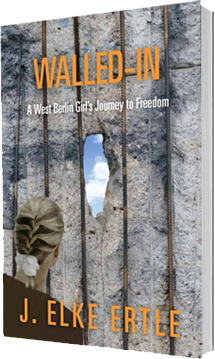
For a sneak peek at the first 20+ pages of my memoir, Walled-In: A West Berlin Girl’s Journey to Freedom, click “Download a free excerpt” on my home page and feel free to follow my blog about anything German: historic and current events, people, places and food.

Walled-In is my story of growing up in Berlin during the Cold War. Juxtaposing the events that engulfed Berlin during the Berlin Blockade, the Berlin Airlift, the Berlin Wall and Kennedy’s Berlin visit with the struggle against my equally insurmountable parental walls, Walled-In is about freedom vs. conformity, conflict vs. harmony, domination vs. submission, loyalty vs. betrayal.

On the practice of education

Monday, May 11th, 2015

If we practiced medicine like we practice education, we’d look for the liver on the right side and left side in alternative years.


–Alfred Kazin

For a sneak peek at the first 20+ pages of my memoir, Walled-In: A West Berlin Girl’s Journey to Freedom, click “Download a free excerpt” on my home page and feel free to follow my blog about anything German: historic or current events, people, places or food.

Walled-In is my story of growing up in Berlin during the Cold War. Juxtaposing the events that engulfed Berlin during the Berlin Blockade, the Berlin Airlift, the Berlin Wall and Kennedy’s Berlin visit with the struggle against my equally insurmountable parental walls, Walled-In is about freedom vs. conformity, conflict vs. harmony, domination vs. submission, loyalty vs. betrayal.


Two Plus Four Treaty

Thursday, May 7th, 2015

The Two Plus Four Treaty (Zwei-Plus-Vier-Vertrag) is an agreement between the TWO post-World War II German states and the FOUR victorious Allied powers. The two German states in the agreement refer to the Federal Republic of Germany (West Germany) and the German Democratic Republic (East Germany). The four victorious powers referred to the four occupying Allies: the United States of America, The United Kingdom, France and the Soviet Union.

Effective date of the Two Plus Four Treaty

Representatives from each of the six countries signed the Treaty on the final settlement with respect to Germany. It was signed in Moscow on 12 September 1990. http://www.walled-in-berlin.com/j-elke-ertle/genscher-detoxifier-of-east-west-relations/ In a joint declaration the Four Allied Powers renounced their rights and responsibilities relative to Germany on 1 October 1990. Two days later, on 3 October 1990, the German Democratic Republic acceded to the Federal Republic of Germany. While the newly united Germany and the three western powers speedily ratified the Treaty, Moscow took its time. The Soviet Ambassador finally presented the German Foreign Minister with the instrument of ratification in March of 1991. Only then did the Two Plus Four Treaty go into effect. https://www.deutschland.de/en/topic/politics/development-dialogue/25th-anniversary-of-the-two-plus-four-treaty https://www.deutschland.de/en/topic/politics/germany-europe/two-plus-four-treaty

Terms of the Two Plus Four Treaty

Under the terms of the treaty,

(1) The Four Allied Powers renounced all rights in Germany, including those relative to the city of Berlin. The Allies returned full sovereignty to the reunited Germany.

(2) The treaty stipulated the withdrawal of Soviet troops from East Germany by the end of 1994.

(3) Germany agreed to limit its combined Armed Forces personnel to no more than 370,000. Germany further agreed to use military force only in accordance with the United Nations Charter and to continue to abide by the Nuclear Non-Proliferation Treaty.

(4) Germany confirmed to abide by the internationally recognized border with Poland and gave up any future claims to territory that had been part of Germany before 1945.


For a sneak peek at the first 20+ pages of my memoir, Walled-In: A West Berlin Girl’s Journey to Freedom, click “Download a free excerpt” on my home page and feel free to follow my blog about anything German: historic and current events, people, places and food.

Walled-In is my story of growing up in Berlin during the Cold War. Juxtaposing the events that engulfed Berlin during the Berlin Blockade, the Berlin Airlift, the Berlin Wall and Kennedy’s Berlin visit with the struggle against my equally insurmountable parental walls, Walled-In is about freedom vs. conformity, conflict vs. harmony, domination vs. submission, loyalty vs. betrayal.


polishing your reputation

Monday, May 4th, 2015

If you spend too much time polishing your reputation, your character will become tarnished.

–Anonymous


For a sneak peek at the first 20+ pages of my memoir, Walled-In: A West Berlin Girl’s Journey to Freedom, click “Download a free excerpt” on my home page and feel free to follow my blog about anything German: historic and current events, people, places and food.

Walled-In is my story of growing up in Berlin during the Cold War. Juxtaposing the events that engulfed Berlin during the Berlin Blockade, the Berlin Airlift, the Berlin Wall and Kennedy’s Berlin visit with the struggle against my equally insurmountable parental walls, Walled-In is about freedom vs. conformity, conflict vs. harmony, domination vs. submission, loyalty vs. betrayal.


Magdeburg Water Bridge

Thursday, April 30th, 2015

That is exactly what the Magdeburg Water Bridge (Kanalbruecke Magdeburg) is: a freeway overpass for boats. Technically, it is an aqueduct, not a bridge, but it is so large that it is navigable by huge barges. Looking down at it, the Magdeburg Water Bridge looks like a river that passes over another river, but more than 20 feet in the air. The canal crossing is 111 feet wide and 14 feet deep. With over 3,000 feet in length (750 feet over water, the remainder over land), it is the longest navigable aqueduct in the world. http://www.amusingplanet.com/2012/09/3-most-impressive-water-bridges-around.html

Location of the Magdeburg Water Bridge

Magdeburg is located in the former East Germany, about 100 miles southwest of Berlin. It spans the River Elbe and connects two important German shipping canals: The Mittelland Canal and the Elbe-Havel Canal. The aqueduct allows large ships to pass between the Rhineland and Berlin without having to first descend into and then climb out again of the River Elbe itself.

Purpose of the Magdeburg Water Bridge

The River Elbe flows at a significantly lower elevation than the Mittelland Canal or the Elbe-Havel Canal. To cross from one canal to another, barges had to make a 7.5-mile detour prior to construction of the canal crossing. The detour also included having to be lowered 60 feet into the River Elbe and then raised back up again into the Elbe-Havel Canal. The previous maximum load per barge was 880 tons. Since construction of the Magdeburg Water Bridge, maximum loads of 1,500 tons can be shipped, which is the equivalent of 50 truckloads.http://www.dw.de/europes-largest-water-bridge-opens/a-990878

Construction of the Magdeburg Water Bridge

Work on the Mittelland Canal began in 1905. Because of World War II, construction stopped in 1942. During the Cold War that which followed World War II, east-west trade became unimportant so that the East German government did not resume construction. After the reunification of Germany, however, work started again in 1997. Construction took six years and cost 501 million Euros. The aqueduct’s structure incorporates 26,500 tons of steel and 2,400,000 cubic feet of concrete.


For a sneak peek at the first 20+ pages of my memoir, Walled-In: A West Berlin Girl’s Journey to Freedom, click “Download a free excerpt” on my home page and feel free to follow my blog about anything German: historic and current events, people, places and food.

Walled-In is my story of growing up in Berlin during the Cold War. Juxtaposing the events that engulfed Berlin during the Berlin Blockade, the Berlin Airlift, the Berlin Wall and Kennedy’s Berlin visit with the struggle against my equally insurmountable parental walls, Walled-In is about freedom vs. conformity, conflict vs. harmony, domination vs. submission, loyalty vs. betrayal.


Your job won’t take care of you

Monday, April 27th, 2015

Your job won’t take care of you when you are sick. Your friends will.

Stay in touch.


For a sneak peek at the first 20+ pages of my memoir, Walled-In: A West Berlin Girl’s Journey to Freedom, click “Download a free excerpt” on the home page of http://www.walled-in-berlin.com. Walled-In is a story of growing up in Berlin during the Cold War.

Berlin Brandenburg Airport boondoggle

Thursday, April 23rd, 2015

Berlin Brandenburg Airport (BER) has been under construction since 2006 and continues to be a source of nonstop embarrassment for Germany. BER, 11 miles south of the center of the city, was supposed to replace both, Tegel and Schoenefeld airports. The two older airports have become outdated and far too small to adequately serve the projected annual passenger total of around 27 million. Berlin Brandenburg’s opening was initially scheduled for 2010, but quickly pushed back to 2011. Ten days prior to the second planned opening, BER’s inauguration was rescheduled again, this time for 2012. Airport manager, Rainer Schwarz, was fired and replaced by Hartmut Mehdorn.

Corruption, mismanagement and safety issues have pushed back the opening date of Berlin Brandenburg International Airport again and again and resulted in sizable cost overruns. The latest inauguration estimates suggest a date somewhere between the first half of 2017 and the last half of 2018. In the meantime, construction permits for BER’s south wing will expire in August 2015 and permits for the main terminal have an expiration date in October. Extensions are less than desirable because they will add additional environmental protection requirements and barrier-free installations.

Muehlenfeld becomes new CEO

In the latest development, Hartmut Mehdorn, BER’s current airport manager, will step down in June of 2015. Karsten Muehlenfeld, a former executive at Rolls Royce in Germany, will take over the reins. Muehlenfeld who had just left Rolls Royce and accepted a position with the train manufacturer Bombardier in February, agreed to take over as the new airport manager of BER instead of working for Bombardier.

http://www.thelocal.de/20150223/ex-rolls-royce-exec-takes-over-ber-airport

Berlin Brandenburg Airport declared too small

Another bombshell in the ongoing BER boondoggle is that the airport that hasn’t even opened yet has already been called “too small” to handle the expected air traffic. Planners say that they underestimated the number of passengers the airport would serve. In response, Mehdorn proposed last December to add another terminal. If approved, the additional terminal would serve an additional 8 to 10 million passengers and be located adjacent to the northern wing of the main terminal. It will now be up to Muehlenfeld to decide whether or not this possibility should be pursued. One of the main issues with a potential terminal addition is that the 6 million residents living in the airport area have previously rejected the idea.

Berlin Brandenburg Additional Costs

Estimated current total costs for BER amount to €5.4 billion. The planned additions would add €2.19 billion to that figure. But there is also talk of a third runway at the tune of an additional €1 billion and other new projects such as expanded baggage system and another freight facility. The total additional costs could amount to €3.2 billion.


For a sneak peek at the first 20+ pages of my memoir, Walled-In: A West Berlin Girl’s Journey to Freedom, click “Download a free excerpt” on my home page and feel free to follow my blog about anything German: historic or current events, people, places or food.

Walled-In is my story of growing up in Berlin during the Cold War. Juxtaposing the events that engulfed Berlin during the Berlin Blockade, the Berlin Airlift, the Berlin Wall and Kennedy’s Berlin visit with the struggle against my equally insurmountable parental walls, Walled-In is about freedom vs. conformity, conflict vs. harmony, domination vs. submission, loyalty vs. betrayal.


Everything in life reflects a choice

Monday, April 20th, 2015

Everything in life is a reflection of a choice you have made. If you want a different result, make a different choice.

Anonymous


For a sneak peek at the first 20+ pages of my memoir, Walled-In: A West Berlin Girl’s Journey to Freedom, click “Download a free excerpt” on the home page of http://www.walled-in-berlin.com. Walled-In is a story of growing up in Berlin during the Cold War.

1000 years city of Leipzig

Thursday, April 16th, 2015

The city of Leipzig, Germany, is celebrating its 1,000th anniversary this year. Thietmar, Bishop of Merseburg, mentioned the Saxon trading town for the first time on 20 December 1015 in his chronicle.

Year-Around Leipzig Sights

Leipzig is a city full of interesting history and culture: There is the Thomaskirche where Johann Sebastian Bach worked as a music director. The Thomaner Boys Choir has delighted audiences for 800 years. The first Christmas market took place here in 1458. Auerbach’s Keller is a tavern that was already frequented by Johann Wolfgang von Goethe. His classic legend “Faust” is set here. You can still visit the tavern today. The University of Leipzig was founded in 1409, and the Leipzig Zoo opened its doors in 1878 for the first time. The old shopping arcade of Specks Hof is located here, and so is the famous concert hall, the Gewandhaus. The beautiful, old St. Nikolaikirche (St. Nicholas Church), is located in Leipzig. It rose to national fame in 1989 when its Monday peace prayers became an integral part of East Germany’s peaceful revolution against communist rule. Leipzig is also the birthplace of institutions such as the German Publishers and Booksellers Association and the German Football Association.

Maedler Passage, Leipzig, photo © J. Elke Ertle, 2015

Maedler Passage, Leipzig, photo © J. Elke Ertle, 2015

Special 2015 Leipzig Events

Leipzig is a delight to visit at any time, but this year will be even more exciting because of the many birthdays that will take place this year. The city of Leipzig will celebrate its 1000th anniversary. Both, the St. Nikolaikirche and the Leipziger Messe (Leipzig trade fairs) will see their 850th birthday. And Leipzig’s Central Train Station will turn 100 this year. Many special events are scheduled throughout the year. Below are some of the highlights:

May 1- to May 25 – Leipzig’s Museum of Fine Arts will present a Paul Klee exhibition, exhibiting about 100 expressionist’s works.

May 17 to May 24 – St. Nikolaikirche’s first festival celebrating 850 years.

May 20 to Oct 25 – Exhibition “1015 – Leipzig from its beginning”

May 22 to May 31Wagner Festival

May 31 to June 7 – The Titanick Theater is enacting Leipzig’s 1000-year history at different places throughout the city, and the Gewandhaus Orchestra is playing Mendelssohn’s “Hymn of Praise,” accompanied by a 1000-voice choir.

June 27 to July 5 – Festival “850 Years Leipzig Fairs” at the trade grounds.

July 10 to 11 – Open air concert “Klassik Airleben” with the Gewandhaus Orchestra.

October 9 – Festival of Lights.

December 20 – Closing event in the Augustusplatz, including the cutting of the grand birthday cake with 1000 candles.


For a sneak peek at the first 20+ pages of my memoir, Walled-In: A West Berlin Girl’s Journey to Freedom, click “Download a free excerpt” on my home page and feel free to follow my blog about anything German: historic or current events, people, places or food.

Walled-In is my story of growing up in Berlin during the Cold War. Juxtaposing the events that engulfed Berlin during the Berlin Blockade, the Berlin Airlift, the Berlin Wall and Kennedy’s Berlin visit with the struggle against my equally insurmountable parental walls, Walled-In is about freedom vs. conformity, conflict vs. harmony, domination vs. submission, loyalty vs. betrayal.

 

Many things are learned in adversity

Monday, April 13th, 2015

Many things are learned in adversity, just as stars may be seen from the bottom of a deep well when they cannot be seen from the top of the mountain.

Anonymous


For a sneak peek at the first 20+ pages of my memoir, Walled-In: A West Berlin Girl’s Journey to Freedom, click “Download a free excerpt” on the home page of http://www.walled-in-berlin.com. Walled-In is a story of growing up in Berlin during the Cold War.