Archive for the ‘Walled In Berlin’ Category

The Striking German Chancellery

Monday, July 18th, 2016


The German Chancellery in Berlin, known as the Bundeskanzleramt, is one of the largest government headquarters in the world. Occupying 129,166 square feet, it is more than twice the size of the White House in Washington. https://archive.curbed.com/2015/12/9/9892938/angela-merkel-time-person-of-the-year-german-chancellery While the Chancellery’s architecture is modern, Germany’s Parliament, the Reichstag, just across the adjacent open plaza, has an “old-world” look. The Bundeskanzleramt’s simple and open design is to symbolize transparency in government.

German Chancellery in Berlin, photo © J. Elke Ertle, 2016, www.walled-in-berlin.com

German Chancellery in Berlin, photo © J. Elke Ertle, 2016, www.walled-in-berlin.com

Location and architecture of the Chancellery

The German Chancellery is located in a bend in the River Spree and consists of three connected structures. At the heart of the grouping stands a nine-story white cube. Its entrance is framed by a series of freestanding columns. Large glass facades give it an airy look. This is where official receptions and presentations are hosted. The two connecting wings house the administrative staff.

German Chancellery in the bend of the River Spree. Photo © J. Elke Ertle, 2016, www.walled-in-berlin.com

German Chancellery in the bend of the River Spree. Photo © J. Elke Ertle, 2016, www.walled-in-berlin.com

History of the German Chancellery

The German Chancellery was established in 1871 as Reichskanzlei (Imperial Chancellery) of the German Empire. The Reichskanzlei was located in the Wilhelmstrasse, just a little over a mile southeast from the current location. In 1939, construction was completed on the Neue Reichskanzlei (New Imperial Chancellery) in the Vossstrasse, also close to the current location. The New Imperial Chancellery was damaged during World War II and subsequently razed by Soviet occupation forces.

After World War II and the division of Berlin and Germany, Bonn became the seat of the West German government. In 1949, the West German Chancellery moved to Bonn. At the same time, East Germany created the Volkskammer (People’s Chamber), the East German Parliament. The Volkskammer eventually moved into the Palace of the Republic in East Berlin. http://www.walled-in-berlin.com/j-elke-ertle/the-palast-der-republik-lives-on/

In the summer of 1999, the government of the reunited Germany returned to Berlin. Until the new German Chancellery building was completed, the Chancellor’s offices were temporarily housed in the former State Council building (Staatsratsgebaeude). In spring of 2001, the current Bundeskanzleramt opened for business.

The Chancellor’s apartment

While located in Bonn, a separate bungalow had served as the private residence for the Chancellor and family. Although an apartment for the Chancellor is located on the top floor of the central Chancellery cube, current Chancellor Angela Merkel prefers to live in her private apartment. She and her husband, Professor Joachim Sauer, reside at “Am Kupfergraben 6,” across from Museum Island in the Mitte District of Berlin. Contrary to the extensive security that surrounds top State officials in the United States, Merkel’s apartment building is watched over by just two policemen. There are no blocked streets, no police vans and no armed guards.


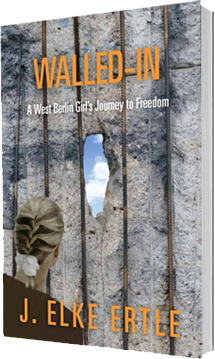
For a sneak peek at the first 20+ pages of my memoir, Walled-In: A West Berlin Girl’s Journey to Freedom, click “Download a free excerpt” on my home page and feel free to follow my blog about anything German: historic or current events, people, places or food.

Walled-In is my story of growing up in Berlin during the Cold War. Juxtaposing the events that engulfed Berlin during the Berlin Blockade, the Berlin Airlift, the Berlin Wall and Kennedy’s Berlin visit with the struggle against my equally insurmountable parental walls, Walled-In is about freedom vs. conformity, conflict vs. harmony, domination vs. submission, loyalty vs. betrayal.

 

The Meaning of Love

Thursday, July 14th, 2016


Tennis is the only game where love means nothing.

–Sign at “Mueritzer Bauernmarkt”, Klink, Germany


For a sneak peek at the first 20+ pages of my memoir, “Walled-In: A West Berlin Girl’s Journey to Freedom,” click “Download a free excerpt” on the home page of http://www.walled-in-berlin.com


Waren – Where the Soul Vacations

Monday, July 11th, 2016


The town of Waren is located in the Federal state of Mecklenburg-Vorpommern in northern Germany. This stunningly beautiful region, the Lake District, seems to be one of Germany’s best-kept secrets, even though the Alexandrian geographer Claudius Ptolemy mentioned Waren as early as 150 A.D. With a population of about 22,000, the town lies at the northern tip of Germany’s largest inland lake, the Mueritz. It also borders on several smaller lakes.

History of Waren

The town of Waren was founded in the middle of the 13th century. The Altstadt, (Old Town) formed around the church of St. George and the Alter Markt (Old Market) close to the edge of the lake. Later, the Neustadt (New Town) developed around St. Mary’s Church and the Neuer Markt (New Market). Altstadt and Neustadt merged in 1325. During the 16th and 17th centuries, major fires and the Thirty Years’ War repeatedly devastated Waren, and most of the town had to be rebuilt time and again. Only the two churches and a few of the buildings surrounding the Alter Market survived. In the 19th century Waren saw an important economic upswing. During this period, the town became the transportation hub for the area, connected to the telegraph network in 1856, opened the Wossidlo Gymnasium (High School) in 1869 and connected to the telephone network in 1899. http://www.waren.m-vp.de/geschichte-waren/

Richard-Wossidlo-Gymnasium in Waren, photo © J. Elke Ertle, 2016, www.walled-in-berlin.com

Richard-Wossidlo-Gymnasium in Waren, photo © J. Elke Ertle, 2016, www.walled-in-berlin.com

Waren today

Although large parts of Waren’s historic Old Town were demolished in the 1970s to allow for a new traffic system, much of the quaint Altstadt was reconstructed. Since German reunification, Waren has become a popular destination for boaters, anglers and spa enthusiasts. However, I believe Waren’s unbeatable charm lies in the unspoiled nature that surrounds it. On the 375 miles of hiking and biking trails that surround the town, visitors can truly let their souls take a vacation.

St. Mary's Church (Marienkirche) in Waren, photo © J. Elke Ertle, 2016, www.walled-in-berlin.com

St. Mary’s Church (Marienkirche) in Waren, photo © J. Elke Ertle, 2016, www.walled-in-berlin.com

Mueritz-Nationalpark

Along with several other easily accessible nature parks in the area, the unmatched Mueritz-Nationalpark borders Waren to the east. There are no less than 130 lakes within the 125 square miles of park along with the headwaters of the Havel and Peene Rivers. Huge glaciers formed the landscape of the Mueritz-Nationalpark during the last Ice Age some 20,000 years ago. Its forests, lakes and wetlands provide homes and important breeding grounds for rare animals, such as tailed eagles, ospreys, black storks and cormorants. In 2011, the park became a UNESCO World Natural Heritage Site.


Waren seen from the Mueritz-Nationalpark, photo © J. Elke Ertle, 2016, www.walled-in-berlin.com

Waren seen from the Mueritz-Nationalpark, photo © J. Elke Ertle, 2016, www.walled-in-berlin.com


For a sneak peek at the first 20+ pages of my memoir, “Walled-In: A West Berlin Girl’s Journey to Freedom,” click “Download a free excerpt” on the home page of http://www.walled-in-berlin.com


What is life all about?

Thursday, July 7th, 2016


When I woke up this morning, I asked myself,” What is life all about?” The answer came from every corner of the room.

The fan said, “Be cool.”

The ceiling said, “Aim high.”

The window said, “Really see the world.”

The clock said, “Every minutes is precious.”

The mirror said, “Reflect before you act.”

The calendar said, “Be up to date.”

And the door said, “Push hard for your goals.”

— Anonymous


For a sneak peek at the first 20+ pages of my memoir, “Walled-In: A West Berlin Girl’s Journey to Freedom,” click “Download a free excerpt” on the home page of http://www.walled-in-berlin.com


The Four Faces of the Neue Wache Memorial

Monday, July 4th, 2016


The Neue Wache (New Guardhouse) in Berlin is located on the boulevard Unter den Linden between Deutsches Historisches Museum (German History Museum) and Humboldt University. Since 1993, the Neue Wache is a memorial to the victims of war and tyranny. However, during its 200-year history, it had four distinct faces. The building’s interior has seen even more configurations during that time.

History of the Neue Wache

In 1818, on the occasion of Germany’s victory in the Wars of Liberation against Napoleon, King Friedrich Wilhelm III ordered the construction of the Neue Wache. Originally, it was erected as a guardhouse for the Prussian royal family and a monument to the victims of the anti-Napoleonic wars. For the next 100 years the Royal Guard was stationed at the Neue Wache. It was the Neue Wache to which Wilhelm Voigt, the bogus “Captain from Koepenick,” took the mayor and the city treasurer of Koepenick in 1906 while impersonating a captain in the Regiment of Foot Guards. http://www.walled-in-berlin.com/j-elke-ertle/the-captain-from-koepenick-ruse/

One hundred years later, in 1918, the German monarchy abdicated and the Neue Wache was converted into a memorial for the victims of World War I. During World War II the building was severely damaged by bombs.

Following the division of Germany in 1945, the Neue Wache was located in the Soviet sector of the divided city. In 1960, the East German government transformed the restored building into a memorial to the victims of fascism and militarism. It housed an eternal flame in a cube above the remains of an unknown concentration camp prisoner and an unknown fallen soldier. A Soviet honor guard stood watch and marched in front of the memorial.

Change of the Soviet Honor Guard in front of Neue Wache - photo © J. Elke Ertle, 1990, www.walled-in-berlin.com

Change of the Soviet Honor Guard in front of Neue Wache – photo © J. Elke Ertle, 1990, www.walled-in-berlin.com

The Neue Wache Today

In 1993, the Reunified Germany turned the Neue Wache into its main monument for the commemoration of the victims of war and tyranny. The building now houses Kaethe Kollwitz’s sculpture “Mother and her Dead Son.” An open, circular skylight provides the only light and leaves the sculpture in the center exposed to wind and weather. An underground room still houses the remains of the unknown soldier and soil from battlefields and concentration camps.

Kaethe Kollwitz sculpture "Mother and her Dead Son" inside the Neue Wache, Berlin - photo © J. Elke Ertle, 2016, www.walled-in-berlin.com

Kaethe Kollwitz sculpture “Mother and her Dead Son” inside the Neue Wache, Berlin – photo © J. Elke Ertle, 2016, www.walled-in-berlin.com

Who was the artist Kaethe Kollwitz?

Kaethe Kollwitz, a well-known German artist, was born in eastern Prussia in 1867. With the outbreak of the First World War, her sons Hans and Peter volunteered for service. Peter was killed just months into the conflict and Kollwitz never recovered from the loss. Several of her sculptures, including “Mother and her Dead Son” were inspired by Peter’s untimely death.


For a sneak peek at the first 20+ pages of my memoir, Walled-In: A West Berlin Girl’s Journey to Freedom, click “Download a free excerpt” on my home page and feel free to follow my blog about anything German: historic or current events, people, places or food.

Walled-In is my story of growing up in Berlin during the Cold War. Juxtaposing the events that engulfed Berlin during the Berlin Blockade, the Berlin Airlift, the Berlin Wall and Kennedy’s Berlin visit with the struggle against my equally insurmountable parental walls, Walled-In is about freedom vs. conformity, conflict vs. harmony, domination vs. submission, loyalty vs. betrayal.


Generosity is doing something nice

Thursday, June 30th, 2016

Real generosity is doing something nice for someone who will never find out.

— Frank A. Clark


For a sneak peek at the first 20+ pages of my memoir, Walled-In: A West Berlin Girl’s Journey to Freedom, click “Download a free excerpt” on my home page and feel free to follow my blog about anything German: historic and current events, people, places and food.

Walled-In is my story of growing up in Berlin during the Cold War. Juxtaposing the events that engulfed Berlin during the Berlin Blockade, the Berlin Airlift, the Berlin Wall and Kennedy’s Berlin visit with the struggle against my equally insurmountable parental walls, Walled-In is about freedom vs. conformity, conflict vs. harmony, domination vs. submission, loyalty vs. betrayal.


Berlin’s Humboldt Box

Monday, June 27th, 2016

The Humboldt Box in Berlin is a temporary information center and exhibition space for the Humboldt Forum reconstruction project. The Forum will occupy the site of the former Berliner Stadtschloss (Berlin City Palace), http://www.walled-in-berlin.com/j-elke-ertle/berliner-stadtschloss-to-humboldt-forum/, which gave way to the Palast der Republik (Palace of the Republic) in the 1970’s. http://www.walled-in-berlin.com/j-elke-ertle/the-palast-der-republik-lives-on/. Both edifices were eventually razed for various reasons.

The reconstructed City Palace – renamed Humboldt Forum – will serve as a cultural center. Its exterior will resemble the former Stadtschloss; its interior will be modern. An extension of Berlin’s State Museums and Humboldt University, the Humboldt Forum is currently under construction with an anticipated completion date of 2019. Upon completion of the Forum, the Humboldt Box will be dismantled.

Why the Humboldt Box?

The idea of the Humboldt Box is based on a similar structure that once stood at the Potsdamer Platz when that area underwent extensive construction. That structure was called the “Info Box.” Its purpose was to raise public awareness of the Potsdamer-Platz-project. The plan succeeded and the Info Box attracted close to  nine million visitors. Similarly, the Humboldt Box, which opened in 2011, now ranks among the city’s top attractions.

What is on Display in the Humboldt Box?

Spread across 32,000 feet and five floors are a number of exhibition and event spaces, a video screening area, a gift shop, a restaurant and large terraces overlooking the construction site and the central city.

On the first floor, the Stiftung Berliner Schloss-Humboldt Forum, (Foundation Berlin Palace-Humboldtforum) outlines the history of the site and the plans for its development. Also highlighted is the hi-tech construction technology used in the project. A tremendously detailed, large-scale model of “Berlin around 1900” is on display. It was created and donated by Horst Duehring.

Model of "Berlin around 1900" on display at the Humboldt Box. The model was created and donated by Horst Duehring. Photo © J. Elke Ertle, April 2016, www.walled-in-berlin.com

Model of “Berlin around 1900” on display at the Humboldt Box. The model was created and donated by Horst Duehring. Photo © J. Elke Ertle, April 2016, www.walled-in-berlin.com

On the second and third floors, the Ethnological Museum, the Museum for Asian Art and the Humboldt University outline their plans for the Forum and exhibit part of their collections.

The fourth floor is reserved for private events.

On the fifth floor visitors can relax in the restaurant while taking in the panoramic view across the construction site and Museum Island. http://www.walled-in-berlin.com/j-elke-ertle/berlins-museum-island/


For a sneak peek at the first 20+ pages of my memoir, Walled-In: A West Berlin Girl’s Journey to Freedom, click “Download a free excerpt” on my home page and feel free to follow my blog about anything German: historic and current events, people, places and food.

Walled-In is my story of growing up in Berlin during the Cold War. Juxtaposing the events that engulfed Berlin during the Berlin Blockade, the Berlin Airlift, the Berlin Wall and Kennedy’s Berlin visit with the struggle against my equally insurmountable parental walls, Walled-In is about freedom vs. conformity, conflict vs. harmony, domination vs. submission, loyalty vs. betrayal.


Cloud of Opposition

Thursday, June 23rd, 2016

When your star arises, your cloud of opposition awakens.

–Ernest Agyemang Yeboah


Could these be clouds of opposition? photo © J. Elke Ertle, 2016, www.walled-in-berlin.com

Could these be clouds of opposition? photo © J. Elke Ertle, 2016, www.walled-in-berlin.com


For a sneak peek at the first 20+ pages of my memoir, Walled-In: A West Berlin Girl’s Journey to Freedom, click “Download a free excerpt” on my home page and feel free to follow my blog about anything German: historic and current events, people, places and food.

Walled-In is my story of growing up in Berlin during the Cold War. Juxtaposing the events that engulfed Berlin during the Berlin Blockade, the Berlin Airlift, the Berlin Wall and Kennedy’s Berlin visit with the struggle against my equally insurmountable parental walls, Walled-In is about freedom vs. conformity, conflict vs. harmony, domination vs. submission, loyalty vs. betrayal.


The Palast der Republik lives on

Monday, June 20th, 2016

Berlin’s Palast der Republik (Palace of the Republic) and the Berliner Stadtschloss (Berlin City Palace) shared the same physical site at different points in history. Located at the Schlossplatz, across from the Berlin Cathedral and the Lustgarten, the former Stadtschloss served as royal residence during the Prussian era. In 1950, East Germany’s socialist government demolished the symbol of Prussian imperialism and constructed the Palace of the Republic on the same spot a quarter of a century later. In 2008, it too was razed. The government of the reunited Germany leveled it because the structure was contaminated with asbestos. In 2013, reconstruction of the exterior of the former Stadtschloss began. The new building is scheduled to open in 2019 as the “Humboldt Forum.” http://www.walled-in-berlin.com/j-elke-ertle/berliner-stadtschloss-to-humboldt-forum/

Palast der Republic (Palace of the Republic), image by www.spiegel.de

Palast der Republik (Palace of the Republic), image by www.spiegel.de

Function of the Palast der Republik

The Palast der Republik http://www.walled-in-berlin.com/j-elke-ertle/palace-of-the-republic/ was an East German prestige project. The contemporary structure, covered almost entirely in brown mirror-glass, was not only the seat of the former East German Parliament; it also served as a cultural center, a “Peoples House.” In addition to two large auditoriums, it housed a theatre, art galleries, restaurants, cafés, a post office, a bowling alley, a giant dance floor and a discothèque. Important events at the Palace of the Republic included party congresses of the Socialist Unity Party (SED), East Germany’s 40th anniversary state gala in 1989, which Soviet leader Mikhail Gorbachev attended, and concerts of famous orchestras such as the Gewandhausorchester Leipzig. http://www.walled-in-berlin.com/j-elke-ertle/gewandhaus-garment-hall-to-concert-hall/

Debate over the fate of the Palast der Republik

Following the discovery after German reunification in 1990 that the building was heavily contaminated with asbestos, the Palast der Republik was slated for demolition. A fierce debate ensued. Some former East German citizens had fond memories of the building; others wanted to get rid of this symbol of the former Communist regime. The majority of East Germans agreed on one thing: They opposed tearing down the Palace of the Republic because it represented a part of East Germany’s history. Eventually, the parliament of the reunited Germany decided to demolish the building. They stated that the decision was based on cost considerations.

Reuse of components of the Palast der Republik

Between 25,000 and 35,000 tons of steel were salvaged during the demolition of the Palace of the Republic. The steel was shipped to various sites, but mainly to Dubai for the construction of the Burj Khalifai, the world’s tallest skyscraper. A small amount of steel was used to make Volkswagen engines. Granite slabs from the Palast der Republik line a skate park in Berlin-Tempelhof. http://www.uncubemagazine.com/blog/10642637


For a sneak peek at the first 20+ pages of my memoir, Walled-In: A West Berlin Girl’s Journey to Freedom, click “Download a free excerpt” on my home page and feel free to follow my blog about anything German: historic and current events, people, places and food.

Walled-In is my story of growing up in Berlin during the Cold War. Juxtaposing the events that engulfed Berlin during the Berlin Blockade, the Berlin Airlift, the Berlin Wall and Kennedy’s Berlin visit with the struggle against my equally insurmountable parental walls, Walled-In is about freedom vs. conformity, conflict vs. harmony, domination vs. submission, loyalty vs. betrayal.


The Road of Life

Thursday, June 16th, 2016

The road of life is filled with sunshine and clouds, black and white, triumphs and tragedies. As we continue down the road, we decide which things we bring with us, and which we leave in the rear-view mirror.

–Julie-Anne


Cloudy skies. Photo © J. Elke Ertle, April 2016, www.walled-in-berlin.com

Cloudy skies. Photo © J. Elke Ertle, April 2016, www.walled-in-berlin.com


For a sneak peek at the first 20+ pages of my memoir, “Walled-In: A West Berlin Girl’s Journey to Freedom,” click “Download a free excerpt” on the home page of http://www.walled-in-berlin.com