Archive for the ‘J. Elke Ertle’ Category

Dresden’s Zwinger

Monday, October 21st, 2013

Dresden’s Zwinger is a palace, located in the historic heart of Dresden in eastern Germany. The Zwinger was built in the early 18th century during the reign of Augustus the Strong. The elector of Saxony had been elected King of Poland in 1697. Having seen Louis XIV’s new court in Versailles on a tour through France and Italy, Augustus ached to have a palace of equal splendor for himself. He commissioned the court architect, Matthaeus Daniel Poeppelmann. Since the fortifications were no longer needed they provided readily available space for the elector’s plans.

History of the construction of the Zwinger, Photo © J. Elke Ertle 2013

History of the construction of the Zwinger – Photo © J. Elke Ertle 2013

The Name

The name goes back to a medieval German term that stands for the part of a fortification between the outer and inner defense walls where the cannons were usually placed. Although the Zwinger no longer had a protective function during the time of August the Strong, the name Zwinger hung on.

Original Use

Poeppelmann designed the Zwinger as an open area surrounded by wooden buildings. The open courtyard was used by the nobility as a venue for tournaments and festivities. The pavilions and galleries were used as an orangery (hothouse). The Zwinger was not enclosed until the Semperbau (Semper Gallery) was built on the northern side during the middle of the 19th century.

Today’s Use

Today, Dresden’s Zwinger serves as a museum complex that contains the Dresden Porzellansammlung (Porcelain Collection), the Gemaeldegalerie Alte Meister (Paintings of the Old Masters Gallery), and the Mathematisch-Physikalischer Salon (Royal Cabinet of Mathematical and Physical Instruments – the armory). The porcelain collection is one of the largest collections in the world. The Semper Gallery contains one of the world’s most important collections of paintings, dating from the Baroque to the Renaissance period. It includes the famous Sistine Madonna by Raphael. And the armory contains a collection of weapons, suits of armor, and ceremonial garments.

Dresden's Zwinger Today, Photo © J. Elke Ertle 2013

Dresden’s Zwinger Today – Photo © J. Elke Ertle 2013

Destruction and Reconstruction

Both, the Zwinger and the Semperbau burned out during the bombing of Dresden on 13 February 1945. They were rebuilt during the 1950s and 1960s. Fortunately, the art collection had been previously evacuated. Reconstruction, began in 1945, and restoration continues today.


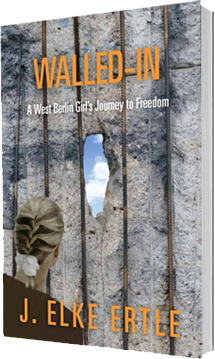
For a sneak peek at the first 20+ pages of my memoir, Walled-In: A West Berlin Girl’s Journey to Freedom, click “Download a free excerpt” on my home page and feel free to follow my blog about anything German: historic or current events, people, places or food.

Walled-In is my story of growing up in Berlin during the Cold War. Juxtaposing the events that engulfed Berlin during the Berlin Blockade, the Berlin Airlift, the Berlin Wall and Kennedy’s Berlin visit with the struggle against my equally insurmountable parental walls, Walled-In is about freedom vs. conformity, conflict vs. harmony, domination vs. submission, loyalty vs. betrayal. 


Dresden’s Frauenkirche

Friday, October 18th, 2013

Dresden’s Frauenkirche is a Lutheran cathedral. It has become a landmark of the old German city not far from the Czech border. The classic baroque church is an absolute must-see on anyone’s German travel list.

The Name

The name Frauenkirche (Church of our Lady) refers to a church that has been consecrated in honor of the Virgin Mary, the mother of Jesus. You will find many churches by that name throughout Germany and Europe. In France and Belgium they would be called Notre Dame.

Previous churches on this spot

The first Frauenkirche on this very spot was built in the 11th century as a village missionary church. With the emergence of the City of Dresden in the 12th century the missionary church turned into a parish church. Of Gothic design, the original Frauenkirche was modified and rebuilt many times over the centuries.

Today’s Frauenkirche

In 1726, the Council of the City of Dresden commissioned the architect, Georg Baehr, to begin construction of a new church with a central dome on a square base. Construction was completed in 1743. The design became a landmark. There are no internal supports. The form of the cathedral’s bell-shaped dome is unique. Made of sandstone, it weighs upward of 12,000 tons and is referred to as the Steinerne Glocke (Stone Bell).

Dresden's Frauenkirche, Photo © J. Elke Ertle 2013

Dresden’s Frauenkirche, photo © J. Elke Ertle, 2013

Destruction

Dresden’s Frauenkirche fell into ruins on 15 February 1945. Two days after the Allies had dropped 650,000 incendiary bombs on the city of Dresden, the baroque beauty collapsed. It had survived the direct attack, but the extreme heat had caused more and more of the sandstone to explode, and the piers could no longer bear the immense weight of the dome.

Reconstruction of Dresden’s Frauenkirche

The scorched stones lay in a heap for the next 45 years. But after German reunification in 1989, reconstruction began with the help from many groups, including American and British organizations. The foundation was laid in 1994, using Baehr’s original blueprints. About 3,800 original stones were reused. The reconstruction was finished in 2005 at a cost of an estimated $217 million.


For a sneak peek at the first 20+ pages of my memoir, Walled-In: A West Berlin Girl’s Journey to Freedom, click “Download a free excerpt” on my home page and feel free to follow my blog about anything German: historic and current events, people, places and food.

Walled-In is my story of growing up in Berlin during the Cold War. Juxtaposing the events that engulfed Berlin during the Berlin Blockade, the Berlin Airlift, the Berlin Wall and Kennedy’s Berlin visit with the struggle against my equally insurmountable parental walls, Walled-In is about freedom vs. conformity, conflict vs. harmony, domination vs. submission, loyalty vs. betrayal.


Dresden’s Semper Opera House

Monday, October 14th, 2013

Dresden’s Semper Opera House is one of Europe’s most important treasures. If you travel in Germany, I suggest you include the historic old city of Dresden in your plans and visit the Semper Opera House. Dominating the Theaterplatz on the river Elbe, this grand old building was beautifully restored in the 1980s.

Semperoper, as reconstructed in 1985, Photo © J. Elke Ertle, www. walled-in-berlin.com

Semperoper, as reconstructed in 1985, Photo © J. Elke Ertle, www. walled-in-berlin.com

The original opera house that stood on this spot was completed in 1841 and called Hoftheater (court theater). Designed by the architect Gottfried Semper in Early Renaissance and Baroque styles with Corinthian-style pillars, the original building burnt down in 1869. When Dresden’s citizens demanded that none other than Semper himself reconstruct their beloved opera house, King John of Saxony agreed to commission the professor of architecture. But Gottfried Semper was already otherwise engaged. He had been hired to construct Vienna’s Museum of Art History and Museum of Natural History. Gottfried Semper’s son, Manfred, stepped in and rebuilt the opera house according to his father’s plans. This second Hoftheater, was constructed in Neo-Renaissance style and renamed Semperoper after its architect. The reconstruction was completed in 1878.

Dresden's Semper Opera House, stucco columns in vestibule, Photo © J. Elke Ertle 2013

Dresden’s Semper Opera House, stucco columns in vestibule, Photo © J. Elke Ertle 2013

In 1945, during the Allied bombing of Dresden in the final months of World War II, the Semper Opera House was largely destroyed again. Only the exterior shell of the building was left standing. The people of Dresden decided to rebuild the exterior as it had looked before the war and to recreate the interior as Semper had originally designed it. The reconstruction was based on over 3,000 letters between Semper and his son concerning the rebuilding of the Hoftheater following the fire of 1869. It took over eight years to rebuild, but in 1985, Dresden’s Semper Opera House finally regained its former glory. As our theater guide pointed out, the wood-clad walls of the opera house are in reality nothing other than stucco. The same is true of the marble columns in the vestibule on the third floor. Six thin coats of plaster and lots of delicate brushing and sponging were required to achieve the marble look. Local craftsmen had to relearn the skill that turned plaster into works of art in the 1800s. They found that each column required over three hundred hours of painstaking work.

Although the interior and exterior of Dresden’s Semper Opera House were reconstructed to look like the original, its stage was upgraded to the state of the art. The Semperoper reopened in 1985 with the same opera that was performed just prior to the building’s destruction in 1945: Carl Maria von Weber’s Der Freischuetz. During the flood of the river Elbe in 2002 the Semper Opera House suffered heavy water damage. With substantial help from around the world, it reopened in December 2002.


For a sneak peek at the first 20+ pages of my memoir, Walled-In: A West Berlin Girl’s Journey to Freedom, click “Download a free excerpt” on my home page and feel free to follow my blog about anything German: historic and current events, people, places and food.

Walled-In is my story of growing up in Berlin during the Cold War. Juxtaposing the events that engulfed Berlin during the Berlin Blockade, the Berlin Airlift, the Berlin Wall and Kennedy’s Berlin visit with the struggle against my equally insurmountable parental walls, Walled-In is about freedom vs. conformity, conflict vs. harmony, domination vs. submission, loyalty vs. betrayal.


credit

Friday, October 11th, 2013

There is no limit to what can be accomplished if no one cares who gets credit.

–John Wooden


For a sneak peek at the first 20+ pages of my memoir, Walled-In: A West Berlin Girl’s Journey to Freedom, click “Download a free excerpt” on the home page of http://www.walled-in-berlin.com. Walled-In is a story of growing up in Berlin during the Cold War.


Wittelsbach and Luxembourg Dynasties

Monday, October 7th, 2013

Following the extinction of the House of Ascania in 1320, Brandenburg – and therefore Berlin – came under the control of the Wittelsbach and Luxembourg Dynasties. In 1323, the King of Germany, Louis IV of the House of Wittelsbach, granted the territory to his eldest son, Louis V, “The Brandenburger.” After the King’s death, The Brandenburger gave the margraviate to his two half-brothers, Louis VI, “The Roman” and Otto V, “The Bavarian,” in exchange for the sole rule over Upper Bavaria. The brothers succeeded in establishing Brandenburg as an electorate of the Holy Roman Empire. Thereafter, they ruled as Kurfuersten – Prince-electors – of Brandenburg. Following the death of “The Roman” in 1365, his brother Otto neglected government and pawned part of the margraviate to a crusading military order, the Teutonic Knights.

In 1323, Louis IV grated the Margraviate of Brandenburg to his son Louis V

Tomb of Louis IV of the House of Wittelsbach
Frauenkirche, Munich

Fifty years later, the Holy Roman Emperor, Charles IV, forced Otto V to abdicate and installed his own son, Wenceslaus, from the House of Luxembourg. Subsequently, The Margraviate of Brandenburg became the object of a long and fierce feud between the Wittelsbach and Luxembourg Dynasties. The effects of these disputes devastated the region. Finally, the people of Berlin-Coelln appealed to the Holy Roman Emperor for assistance. He, in turn, appointed Friedrich V von Hohenzollern as their special protector.

When Wenceslaus was elected King of Germany and Bohemia, his brother, Sigismund, took control of Brandenburg. Sigismund eventually gave the territory to his cousin Jobst as security for a substantial loan. But Sigismund later regained control and was elected King of Germany. In 1415 the Electorate of Brandenburg was officially handed to the House of Hohenzollern, which would rule until World Word I – for almost five hundred years.


For a sneak peek at the first 20+ pages of my memoir, Walled-In: A West Berlin Girl’s Journey to Freedom, click “Download a free excerpt” on my home page and feel free to follow my blog about anything German: historic and current events, people, places and food.

Walled-In is my story of growing up in Berlin during the Cold War. Juxtaposing the events that engulfed Berlin during the Berlin Blockade, the Berlin Airlift, the Berlin Wall and Kennedy’s Berlin visit with the struggle against my equally insurmountable parental walls, Walled-In is about freedom vs. conformity, conflict vs. harmony, domination vs. submission, loyalty vs. betrayal.


face value

Friday, October 4th, 2013

A smile increases your face value.

–Anonymous


For a sneak peek at the first 20+ pages of my memoir, Walled-In: A West Berlin Girl’s Journey to Freedom, click “Download a free excerpt” on the home page of http://www.walled-in-berlin.com. Walled-In is a story of growing up in Berlin during the Cold War.


The Ascanian Dynasty

Monday, September 30th, 2013

Coelln and Berlin grew rapidly during the Ascanian Dynasty. The House of Ascania reigned from 1157 to 1320. Albert the Bear, the first Margrave of Brandenburg (which includes Berlin) inherited the territory upon the death of the childless Slavic Prince Pribislav. In short order Albert the Bear solidified his rule and led a number of military campaigns against the Slavic population that co-inhabited the area along with Germanic peoples. He encouraged Germanic migration and subjugated the Slaves to Christianity. Upon his death, control over the territory went to his descendants in succession: Otto I (Albert’s son), Otto II (son of Otto I), Albert II (brother of Otto II), and finally John I and Otto III (sons of Albert II and co-rulers).

Albert the Bear, founder of the Ascanian Dynasty

House Order of Albert the Bear
first Margrave of Brandenburg
1157-1170

During the years of John and Otto’s co-rule, the Margraviate saw massive geographic expansion. The brothers were instrumental in the rapid development of Coelln and Berlin by conferring special privileges upon the twin towns, such as staple rights. These were important rights sometimes given to selected ports. Staple rights required passing merchant ships to unload their cargo and display it for sale for a specified period before being allowed to reload any unsold goods and to continue their journey. Possessing staple rights gave Coelln and Berlin important economic advantages over other nearby ports, such as the much older fortification of Spandau.

In 1258 John and Otto divided the territory into Brandenburg Stendal and Brandenburg Salzwedel. From 1266 to 1319 the four sons of John I (John II, Conrad, Otto IV, and Henry) and the four descendants of Otto III (John III, Otto V, Otto VI, and Albert III) shared the title of “Margrave of Brandenburg” and ruled jointly. With the death of John V In 1317, the last grandson of Otto III, the Ottonian line died out. And when Henry II, eleven-year-old grandson of John I, died three years later that line became extinct as well.


For a sneak peek at the first 20+ pages of my memoir, Walled-In: A West Berlin Girl’s Journey to Freedom, click “Download a free excerpt” on my home page and feel free to follow my blog about anything German: historic or current events, people, places or food.

Walled-In is my story of growing up in Berlin during the Cold War. Juxtaposing the events that engulfed Berlin during the Berlin Blockade, the Berlin Airlift, the Berlin Wall and Kennedy’s Berlin visit with the struggle against my equally insurmountable parental walls, Walled-In is about freedom vs. conformity, conflict vs. harmony, domination vs. submission, loyalty vs. betrayal.


brand new ending

Friday, September 27th, 2013

Though no one can go back and make a brand new start, anyone can start from now and make a brand new ending.

–Carl Bard


For a sneak peek at the first 20+ pages of my memoir, Walled-In: A West Berlin Girl’s Journey to Freedom, click “Download a free excerpt” on the home page of http://www.walled-in-berlin.com. Walled-In is a story of growing up in Berlin during the Cold War.


Coelln and Berlin

Monday, September 23rd, 2013

During the 13th century, itinerant merchants founded two trading posts, on opposite sites of the Spree River, Coelln and Berlin. Coelln was first cited in a 1237 deed. The date is commonly regarded as the origin of Berlin, although the city is not mentioned until 1244.

Cölln is first cited in 1237, Berlin in 1244

Berlin (red), Coelln (yellow) Two settlements on opposite sides of the River Spree

The twin settlements were located between the already established towns of Spandau to the northwest and Koepenick to the southeast. Since Coelln and Berlin were on the trading route between Madgeburg and Frankfurt/Oder, they grew quickly. Initially, the Muehlendamm – Mill Dam – that crossed the River Spree served as the only connection between them. Each settlement had its own town hall and mayor. Relations were often tense. When a fire swallowed up a large part of Coelln, the people of Berlin declined to help. But they begged Coelln for assistance only two years later when their own town was burning. An outbreak of the Bubonic plague in Coelln caused Berlin to block the Mill Dam in order to keep the contagions in check. But when a Berlin woman spotted a dead body on the far side of the causeway to Cölln, she climbed over the barriers to steal his jacket. By doing so, she spread the epidemic to Berlin.

In 1307 Coelln and Berlin merged into a single town to improve the inhabitants’ prospects for defending against the sovereign. They constructed a second crossing, the Lange Bruecke – Long Bridge which was later renamed the Rathausbruecke -Town Hall Bridge. It still exists today and is Berlin’s second oldest bridge. A bridge was also constructed to replace the Mill Dam. It was called the Muehlendammbruecke and is now Berlin’s oldest bridge, located between Gertraudenstrasse and Molkenmarkt.

The original two settlements were situated just southwest of today’s Alexanderplatz and the Nikolai section. While Berlin grew into a cosmopolitan city, Coelln became part of its historic core. Its northern peak has become known as Museum Island and its southern part as Fischerinsel – Fishermen’s Island. Coelln’s name survives only in Berlin’s southeastern borough of Neukoelln.


For a sneak peek at the first 20+ pages of my memoir, Walled-In: A West Berlin Girl’s Journey to Freedom, click “Download a free excerpt” on my home page and feel free to follow my blog about anything German: historic and current events, people, places and food.

Walled-In is my story of growing up in Berlin during the Cold War. Juxtaposing the events that engulfed Berlin during the Berlin Blockade, the Berlin Airlift, the Berlin Wall and Kennedy’s Berlin visit with the struggle against my equally insurmountable parental walls, Walled-In is about freedom vs. conformity, conflict vs. harmony, domination vs. submission, loyalty vs. betrayal.


reality

Friday, September 20th, 2013

“The difference between fiction and reality? Fiction has to make sense.”

–Tom Clancy


For a sneak peek at the first 20+ pages of my memoir, Walled-In: A West Berlin Girl’s Journey to Freedom, click “Download a free excerpt” on the home page of http://www.walled-in-berlin.com. Walled-In is a story of growing up in Berlin during the Cold War.