Obama spoke in Berlin

June 19th, 2013

Today, President Barack Obama spoke in Berlin, 50 years after President John F. Kennedy’s famous address in the then-divided city. The last time Obama visited Berlin was during his 2008 run for president.

Fifty years ago, a euphoric crowd of 450,000 cheered Kennedy in front of Schöneberger Rathaus (city hall) when he declared, “Ich bin ein Berliner.” I stood in that crowd 50 years ago and was also swept away by those words, which were spoken at the height of the Cold War. Five years ago, Obama addressed a gathering of over 200,000 at the Siegessaeule (victory column) when he ran for president. Today, Obama spoke at Berlin’s historic 18th century Brandenburger Tor.

Obama Spoke at Berlin's Brandenburger Tor today

Obama Spoke at Berlin’s Brandenburger Tor today

President Obama arrived in Berlin as part of a three-day International Summit tour to discuss a variety of issues. At the top of German Chancellor Angela Merkel agenda were questions relative to global electronic and phone surveillance programs. Public outcry over the intrusion into the lives of private citizens is strong in Germany, far stronger than in the United States. The reason is that Germans have a deep-rooted distrust in governments that spy on their citizens. Germans have lived under the Gestapo (Geheime Staatspolizei) during the Nazi regime. More recently, East Germans citizens have lived under the Stasi–(Staatssicherheitsdienst). Both were secret police spying organizations. They have made Germans distrust any government that claims that broad surveillance activity is necessary for its citizens, safety. Merkel hopes to see a more equitable balance struck between providing security and protecting personal freedoms.

Obama spoke in Berlin today in the midst of a crushing heat wave that followed weeks of heavy rains and severe flooding throughout the country. The extreme temperatures, ranging in the 90s, reduced the number of guests in attendance. Instead of the invited 6,000, closer to 4,000 guests came. However, the poor attendance does not reflect a significant drop in Obama’s popularity in Germany. A recent poll indicates that Obama still holds close to a 90% approval rating in Germany.


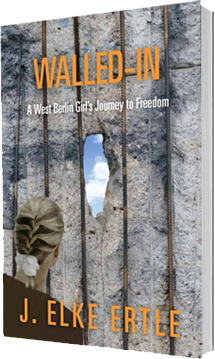
For a sneak peek at the first 20+ pages of my memoir, Walled-In: A West Berlin Girl’s Journey to Freedom, click “Download a free excerpt” on my home page and feel free to follow my blog about anything German: historic or current events, people, places or food.

Walled-In is my story of growing up in Berlin during the Cold War. Juxtaposing the events that engulfed Berlin during the Berlin Blockade, the Berlin Airlift, the Berlin Wall and Kennedy’s Berlin visit with the struggle against my equally insurmountable parental walls, Walled-In is about freedom vs. conformity, conflict vs. harmony, domination vs. submission, loyalty vs. betrayal.


Opportunity

June 18th, 2013

If opportunity doesn’t knock, build a door.
–Milton Berle


For a sneak peek at the first 20+ pages of my memoir, Walled-In: A West Berlin Girl’s Journey to Freedom, click “Download a free excerpt” on the home page of http://www.walled-in-berlin.com. Walled-In is a story of growing up in Berlin during the Cold War.


Regifting

June 17th, 2013

How do you feel about regifting? Is it good? Is it bad? Does it depend? When the topic came up recently among a group of friends, I was surprised at the intensity of feelings on both sides of the issue.

images

According to Merriam-Webster, a gift is something voluntarily transferred by one person to another without compensation. Technically, regifting is nothing more than the act of taking that gift and passing it on to somebody else. I don’t think the concepts of good and bad enter regifting at this point. But the waters get muddy when Webster’s New Millennium Dictionary of English defines regifting as giving an unwanted gift to someone else. The crux, I believe, is in the “unwanted” aspect of the gift, not in the giving.

If regifting is done under the guise of a new gift or as means of disposing an unwanted gift, I agree wholeheartedly that it is tacky. But if my friend is given a blue ceramic vase when her house is decorated in green, while mine is decorated in blue, then I gladly receive her regifted blue vase as a birthday present. I see no reason why perfectly good and desirable stuff should have to go into the landfill just because a gift isn’t coming directly from a store. I consider thoughtful regifting a form of Green Giving. How about you? I would love to hear your thoughts.


For a sneak peek at the first 20+ pages of my memoir, Walled-In: A West Berlin Girl’s Journey to Freedom, click “Download a free excerpt” on my home page and feel free to follow my blog about anything German: historic and current events, people, places and food.

Walled-In is my story of growing up in Berlin during the Cold War. Juxtaposing the events that engulfed Berlin during the Berlin Blockade, the Berlin Airlift, the Berlin Wall and Kennedy’s Berlin visit with the struggle against my equally insurmountable parental walls, Walled-In is about freedom vs. conformity, conflict vs. harmony, domination vs. submission, loyalty vs. betrayal.


Mikhail Gorbachev

June 13th, 2013

Mikhail Sergeyevich Gorbachev paid a State visit to the Federal Republic of Germany on this day in history–on June 13, 1989. Mr. Gorbachev, then First Secretary of the Central Committee of the Communist Party of the Soviet Union, had come to sign a declaration along with German Chancellor Helmut Kohl. The joint statement affirmed the right of peoples and States to self-determination.

220px-RIAN_archive_850809_General_Secretary_of_the_CPSU_CC_M._Gorbachev_(crop)

During his four-day stay in West Germany, Mikhail Gorbachev visited and spoke in several cities. Each time, the crowds cheered affectionately, “Gorby, Gorby, Gorby.” When the First Secretary and his wife, Raissa, appeared on the main plaza of Bonn, the former German capital, thousands of well-wishers applauded. A young boy presented him with him flowers. The people tied their hopes to the man who had introduced Glasnost and Perestroika in the Soviet Union. He had instilled new hope for change and peace.

Despite the general enthusiasm, no one realized though that Glasnost and Perestroika had opened a crack that would continue to widen. Five months later it would allow the Berlin Wall to come down. On November 9, 1989, the Berlin Wall fell after twenty-eight years. Mikhail Gorbachev refrained from giving orders to intervene militarily. On October 3, 1990, the unification of East and West Germany was complete. It is doubtful that any of that could have happened without the restraint shown by the First Secretary of the Central Committee of the Communist Party of the Soviet Union.


For a sneak peek at the first 20+ pages of my memoir, Walled-In: A West Berlin Girl’s Journey to Freedom, click “Download a free excerpt” on my home page and feel free to follow my blog about anything German: historic or current events, people, places or food.

Walled-In is my story of growing up in Berlin during the Cold War. Juxtaposing the events that engulfed Berlin during the Berlin Blockade, the Berlin Airlift, the Berlin Wall and Kennedy’s Berlin visit with the struggle against my equally insurmountable parental walls, Walled-In is about freedom vs. conformity, conflict vs. harmony, domination vs. submission, loyalty vs. betrayal.


Stroke of luck

June 11th, 2013

Remember that not getting what you want is sometimes a wonderful stroke of luck.
–Dali Lama


For a sneak peek at the first 20+ pages of my memoir, Walled-In: A West Berlin Girl’s Journey to Freedom, click “Download a free excerpt” on the home page of http://www.walled-in-berlin.com. Walled-In is a story of growing up in Berlin during the Cold War.


Schloss Neuschwanstein

June 10th, 2013

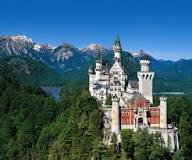
Schloss Neuschwanstein is located near Fuessen in the Bavarian Alps of Germany and overlooks the Hohenschwangau valley. It is the most magnificent of the castles and palaces built by Ludwig II, King of Bavaria. The king reigned from 1864 until shortly before his death in 1886. He is often called the Maerchenkoenig, the Fairy tale King. The most famous of his castles, Schloss Neuschwanstein, became the inspiration for Disneyland’s Cinderella Castle.

Schloss Neuschwanstein near Fuessen in the Bavarian Alps

Schloss Neuschwanstein near Fuessen in the Bavarian Alps

King Ludwig also built other beautiful castles and palaces. Schloss Linderhof and Schloss Herrenchiemsee were constructed during his reign as well. Although the shy and eccentric king used his own funds to pay for the construction of his palaces and did not expend public funds, his ministers became increasingly concerned with their king’s excessive spending. Ludwig II was deeply in debt. Instead of agreeing to future economization, as his financial ministers advised, he planned additional opulent projects. He even contemplated replacing his entire cabinet to rid himself of their antagonism. But his ministers acted quickly. They declared Ludwig II of Bavaria mentally ill, placed him in custody, and replaced him with his uncle, Prince Luitpold.

Only three days after being disposed, King Ludwig II of Bavaria died under mysterious circumstances. On June 13, 1886, he took a walk in the parkland of his Schloss Berg alongside the shore of Lake Starnberg and went missing. He was found dead in the lake. Although Ludwig’s death was officially ruled a suicide by drowning, no water was found in his lungs.

The shy king had built Schloss Neuschwanstein to withdraw from public life. Ironically, his magnificent castle is the most visited tourist attraction today, not only in Germany, but in all of Europe. Every year over 1.3 million people view King Ludwig’s private refuge https://neuschwansteincastle.net. If you visit Schloss Neuschwanstein, I am sure that the beauty of the castle and its surroundings will amaze you.


For a sneak peek at the first 20+ pages of my memoir, Walled-In: A West Berlin Girl’s Journey to Freedom, click “Download a free excerpt” on the home page of http://www.walled-in-berlin.com. Walled-In is a story of growing up in Berlin during the Cold War.


CARE Packages to Berlin

June 6th, 2013

On this day in history, on June 6, 1945, US General Lucius D. Clay signed the CARE treaty for distribution of CARE Packages in the four occupation sectors of Berlin. Until the start of the Berlin Airlift in 1948, CARE Packages made up 60 percent of all private relief delivered to Berlin. During the course of the Berlin Blockade, another 500,000 CARE Packages were airlifted into the city.

Many World War II survivors were starving. In response, the world’s largest private humanitarian relief organization was formed. CARE (Cooperative for Assistance and Relief Everywhere) was to provide relief to the needy. The United States was the first nation to sign the CARE treaty. On June 21 Great Britain followed suit, and in December of that year, France joined the effort. Initially, distribution of CARE Packages to occupied Germany was prohibited, but on June 5 that ban was lifted.

CARE Package

CARE Package

At first, CARE distributed U.S. Army surplus parcels in Europe. These packages had been prepared for a potential invasion of Japan. Soon, Americans could purchase a CARE Package for 10 dollars and send it to family and friends in Europe. At first, a specific recipient had to be specified. When the recipient’s address was unknown, CARE would attempt to find the person. Later, packages were also sent to general target areas.

The standardized food packages consisted of meat, fats, sugar, egg powder, milk, coffee, and some sweets. Each parcel contained 40,000 calories and was to feed one person for 10 days. Later CARE Packages also included non-food items such as medicine. By 1960, when operations in West Germany ended, CARE had distributed 83,000 tons of aid in West Germany. In West Berlin, operations continued until 1962. Since my family did not have friends or relatives in the United States, we never received a CARE Package.


For a sneak peek at the first 20+ pages of my memoir, Walled-In: A West Berlin Girl’s Journey to Freedom, click “Download a free excerpt” on my home page and feel free to follow my blog about anything German: historic and current events, people, places and food.

Walled-In is my story of growing up in Berlin during the Cold War. Juxtaposing the events that engulfed Berlin during the Berlin Blockade, the Berlin Airlift, the Berlin Wall and Kennedy’s Berlin visit with the struggle against my equally insurmountable parental walls, Walled-In is about freedom vs. conformity, conflict vs. harmony, domination vs. submission, loyalty vs. betrayal.


Heavy Rainfall and Flooding

June 5th, 2013

Heavy rainfall and flooding have been reported in parts of Germany and central Europe. Since last Thursday it has rained almost continuously. According to the German news agency, dpa, the city of Passau, among the worst hit places, has not seen water level this high in five centuries of recorded data. Passau, the “City of Three Rivers” is located in Bavaria, in the southeastern part of Germany where the Danube, Inn and Ilz Rivers come together.

Passau flooded

Aerial view of the flooded city of PassauPhoto/dpa, Peter Kneffel

Other rivers have swollen to critical levels as well. Shipping on stretches of the Rhine, Main, and Neckar rivers had to be halted. Rail transportation between Munich and the Austrian city of Salzburg had to be suspended. Berlin’s Spree River is swollen but not considered critical.

Aside from Germany, hardest hit by the heavy rainfall and flooding were Austria, Switzerland, and the Czech Republic. The worst seems to be over. The Deutscher Wetterdienst (German weather service) predicts a decrease in precipitation for the remainder of the week (see www.dwd.de)


For a sneak peek at the first 20+ pages of my memoir, Walled-In: A West Berlin Girl’s Journey to Freedom, click “Download a free excerpt” on my home page and feel free to follow my blog about anything German: historic and current events, people, places and food.

Walled-In is my story of growing up in Berlin during the Cold War. Juxtaposing the events that engulfed Berlin during the Berlin Blockade, the Berlin Airlift, the Berlin Wall and Kennedy’s Berlin visit with the struggle against my equally insurmountable parental walls, Walled-In is about freedom vs. conformity, conflict vs. harmony, domination vs. submission, loyalty vs. betrayal.


Enjoying Failure

June 4th, 2013

I’d rather be a failure at something I enjoy than be a success at something I hate.


For a sneak peek at the first 20+ pages of my memoir, Walled-In: A West Berlin Girl’s Journey to Freedom, click “Download a free excerpt” on the home page of http://www.walled-in-berlin.com. Walled-In is a story of growing up in Berlin during the Cold War.


The Bell Pepper Urban Myth?

June 3rd, 2013

It seems that the bell pepper urban myth has been making the rounds. According to eHow and a sizeable number of blogs, word has it that there is such a thing as male and female bell peppers. Male bell peppers, the legend goes, have a three-lobed bottom and fewer seeds; female peppers have a four-lobed bottom and a lot more seeds. The urban myth goes on to suggest that female bell peppers are sweeter and therefore best eaten raw while male bell peppers are best cooked. The number of seeds in male and female fruits led blogger to the conclusion that male bell peppers are the frugal shopper’s better buy because there is more product and less waste.

Urban Myth?

Are these male and female bell peppers or bisexual bell peppers? Photo © J. Elke Ertle

When I shopped at Sprouts the other day I heard this urban myth for the first time. I placed my three bags of large fruit on the checkout counter when the lady behind me enlightened me on the male and female differences. I had never known this! It sounded so plausible. But a quick trip to the Internet painted a slightly different picture. After searching through a plethora of articles, I feel far more comfortable with Megan Stoddard’s explanation that bell peppers, like most flowering plants, produce bisexual flowers. In other words, the flowers, which eventually become the fruit, have both male and female parts. If you are an expert on the subject, please let me know. Until then I am with Megan Stoddard at http.//www.helpfulgardener.com. I think the existence of male and female bell peppers is an urban myth. I have to admit though – it had me going for a while.


For a sneak peek at the first 20+ pages of my memoir, Walled-In: A West Berlin Girl’s Journey to Freedom, click “Download a free excerpt” on my home page and feel free to follow my blog about anything German: historic and current events, people, places and food.

Walled-In is my story of growing up in Berlin during the Cold War. Juxtaposing the events that engulfed Berlin during the Berlin Blockade, the Berlin Airlift, the Berlin Wall and Kennedy’s Berlin visit with the struggle against my equally insurmountable parental walls, Walled-In is about freedom vs. conformity, conflict vs. harmony, domination vs. submission, loyalty vs. betrayal.